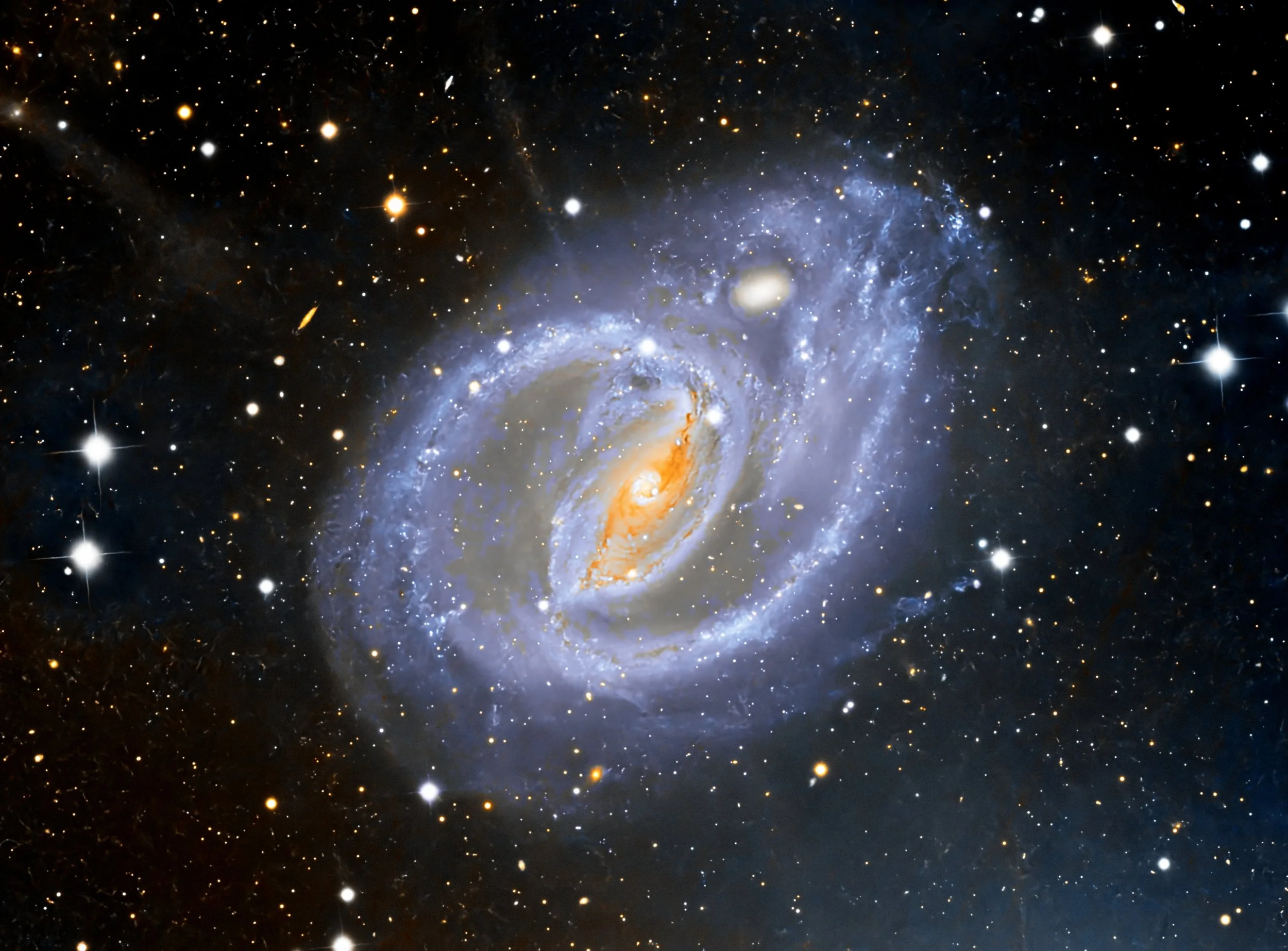
NGC 1097 is a prominent barred spiral galaxy located about 45 million light-years away in the southern constellation Fornax. It is known for its spectacular structure, a cannibalistic history, and a feeding supermassive black hole at its center.
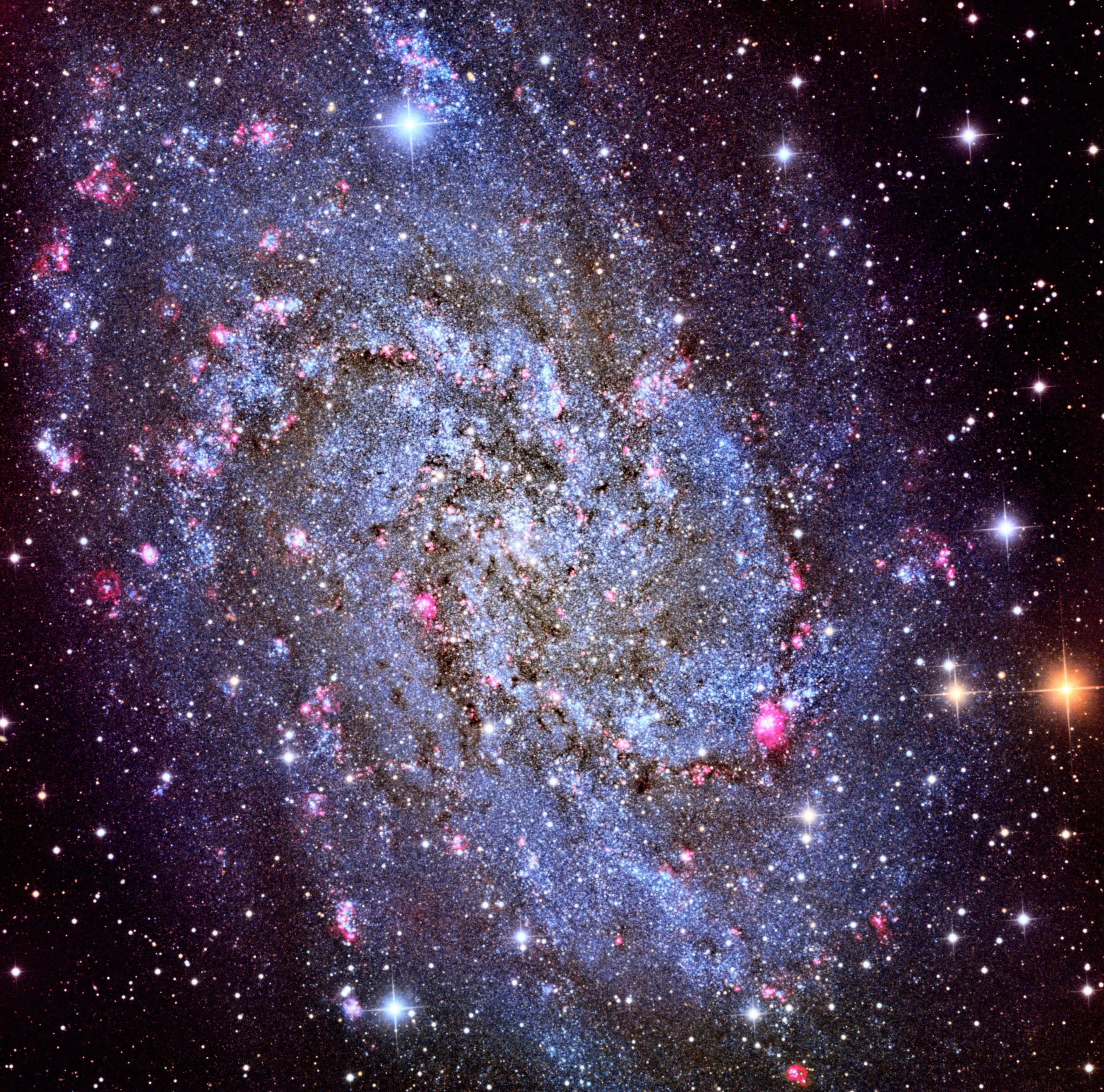
The Triangulum Galaxy, a spiral galaxy and the third-largest member of the Local Group of galaxies, after the Andromeda Galaxy and the Milky Way. It is located about 3 million light-years from Earth.
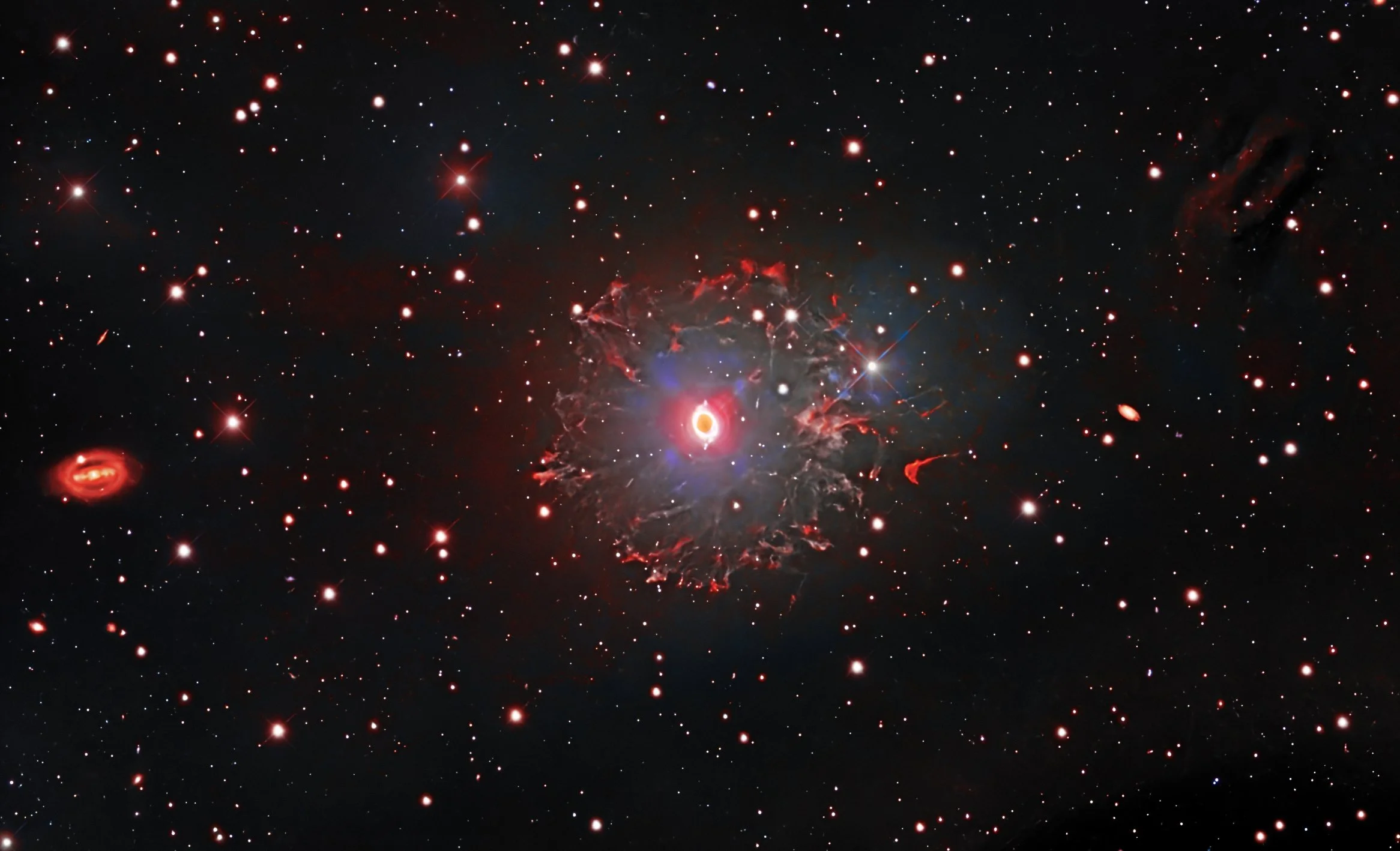
NGC 6543, commonly known as the Cat's Eye Nebula, is one of the most complex and well-studied planetary nebulae in the sky. Located about 3,300 light-years away in the constellation Draco, it represents the end-of-life stage of a star similar to our sun. At the core of the nebula is a very hot, dying star that has shed its outer gaseous layers. This star is on its way to becoming a white dwarf.
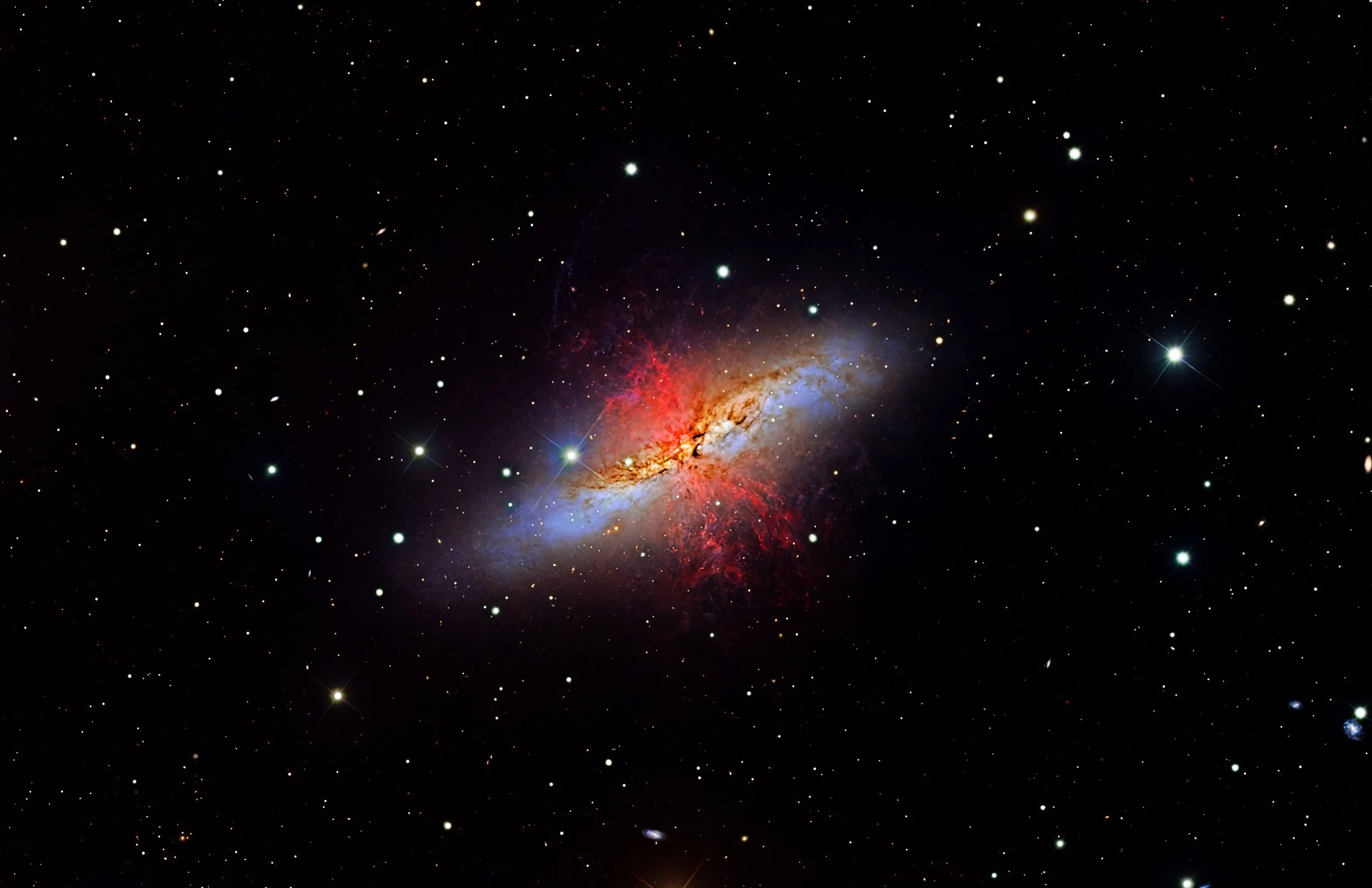
The Cigar Galaxy, M82, a starburst galaxy located about 12 million light-years away. It forms new stars ten times faster than the Milky Way. This activity is believed to have been triggered by a gravitational interaction with its larger neighbor, M81.
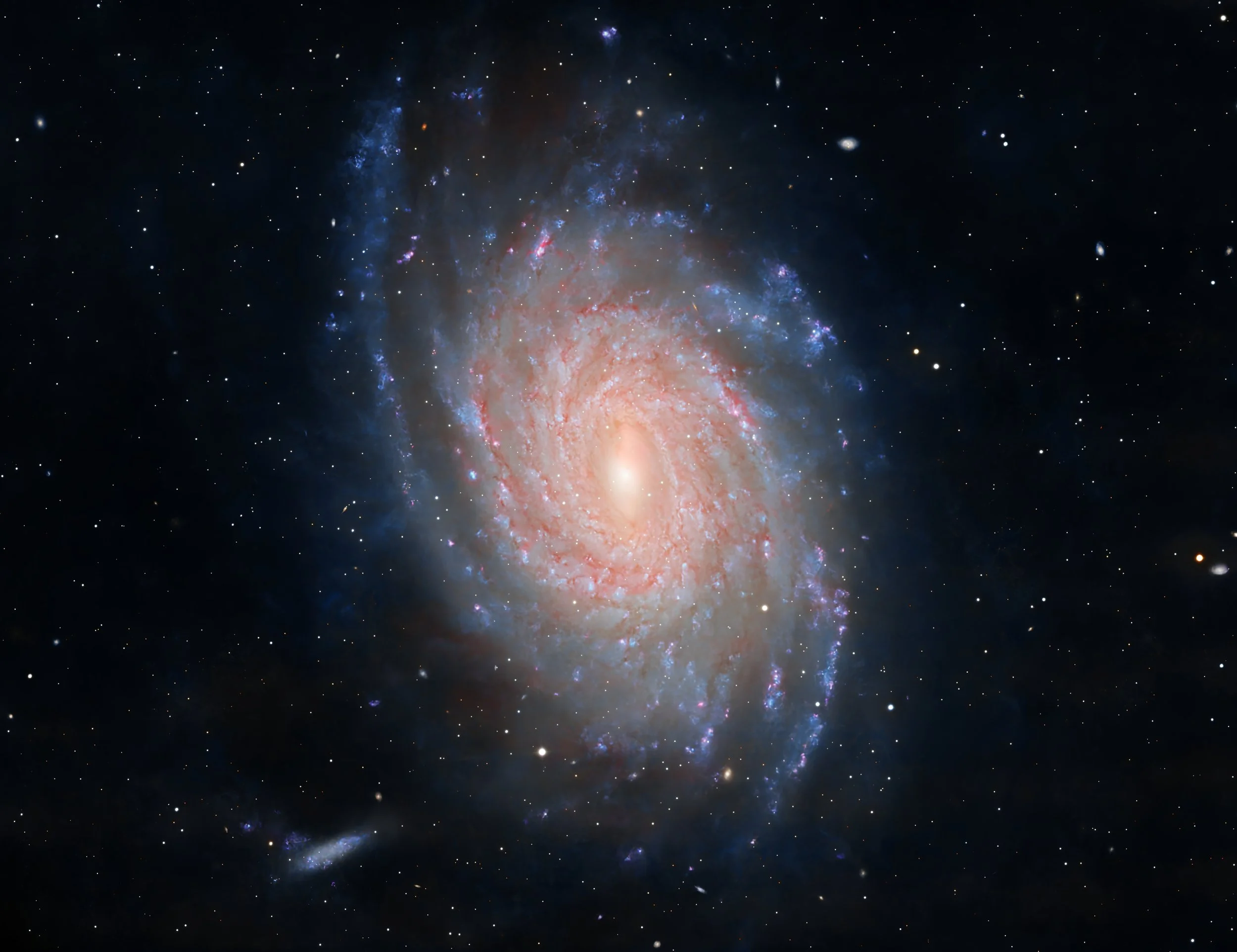
NGC 6744 is a prominent and beautiful intermediate spiral galaxy located approximately 30 million light-years away. Like most large galaxies, NGC 6744 hosts a supermassive black hole at its core. It is classified as a low-luminosity active galactic nucleus (AGN) because its black hole is actively feeding on surrounding material and emitting radiation
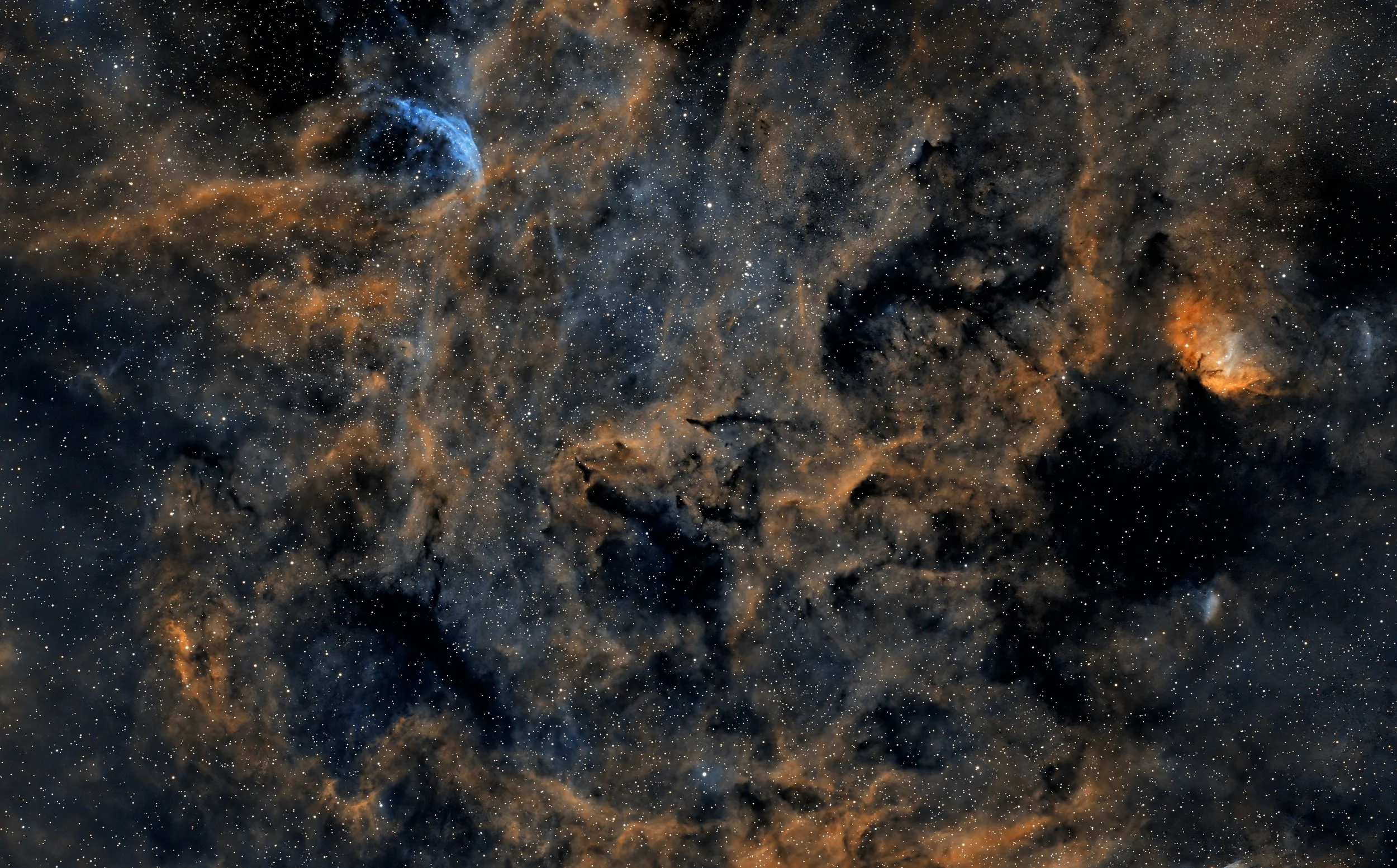
LDN 858 is a dark nebula in Cygnus consisting of cold molecular gas and dust. It’s part of a large complex of interstellar material in that constellation and is commonly captured in astrophotography alongside other famous nebulae in the Cygnus region
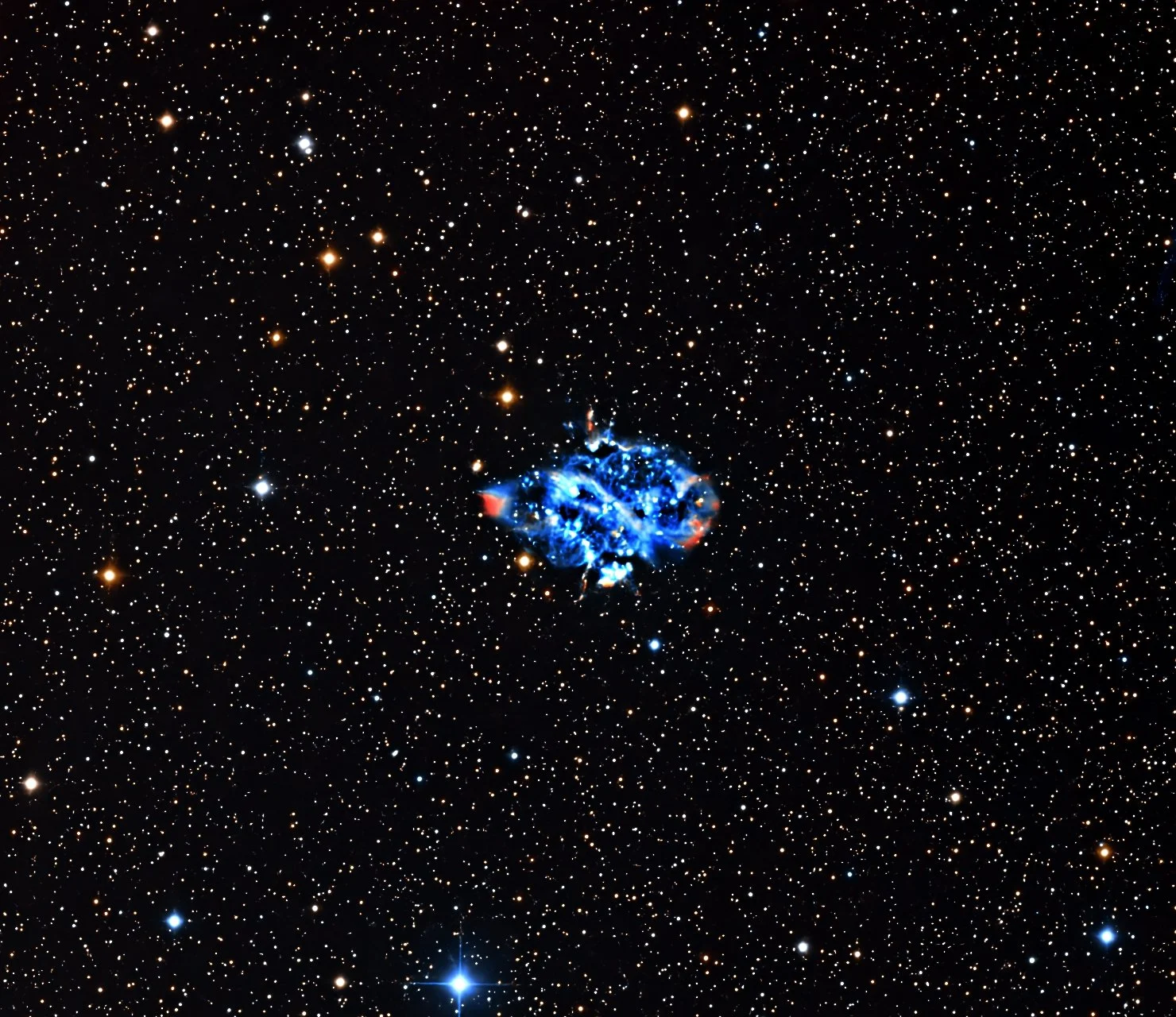
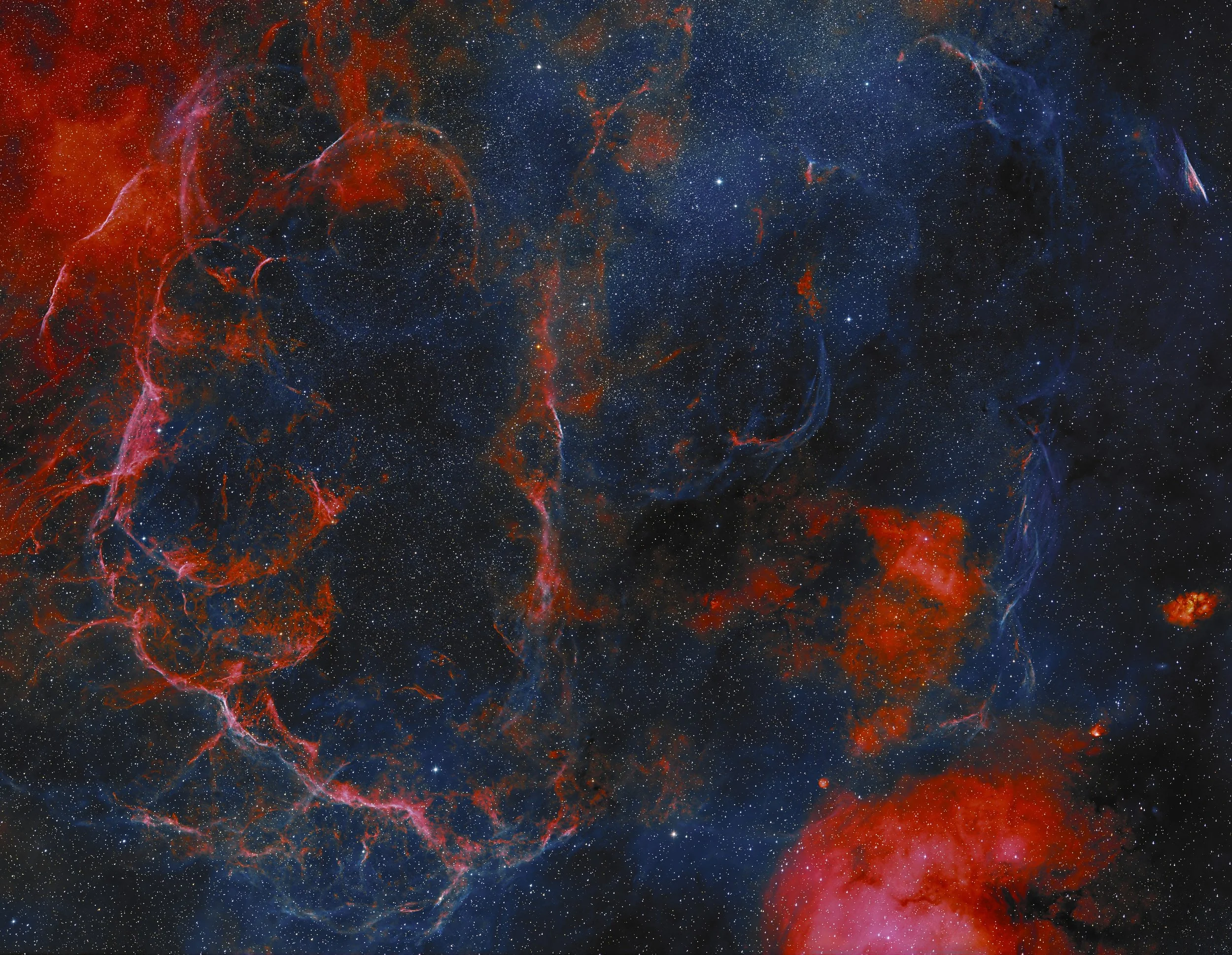
Vela XYZ is the radio designation for the Vela Supernova Remnant, the expanding cloud of gas and dust from a massive star that exploded approximately 11,000 to 12,300 years ago. Vela X: A pulsar-wind nebula (or plerion) at the center of the remnant, energized by the powerful Vela Pulsar. Vela Y and Vela Z: Shell-type remnants that are part of the larger, expanding bubble of gas and dust.
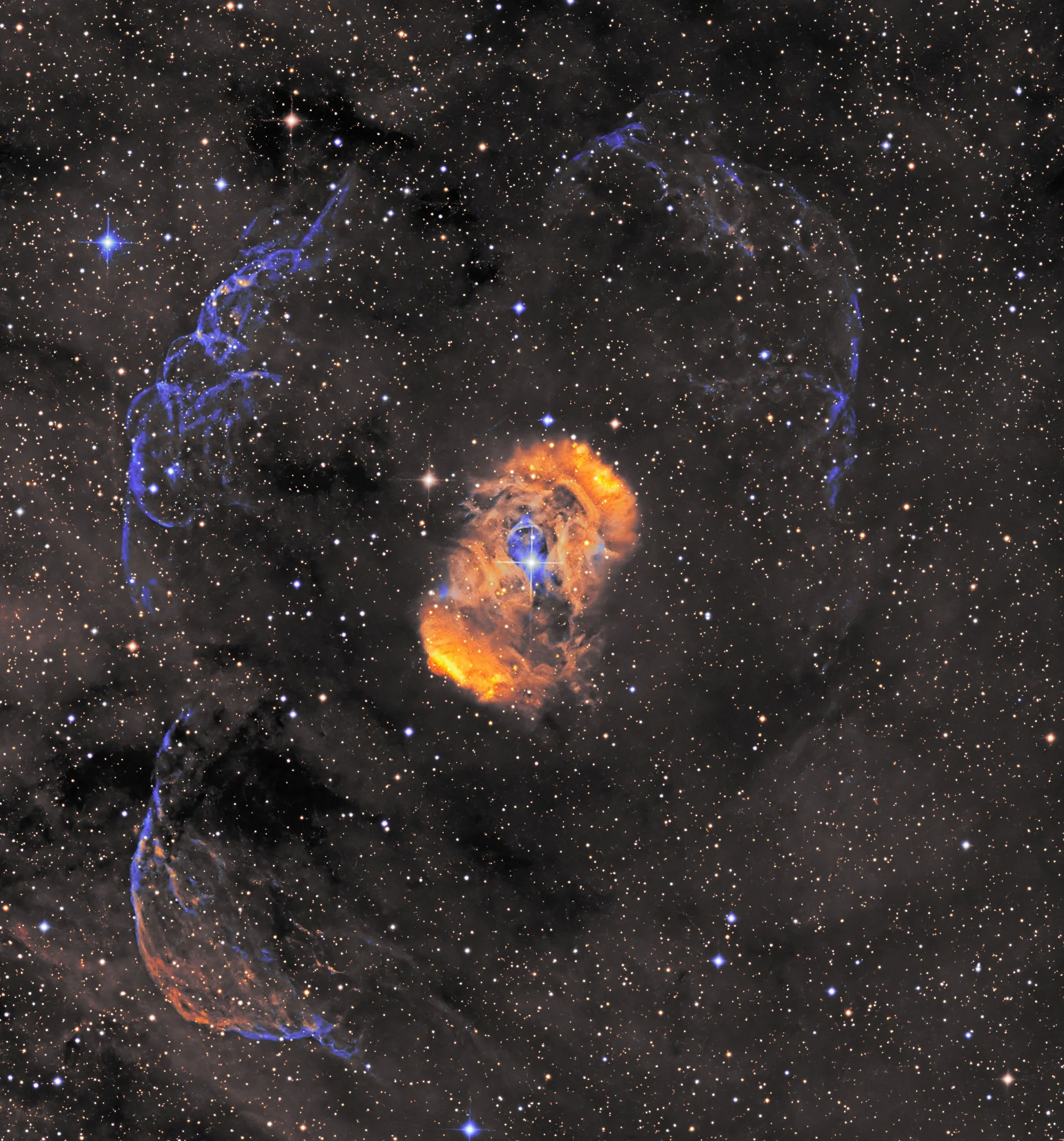
NGC 6164, also known as the Dragon's Egg Nebula, is a distinctive emission nebula located approximately 3,870 to 4,200 light-years away. At the heart of NGC 6164 lies the luminous and magnetic star HD 148937. This is a rare O-type star with a mass about 40 times that of the Sun. Recent studies indicate the star is a result of a dramatic stellar merger. It's believed that what was once a triple-star system became unstable, and two of the stars collided and merged. This violent event created the larger, highly magnetic star and expelled the surrounding gas that now forms the nebula.
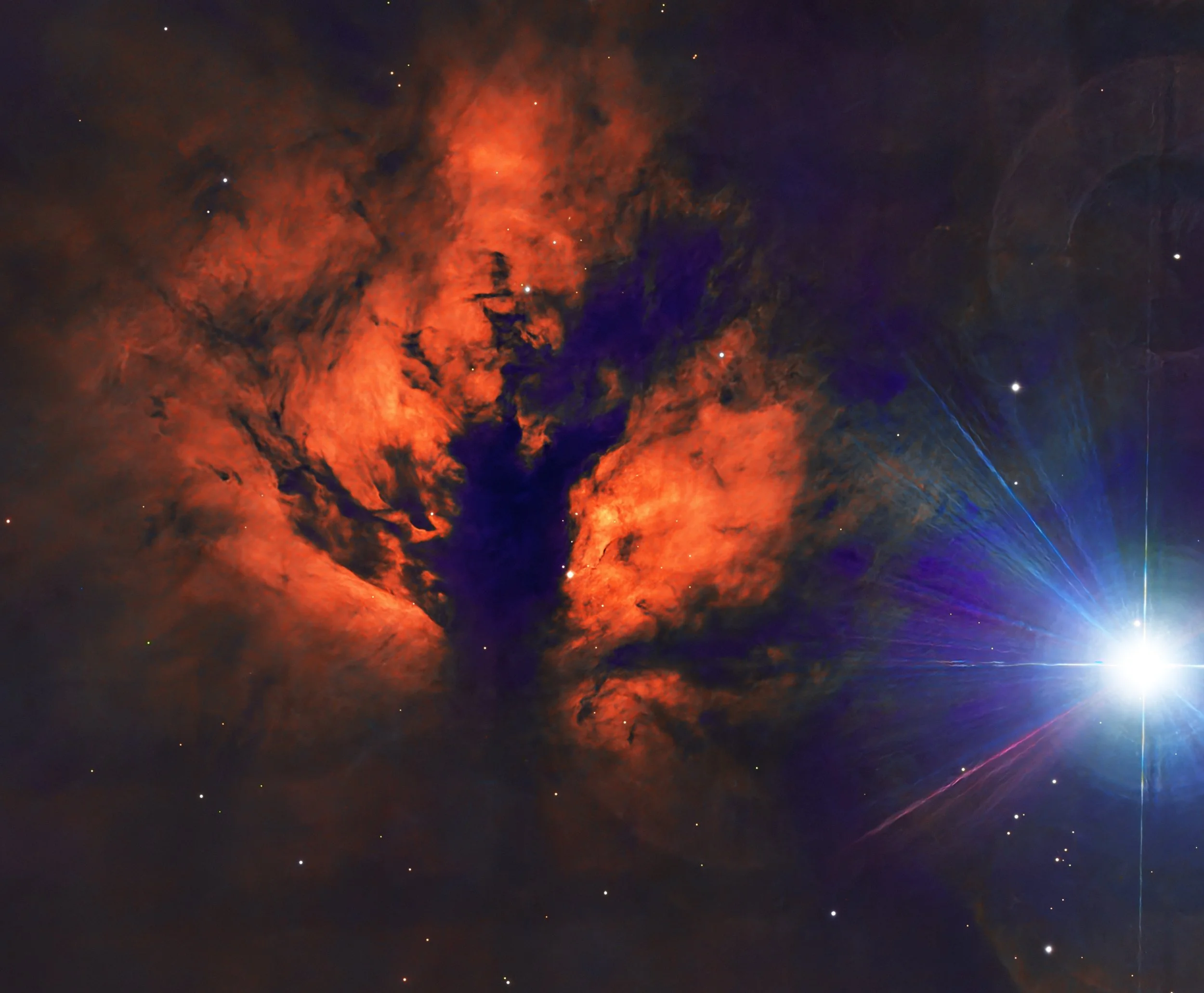
NGC 2024, commonly known as the Flame Nebula, is an emission nebula and active star-forming region. It is located approximately 1,350 to 1,500 light-years away and is part of the larger Orion Molecular Cloud Complex. The nebula is energized by the brilliant, hot star Alnitak (Zeta Orionis), the easternmost star in Orion's Belt. While Alnitak is visually close to the nebula, it is a foreground star and not physically within the nebula itself. Its intense ultraviolet radiation strips electrons from the hydrogen gas in the nebula, causing it to glow brightly as the electrons and hydrogen recombine.
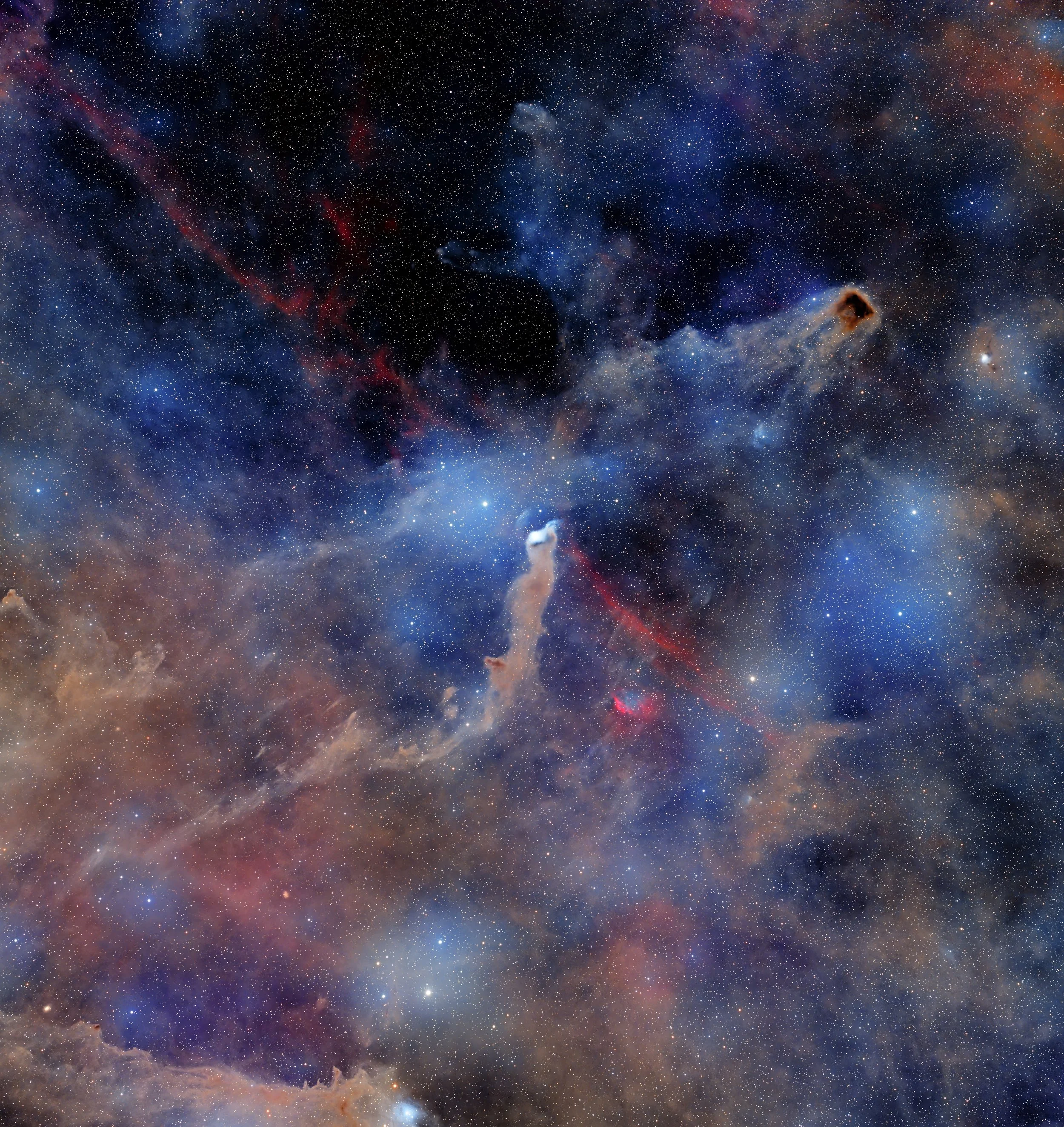
LDN 1217, the Wolf's Cave Nebula, is a dense molecular cloud, a type of stellar nursery where new stars can eventually form from its gas and dust. It is also classified as a Bok globule.
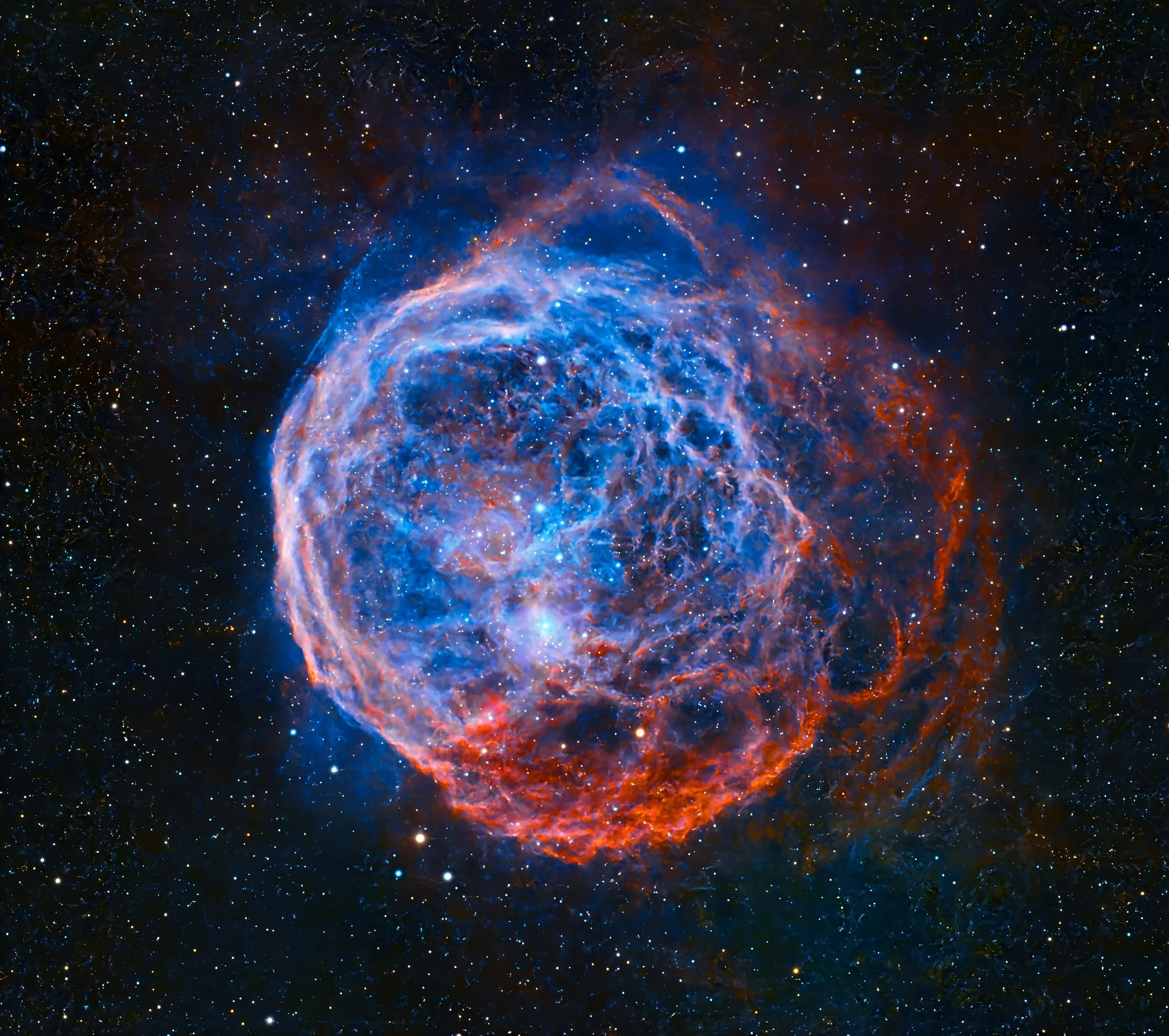
Henize 70 is a fascinating emission nebula located in the Large Magellanic Cloud, roughly 160,000 light-years from Earth. It’s a superbubble, a vast cavity of hot gas carved out by powerful stellar winds and multiple supernova explosions.
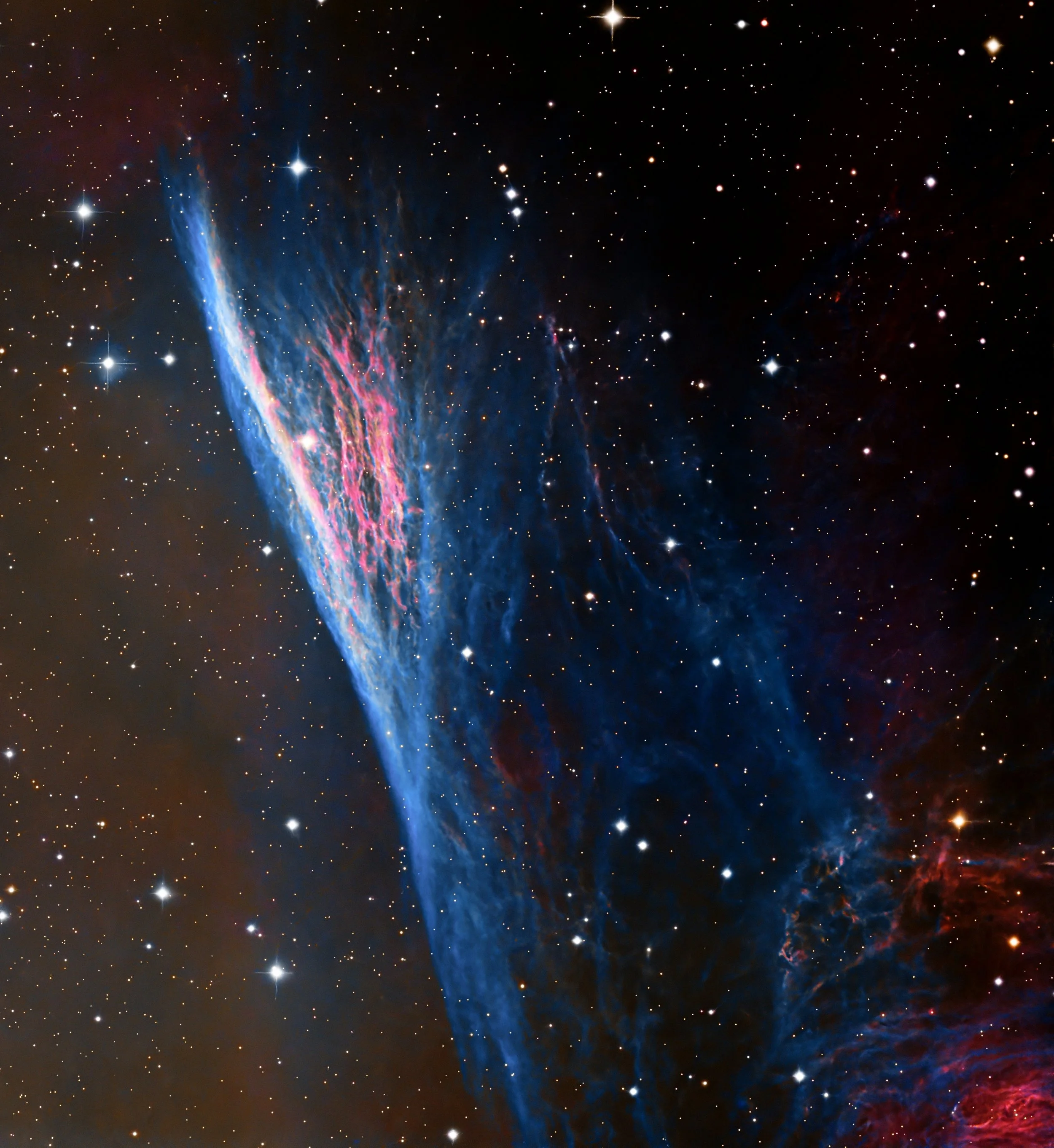
NGC 2736, commonly known as the Pencil Nebula, is a long, thin, bright nebula in the southern constellation of Vela. It is a relatively small and highly visible part of the much larger Vela Supernova Remnant. It was created by the shock wave from a massive star that exploded approximately 11,000 to 12,300 years ago. This shock wave is still expanding outward into space, encountering regions of dense interstellar gas and dust.
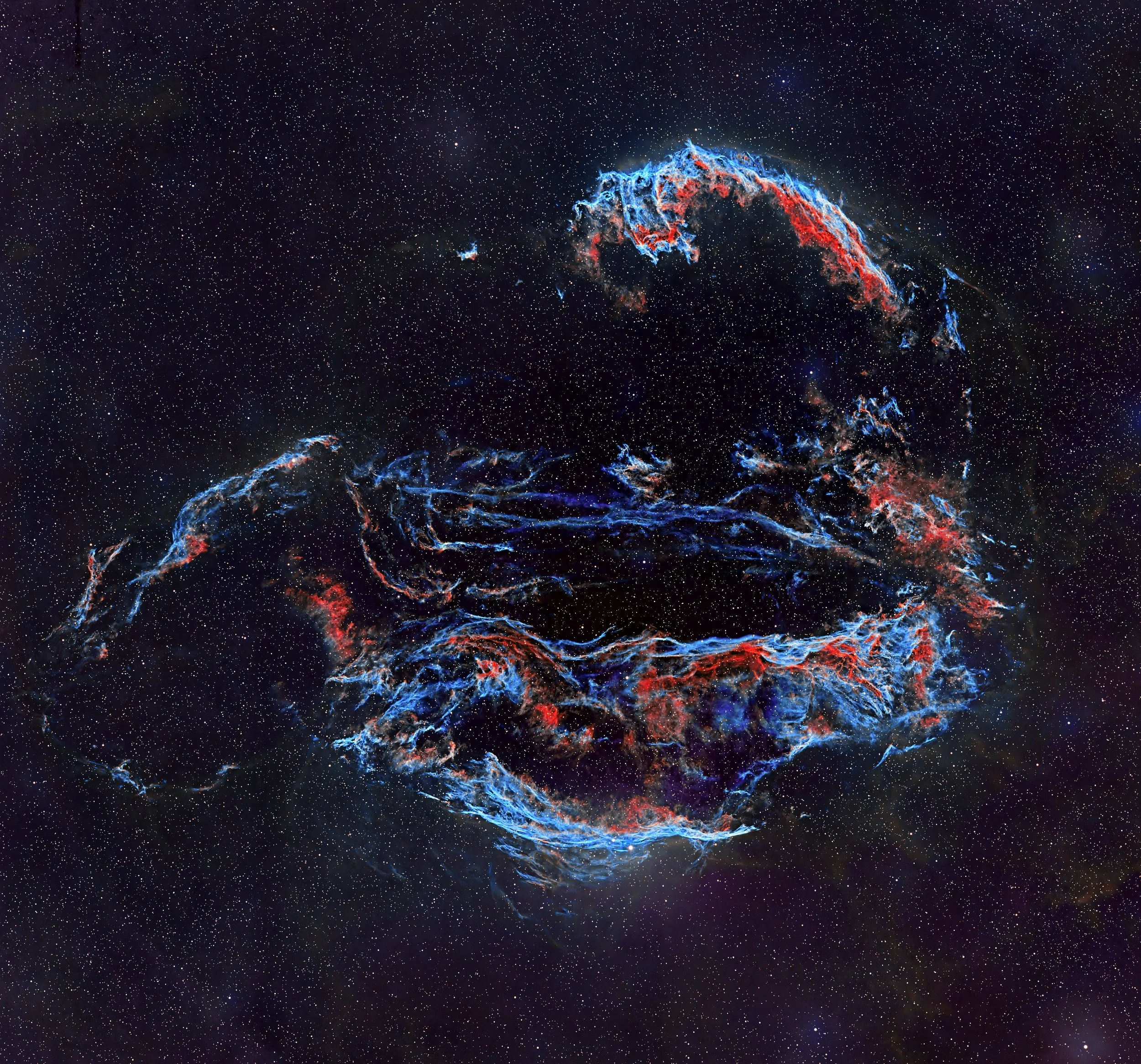
IC 5070, also known as the Pelican Nebula. The nebula's distinctive shape, resembling a pelican's head and neck, is sculpted by powerful ultraviolet radiation and stellar winds. Radiation, coming from the hot, young stars forming within and behind the nebula, creates an ionization front. This front is the boundary where the intense radiation is slowly transforming the cold gas into hot, ionized gas, causing it to glow brightly.
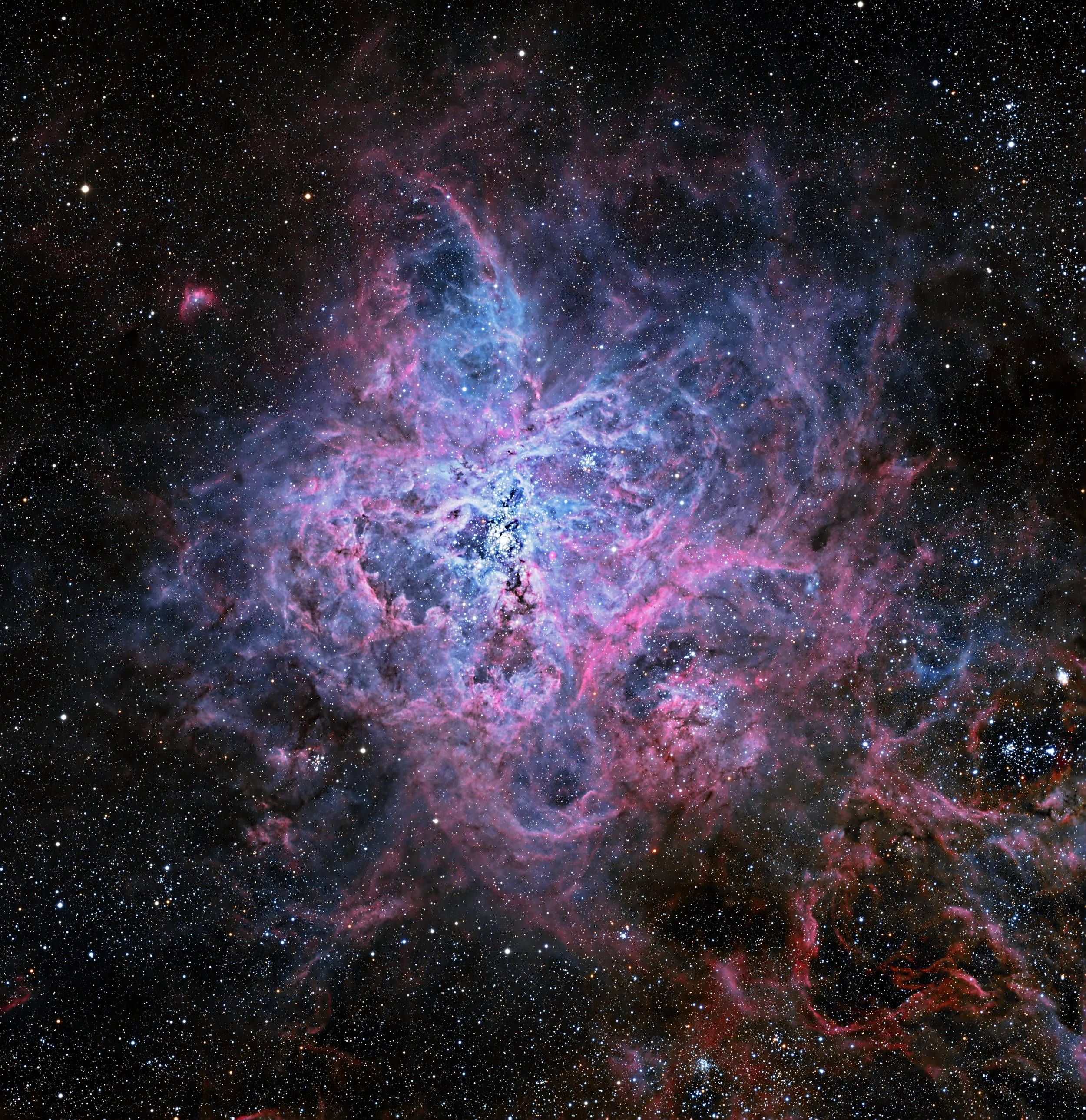
NGC 2070 is the central, massive star cluster at the heart of the Tarantula Nebula (also known as 30 Doradus). Located approximately 170,000 light-years away in the Large Magellanic Cloud (LMC), it is one of the most energetic star clusters known. Its intense stellar radiation is what causes the gas and dust of the Tarantula Nebula to glow so brightly.
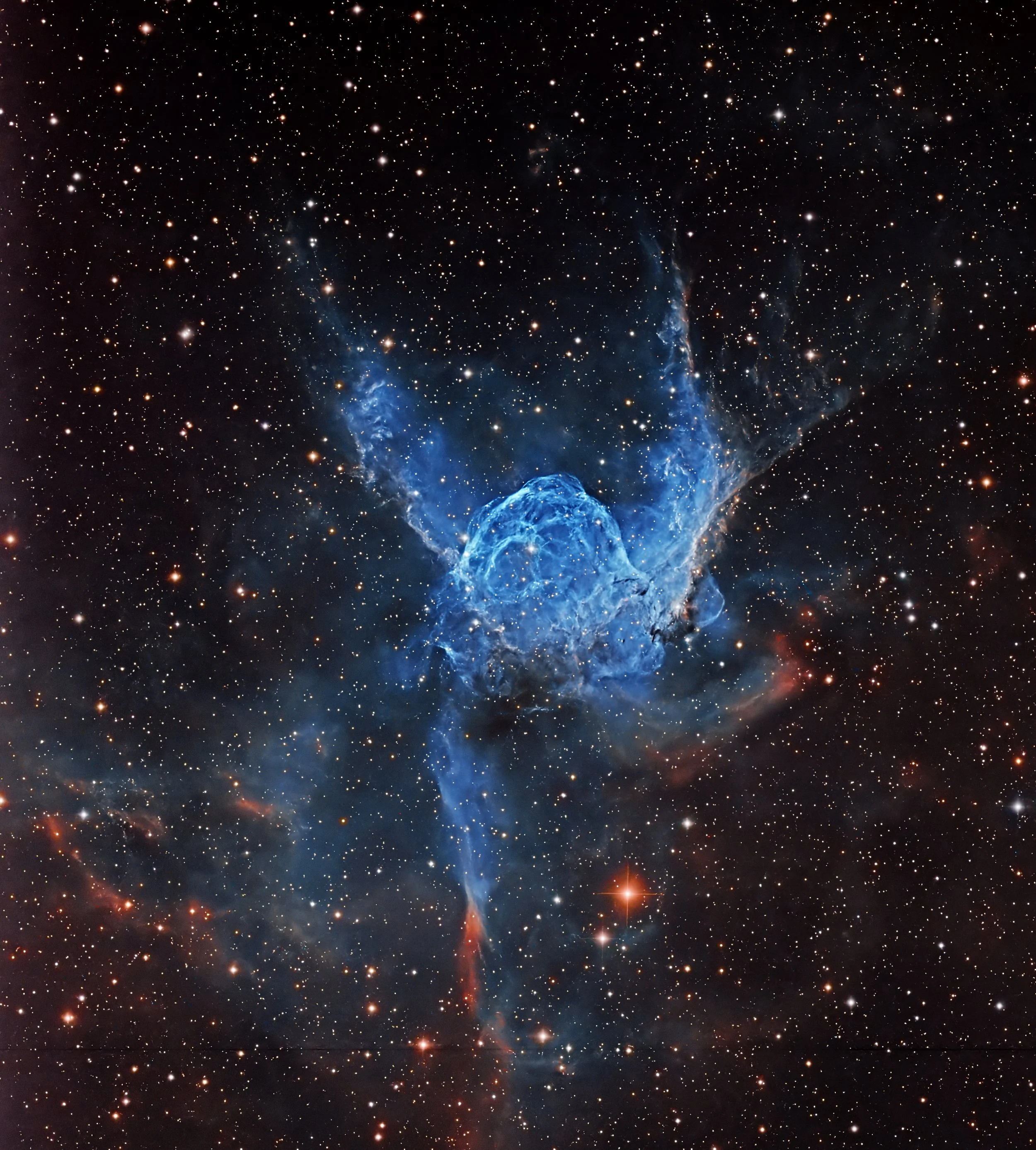
NGC 2359, popularly known as Thor's Helmet, is a striking emission nebula located about 12,000 light-years away. At the heart of NGC 2359 is a massive Wolf-Rayet star known as WR 7. WR 7 is thought to be in a brief, pre-supernova stage of evolution, and is expected to end its life in a spectacular supernova explosion within a few thousand years.
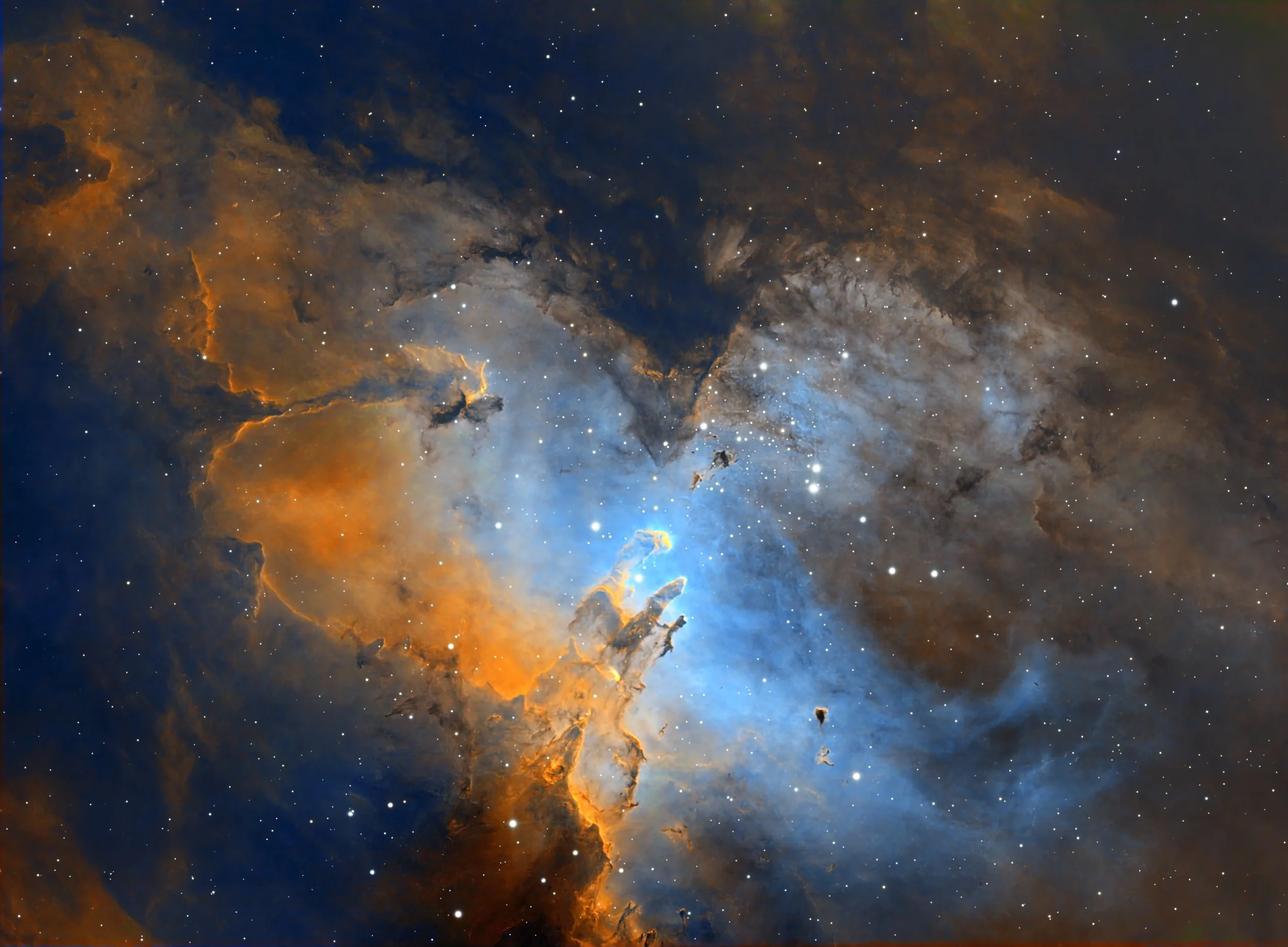
M16 is the designation for the Eagle Nebula, a young open cluster of stars and an active star-forming region. The nebula is most famous for a stunning feature known as the Pillars of Creation, a stellar nursery where new stars are being born inside dense gaseous globules called Evaporating Gaseous Globules.
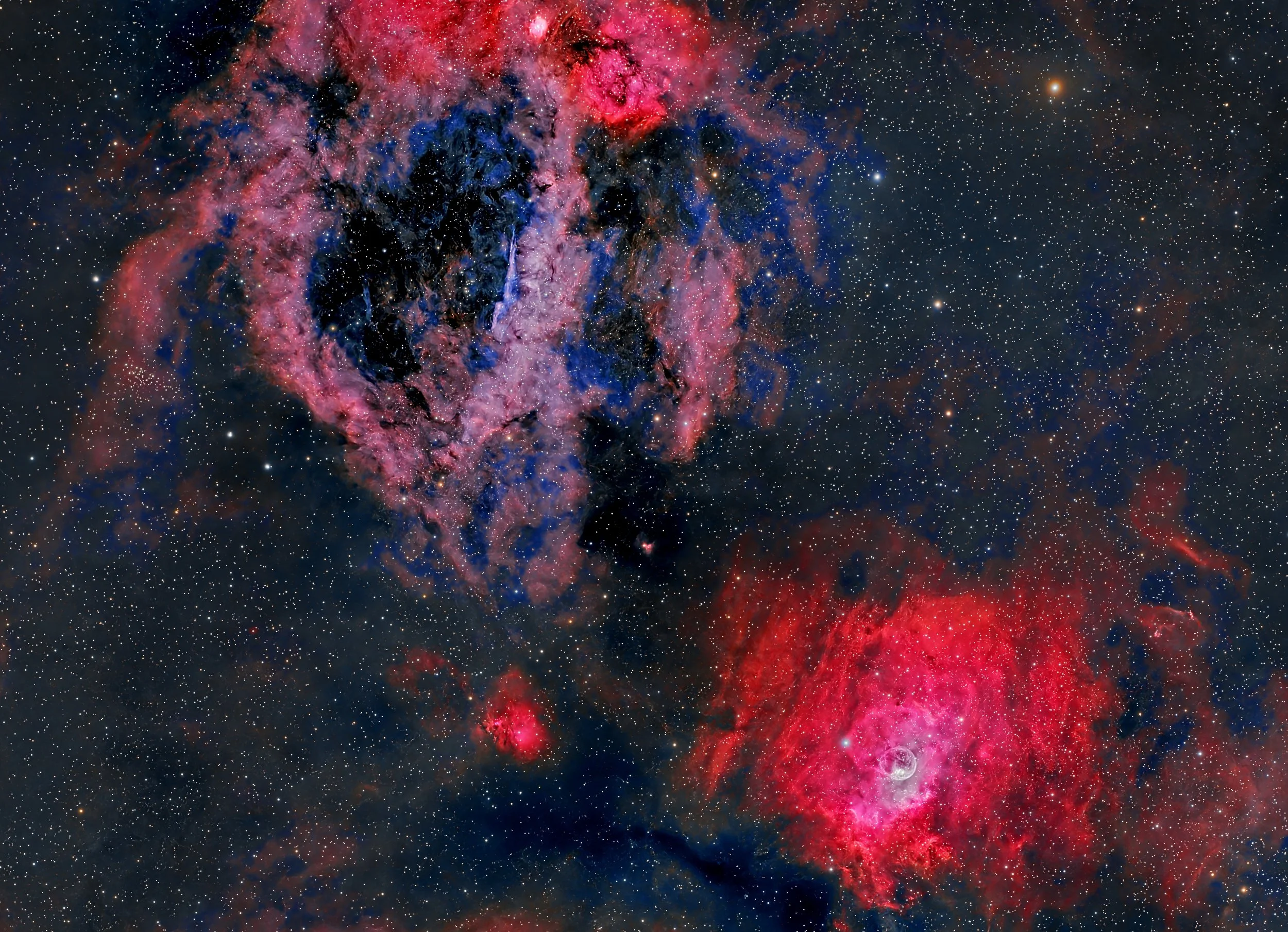

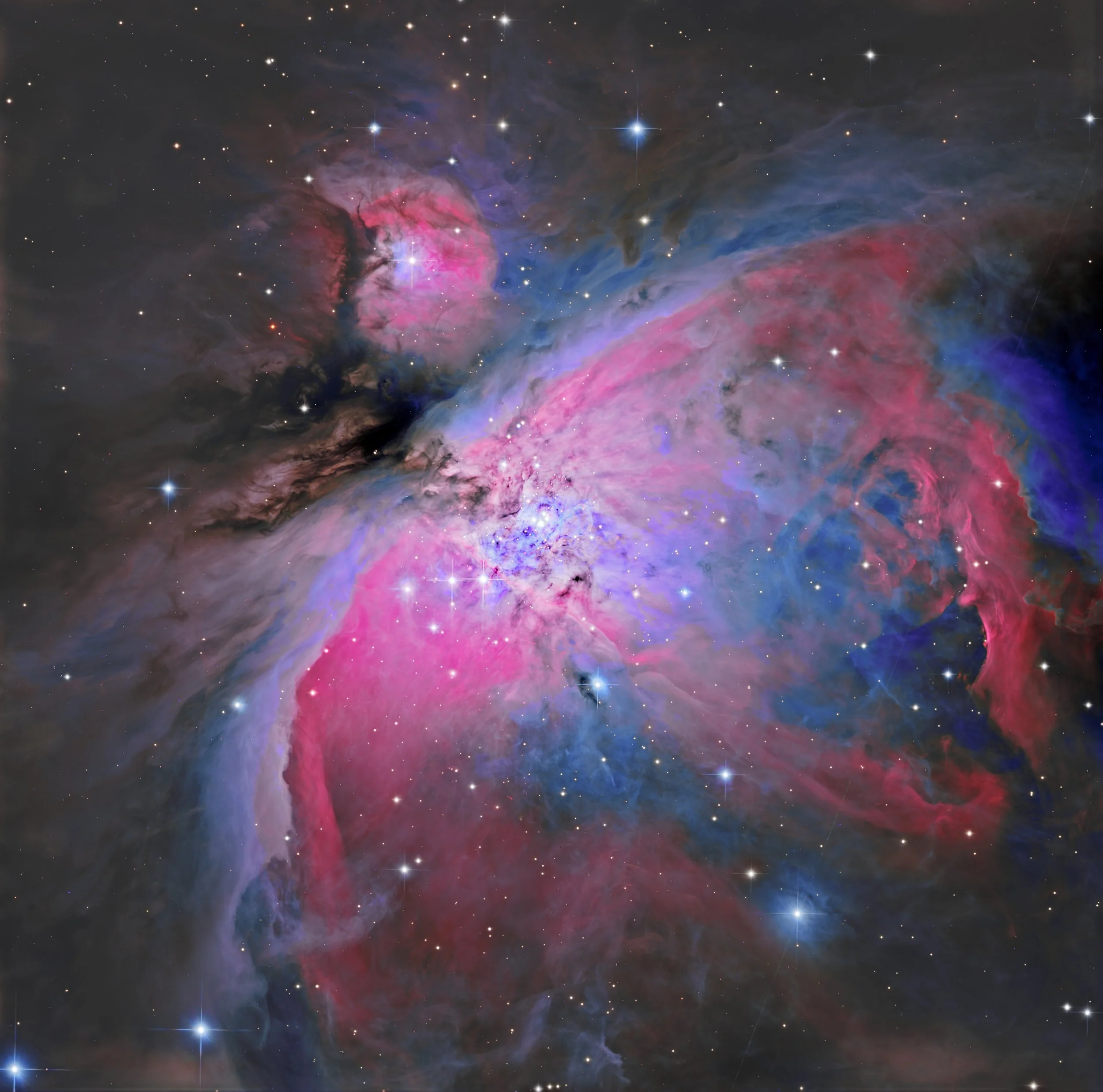
M42 is the Messier designation for the Orion Nebula, one of the brightest and most famous nebulae in the night sky. It is a diffuse nebula and massive stellar nursery located in the constellation Orion, just below the three stars of Orion's Belt. At the heart of the nebula is a very young, tight cluster of hot, massive stars known as the Trapezium Cluster. The intense ultraviolet radiation from these stars is what causes the surrounding gas to glow brightly, sculpting the nebula's iconic shape.
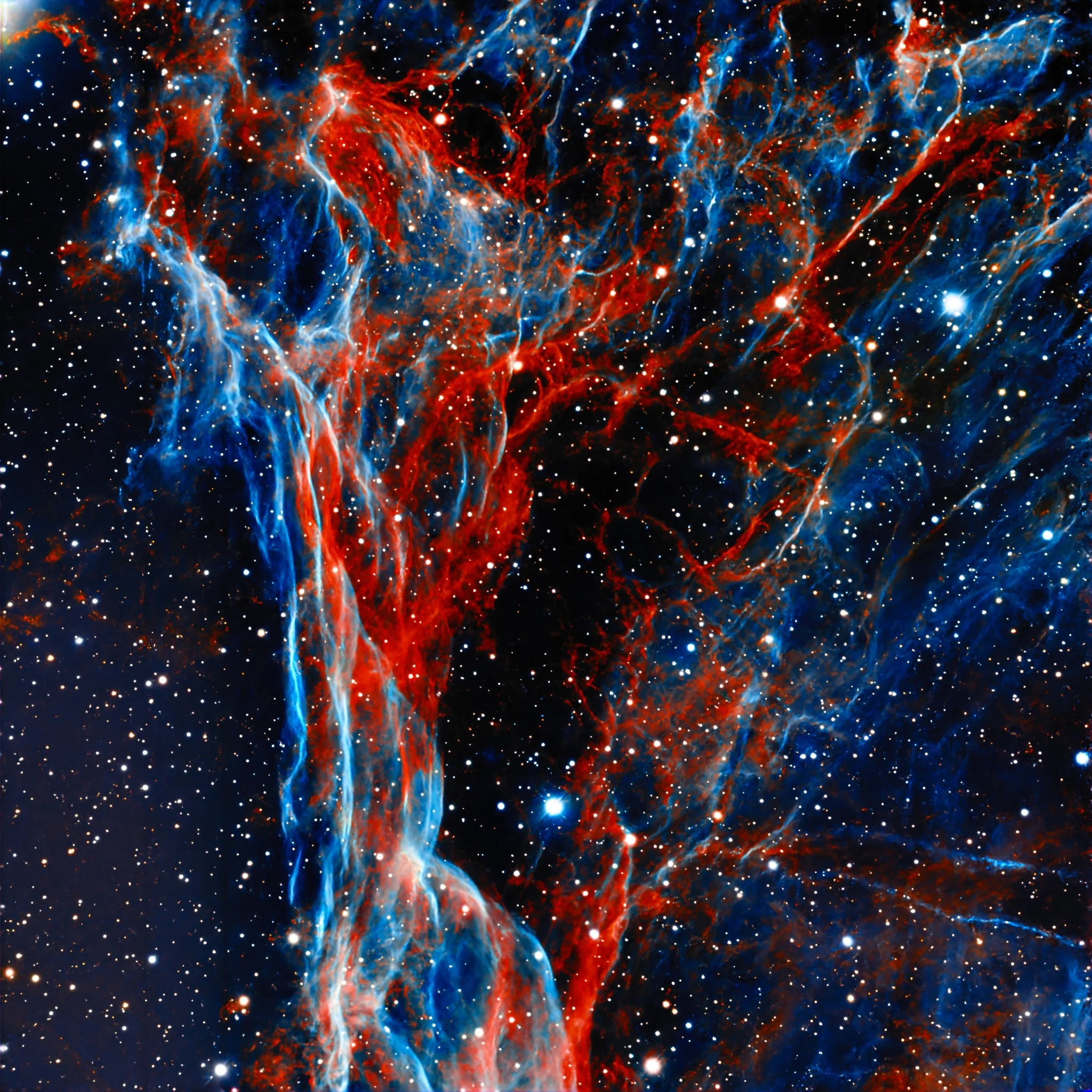
Pickering's Trianglea prominent part of the Veil Nebula. It, along with the entire Veil Nebula, is the remnant of a massive star that exploded as a supernova between 10,000 and 20,000 years ago. The shockwaves from the explosion are still expanding into space, heating and ionizing the surrounding interstellar gas and dust.
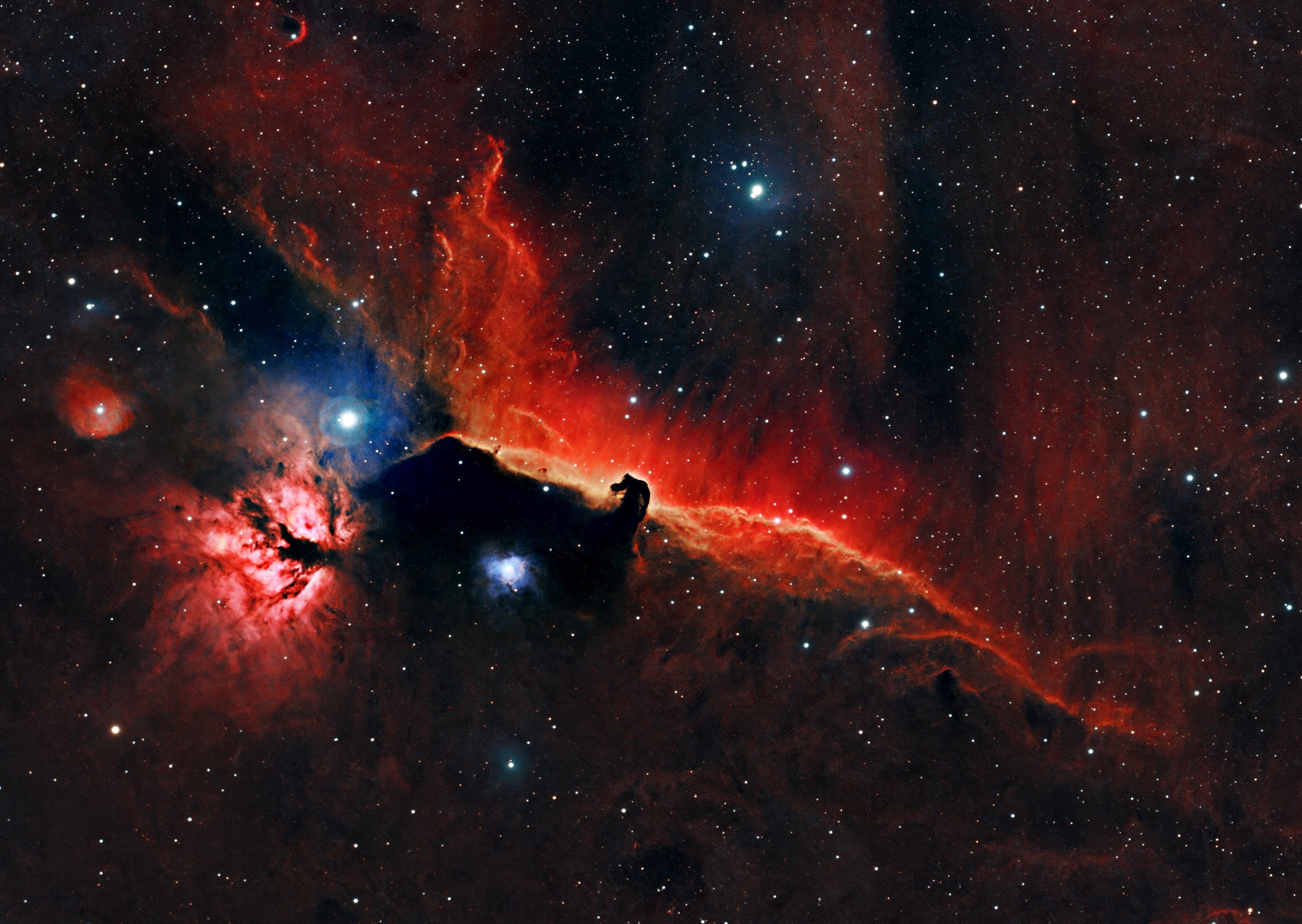
The Horsehead Nebula, B33, is a dark, cold, and dense cloud of gas and dust that blocks light from the emission nebula, IC 434, behind it. This creates the silhouette of a horse's head that makes the nebula so distinct. The background emission nebula glows a faint pinkish color due to radiation from the nearby hot star Sigma Orionis. The nebula's distinct shape is constantly being sculpted by the intense stellar winds and radiation from nearby stars. Astronomers estimate that in about five million years, the Horsehead formation will likely disintegrate due to this erosion.
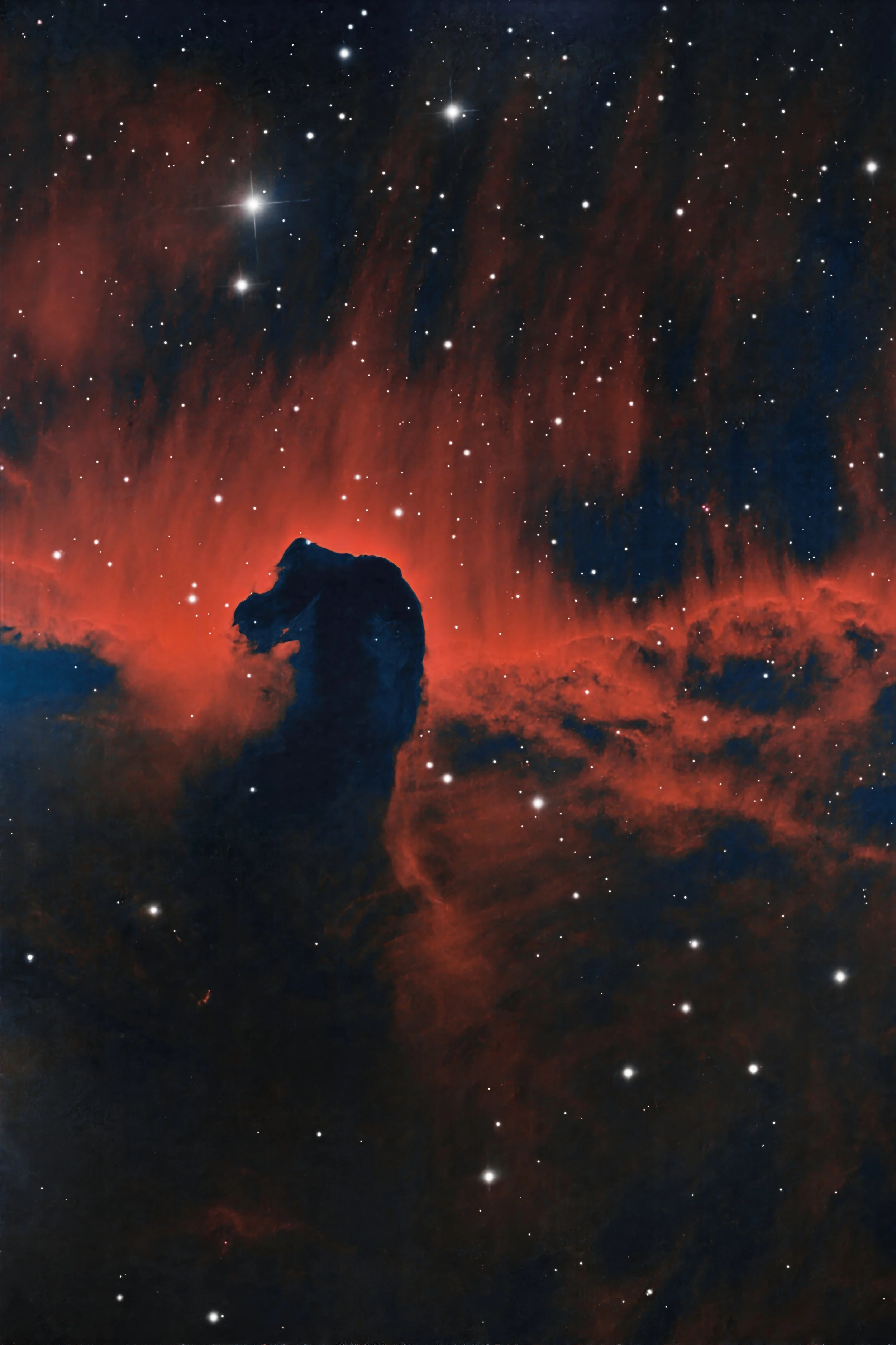
Close-up of B33, the Horsehead Nebula
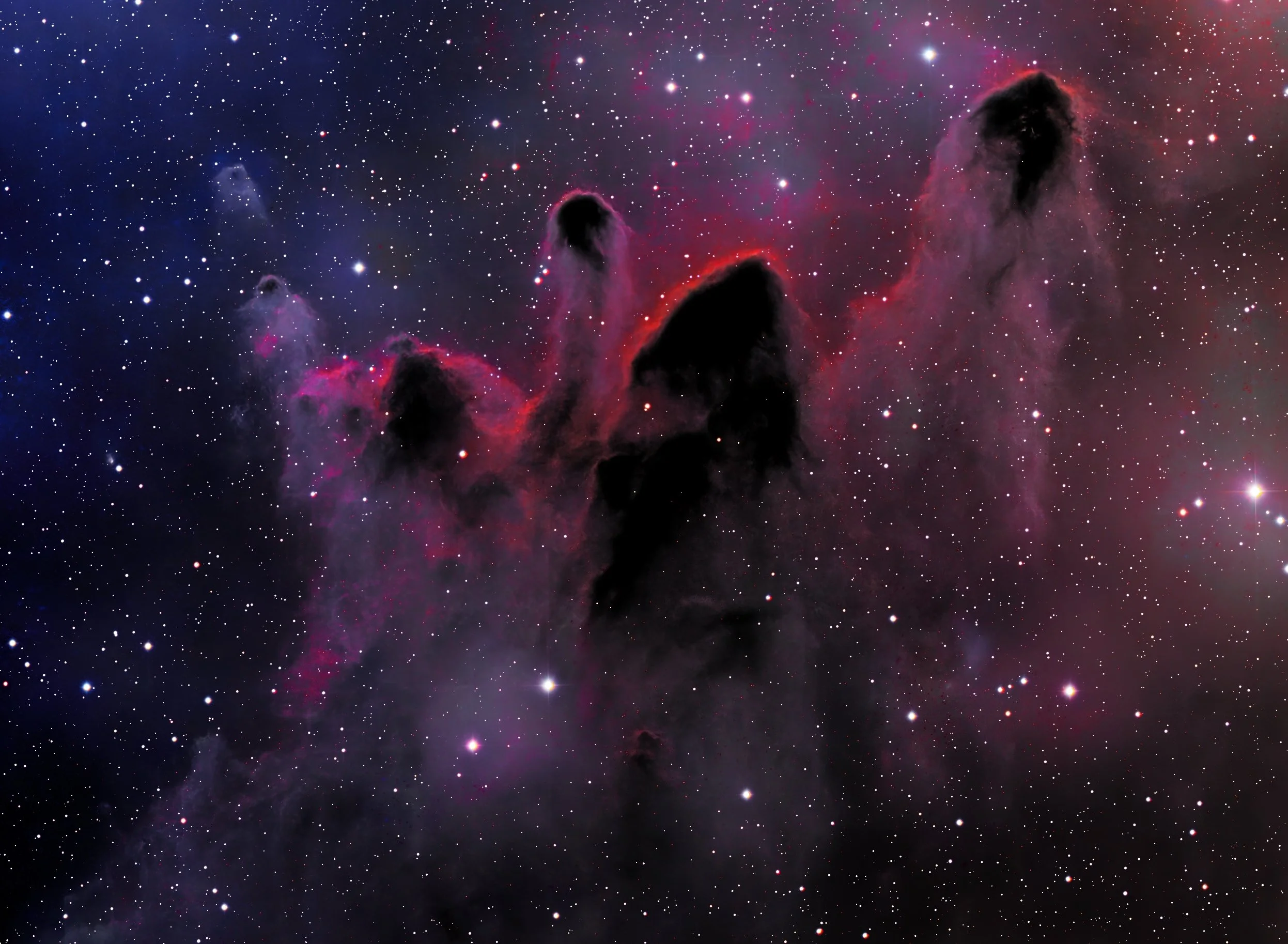
CG 30 and CG 31 are a group of cometary globules, which are isolated, compact clouds of gas and dust with a distinctive comet-like shape. They are located within the Gum Nebula, a large, expanding cloud of ionized hydrogen.

Sh 2-129, commonly known as the Flying Bat Nebula, is a large, faint emission nebula. The even fainter and more recently discovered Squid Nebula (Ou4), which appears to be nestled within it. This cosmic pair lies approximately 2,300 light-years away.
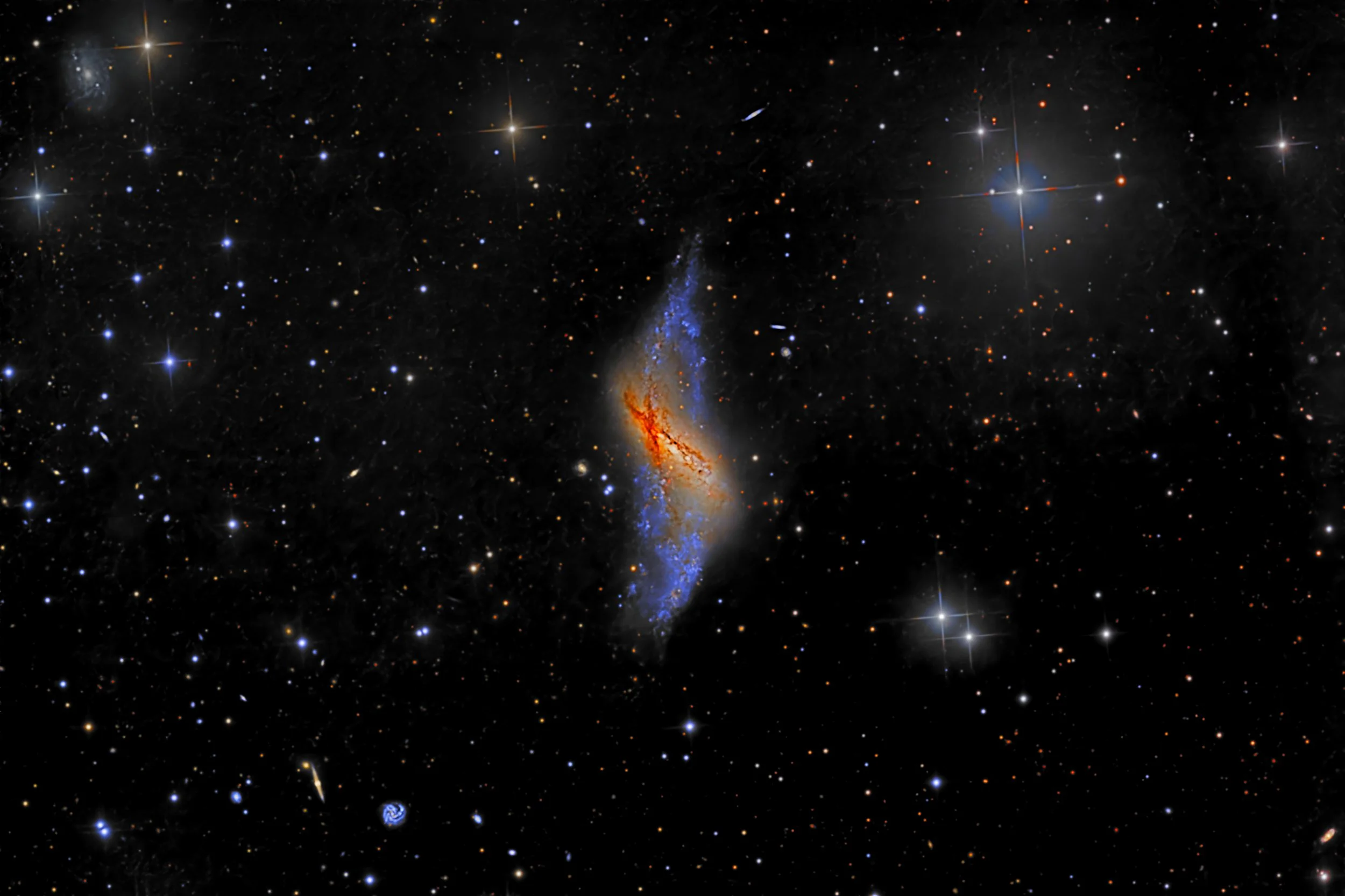
NGC 660 is a rare polar-ring galaxy located approximately 45 million light-years away. This type of galaxy is characterized by a ring of stars, gas, and dust orbiting almost perpendicular to the main galactic disk. he galaxy has a prominent tilted ring stretching over 50,000 light-years, containing bright blue and red supergiant stars and active star-forming regions.
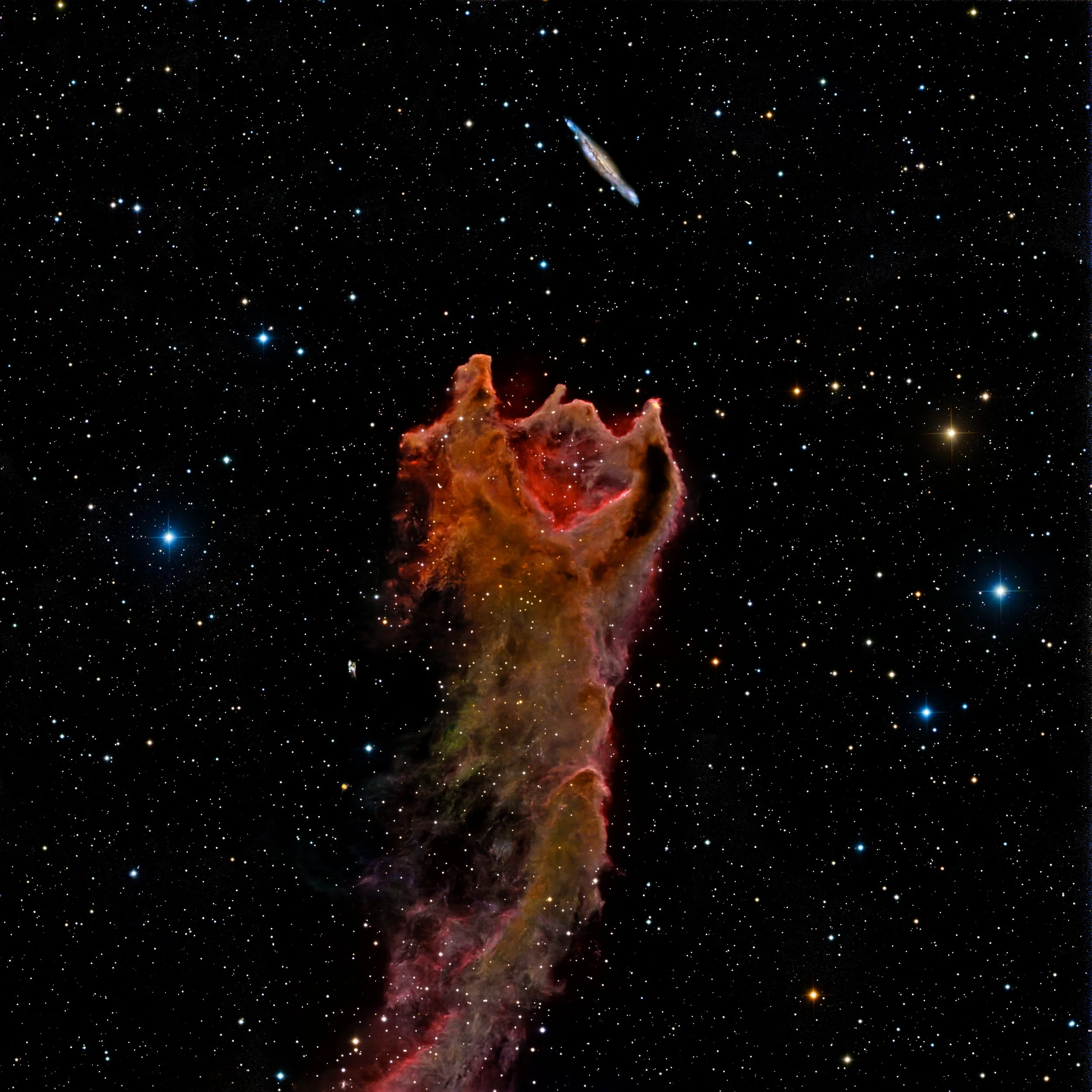
CG 4, often referred to as "God's Hand" or the "Mouth of the Beast," is a prominent cometary globule located approximately 1,300 light-years away.
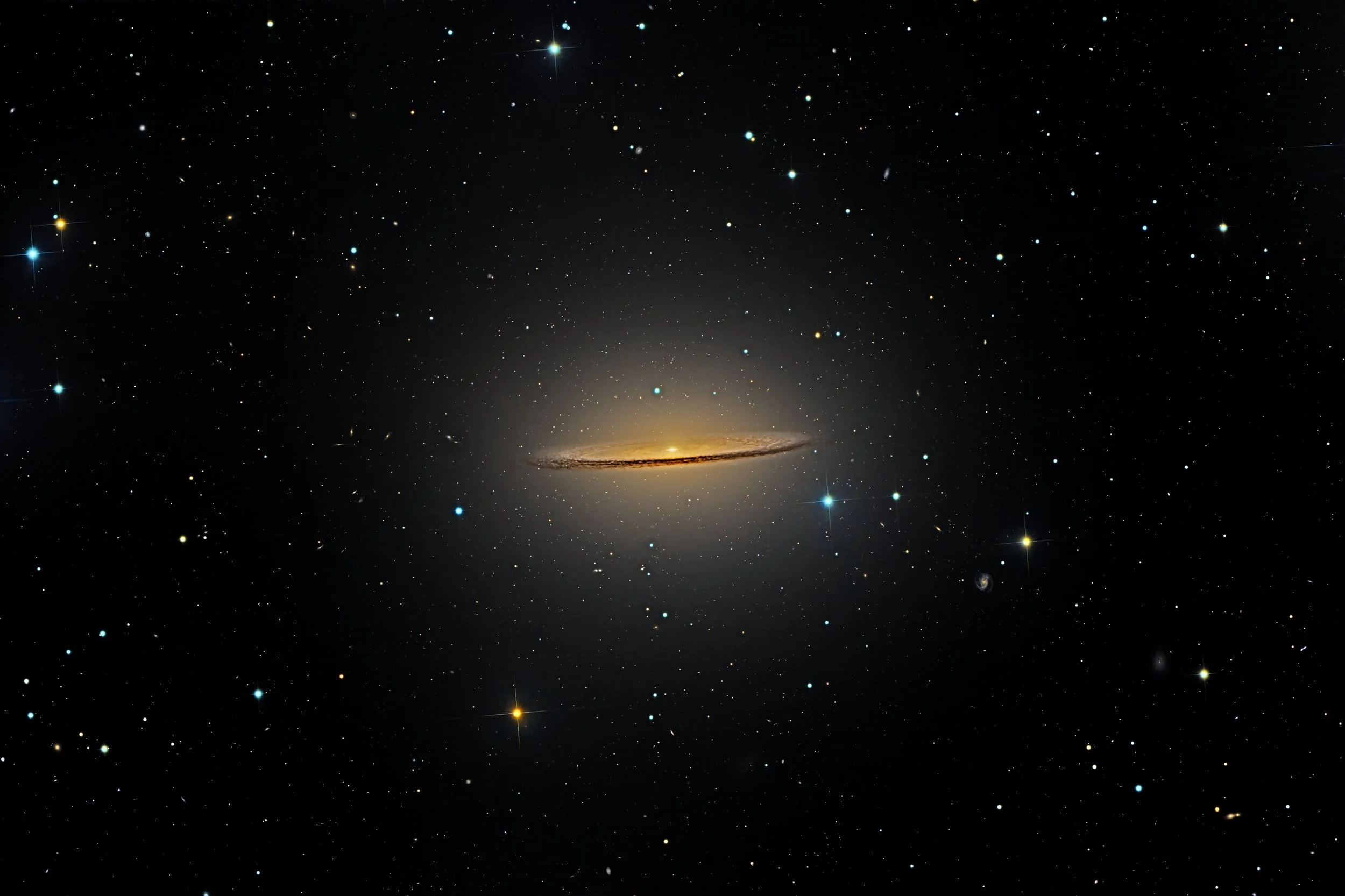
M104, also known as the Sombrero Galaxy, is an unbarred spiral galaxy. At its center lies one of the most massive black holes ever found in a nearby galaxy, weighing approximately one billion times the mass of our Sun.
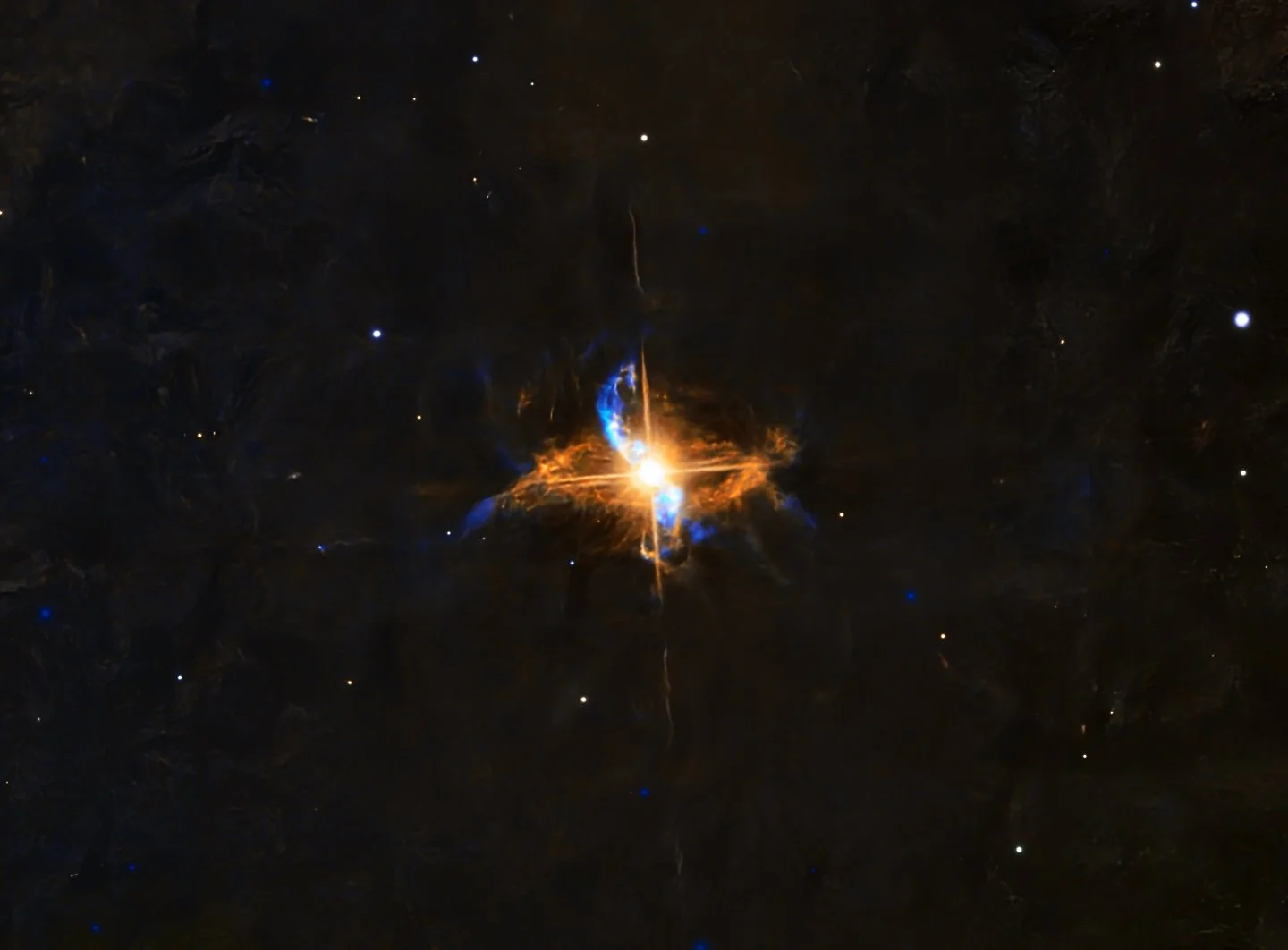
R Aquarii is a symbiotic variable star systems, located approximately 700 light-years away. This unique binary system consists of a pulsating red giant star and a hot, dense white dwarf. The white dwarf's strong gravity siphons material from the red giant onto its surface. When enough hydrogen gas accumulates, it can trigger a thermonuclear explosion on the white dwarf's surface, similar to a nova. These periodic outbursts eject huge filaments of gas and plasma into space.
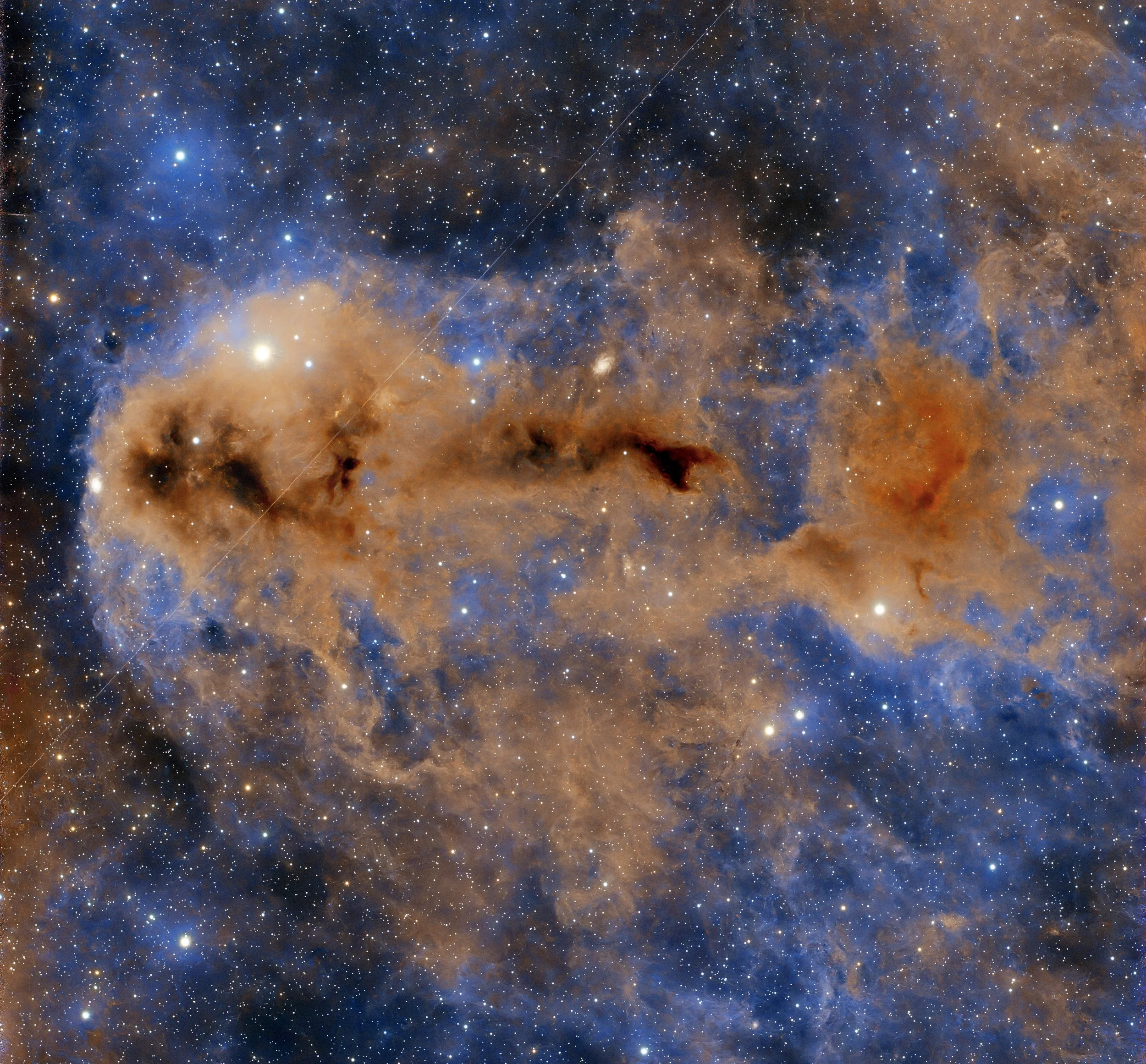
LDN 1251, a dark, star-forming molecular cloud located about 1,000 light-years away.
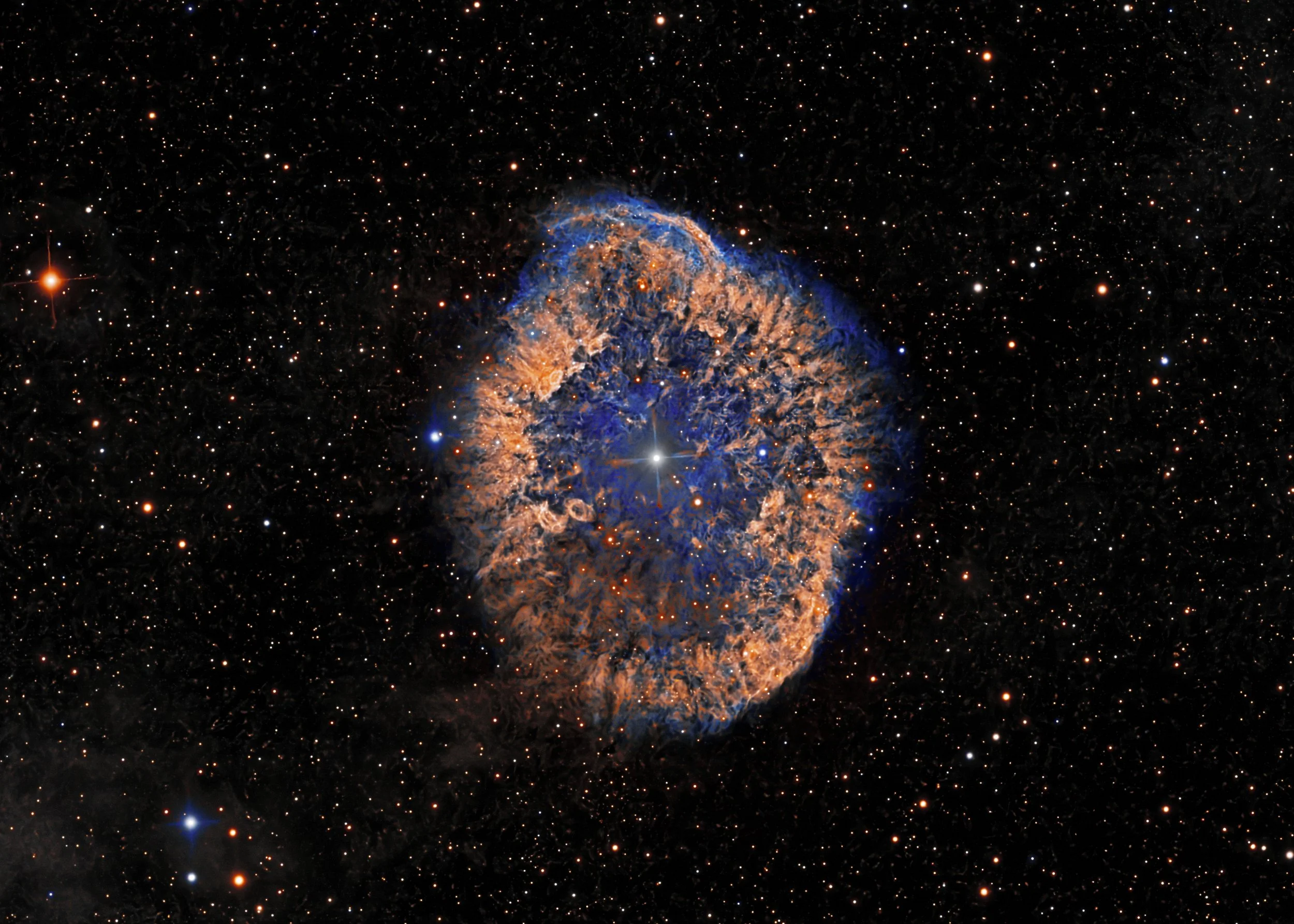
RCW 58 is a ynamic ring nebula located in the southern constellation of Carina. The nebula was formed by the powerful stellar winds from its central star, a massive and luminous Wolf-Rayet star known as WR 40. WR 40 is a "Wolf-Rayet" star, a rare type of massive star that quickly sheds its outer layers through powerful stellar winds. These stars are extremely hot and much more luminous than the sun.
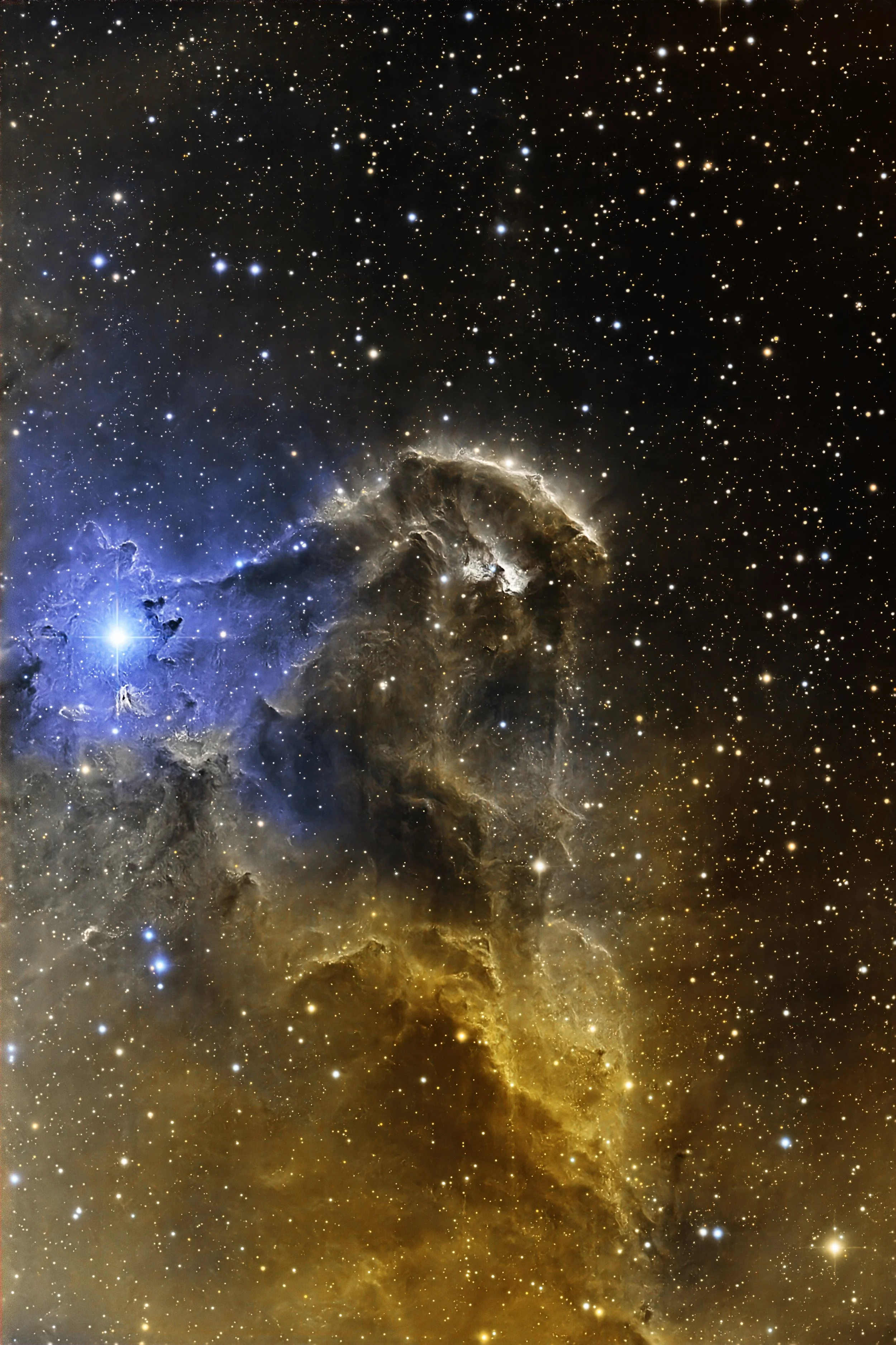
RCW 85, also known as the Devil's Tower Nebula, is a faint emission nebula located in the southern constellation Centaurus.
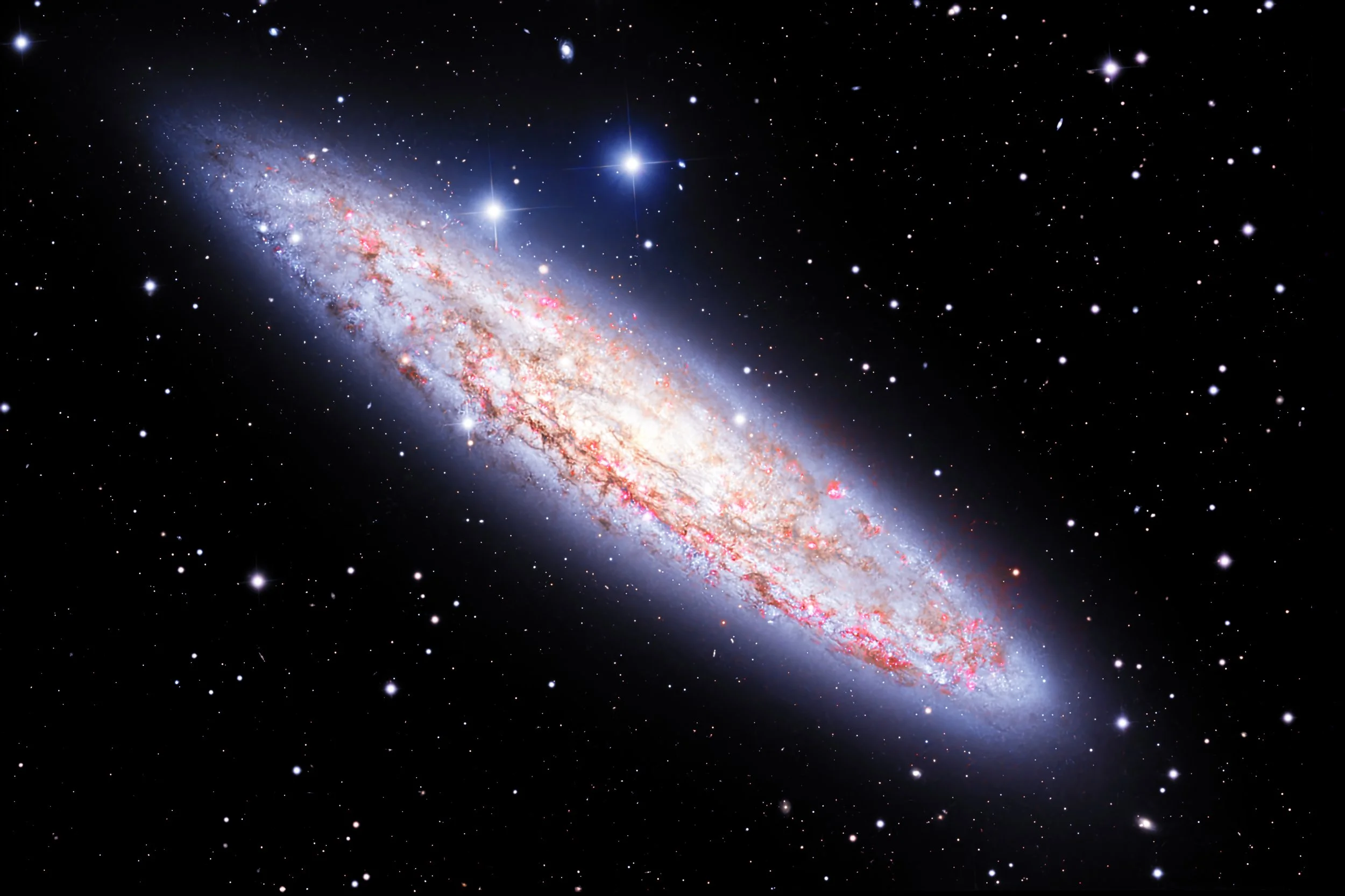
NGC 253, also known as the Sculptor Galaxy, is a starburst spiral galaxy located about 11 to 13 million light-years away. Thousands of young, blue stars are ablaze within the galaxy, interspersed with dense filaments of gas and dust.
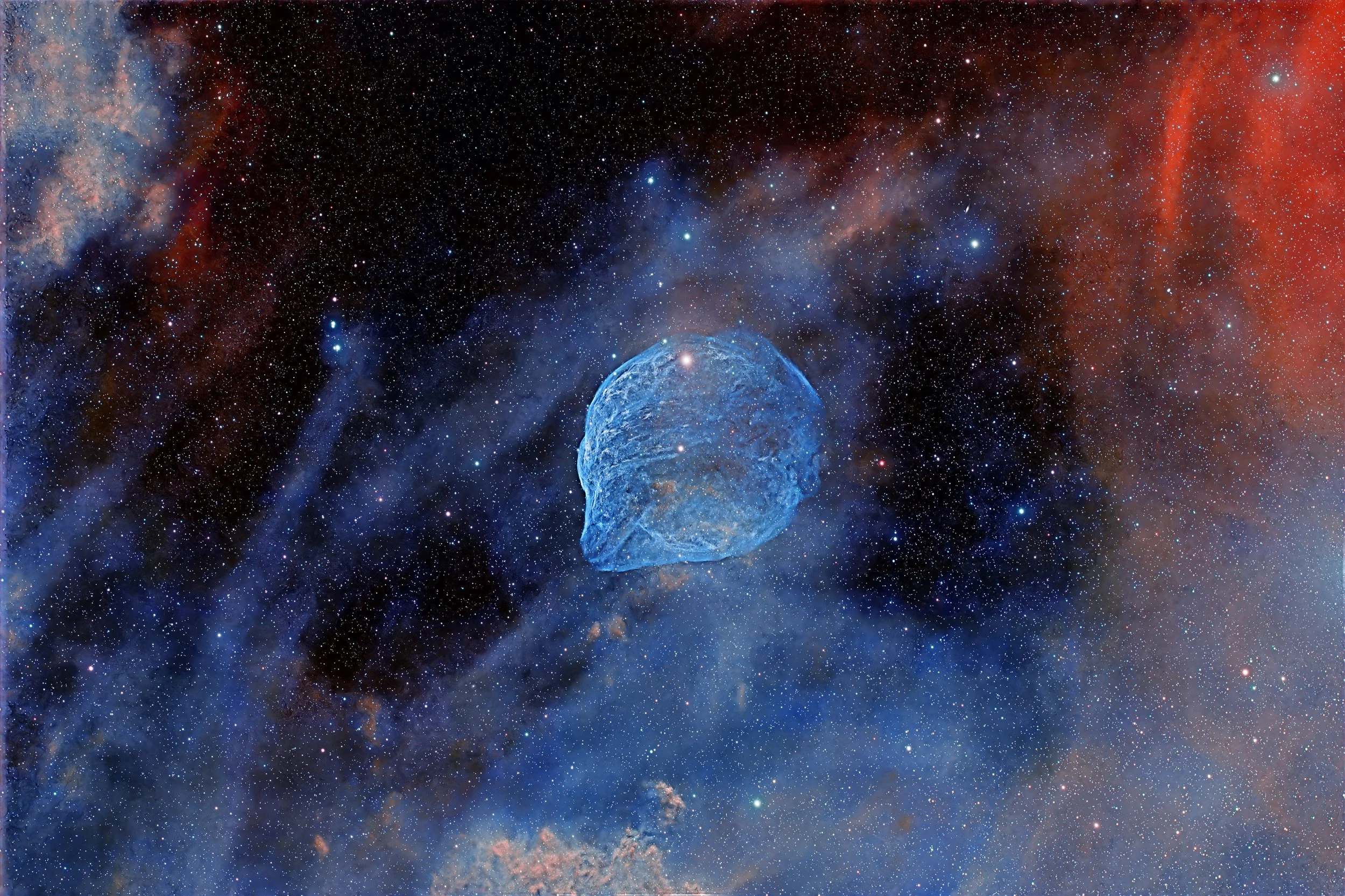
SH 2-308, also known as the Dolphin-Head Nebula, is a bubble-shaped emission nebula located approximately 5,200 light-years away. The nebula was formed by stellar winds from a massive Wolf-Rayet star at its center. The central star, EZ Canis Majoris (EZ CMa), or WR 6, is a powerful Wolf-Rayet star in a pre-supernova stage.
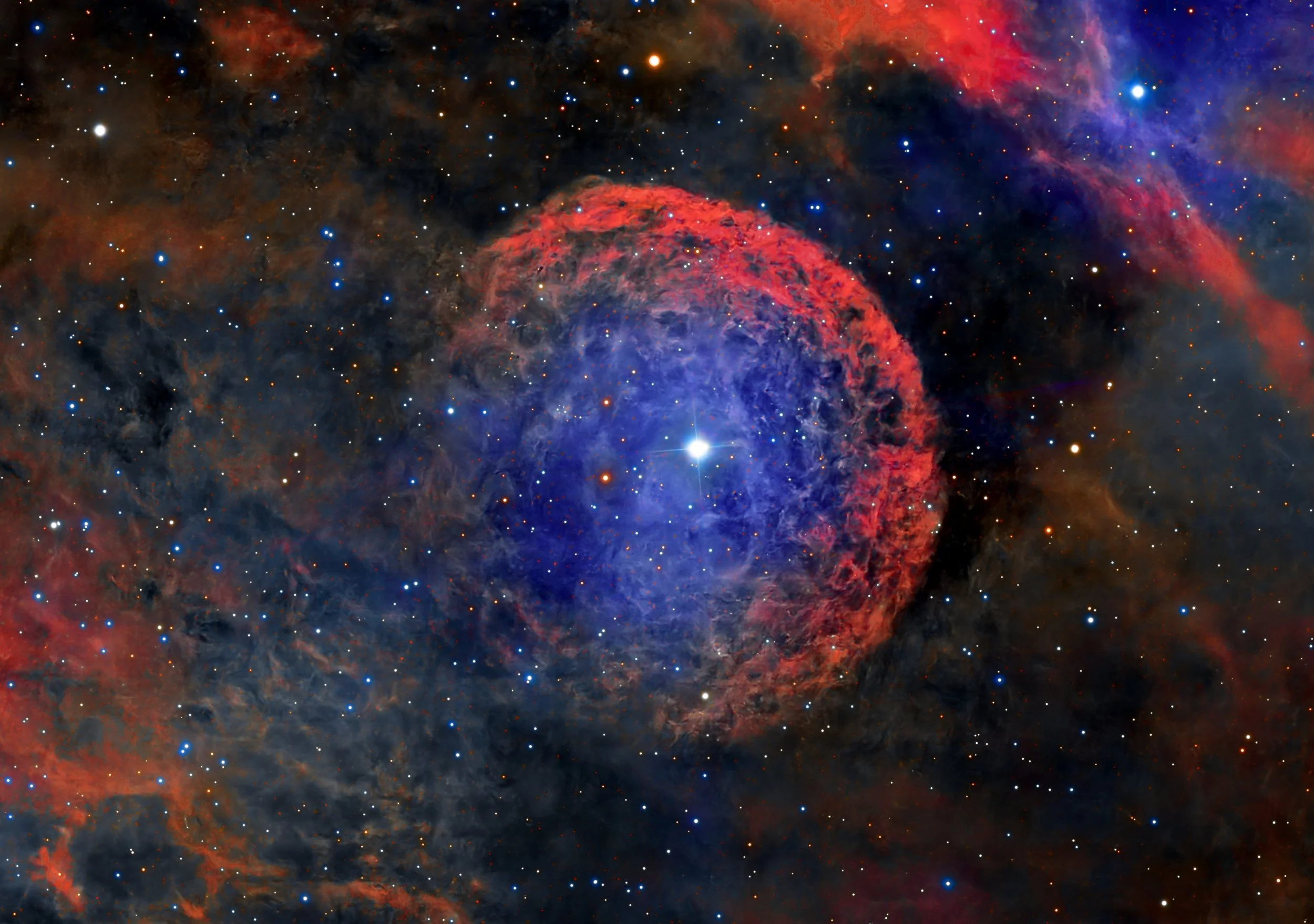
This is WR 16, a massive, highly luminous, and evolved star in a late stage of its life. It is classified as a runaway star because it is moving at a high velocity (61 km/s relative to its local interstellar medium) through space. This high speed is likely the result of a past event, such as a supernova explosion in a binary system that kicked the star out. As the star rushes through space, its stellar wind collides with the slower-moving interstellar gas, creating a curved front known as a bow shock, which is visible in radio and infrared images.
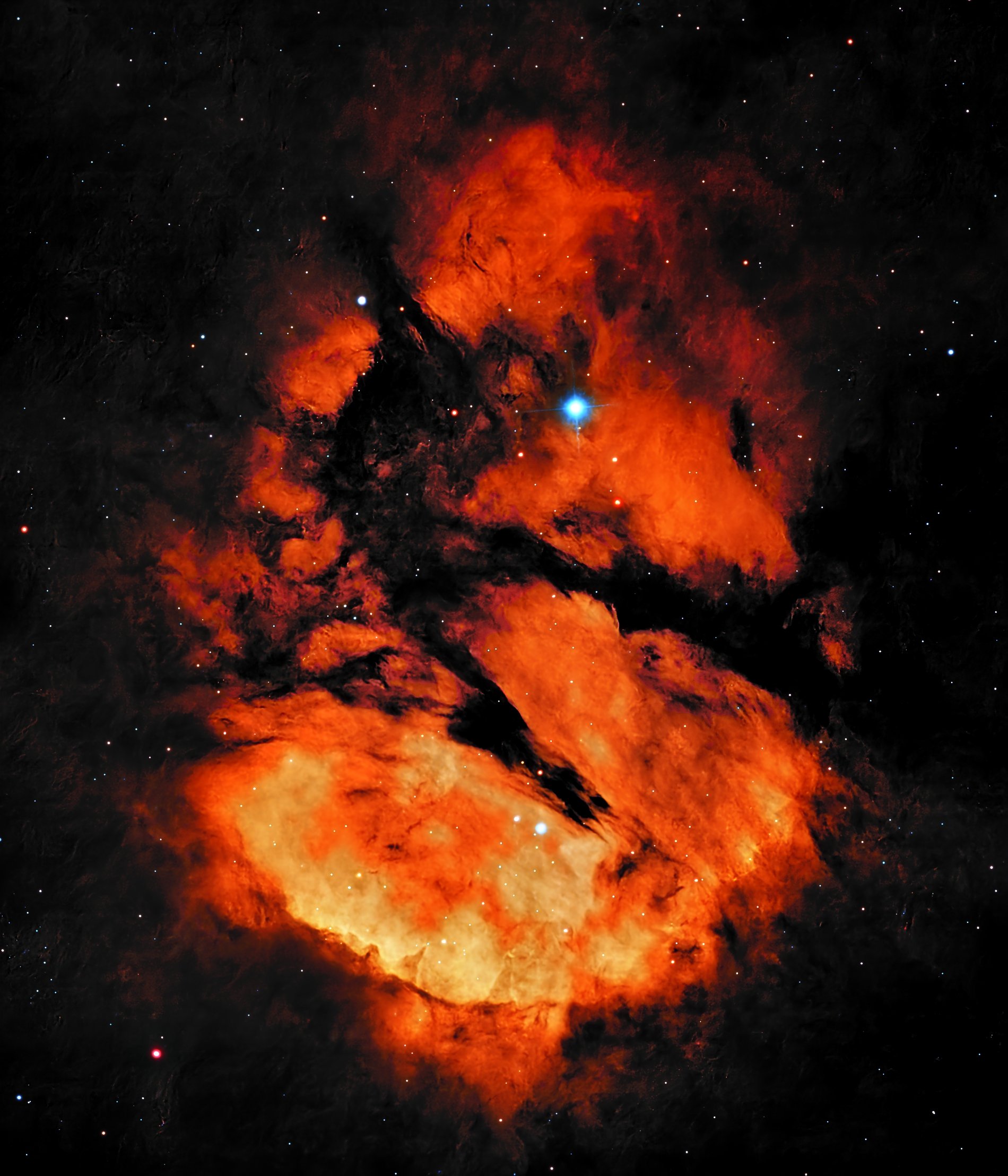
RCW 120 is an emission nebula and H II region located about 4,300 light-years away. It appears as a glowing ring or bubble of ionized gas, about 10 light-years across. The bubble is blown by intense ultraviolet light and stellar winds from a central, massive O-type star, designated CD -38 11636. These forces carve out the bubble from the surrounding molecular cloud. The nebula hosts an unusually large embryonic star, already about 10 times the mass of the Sun, is surrounded by a massive cloud of gas and dust from which it continues to accrete material.
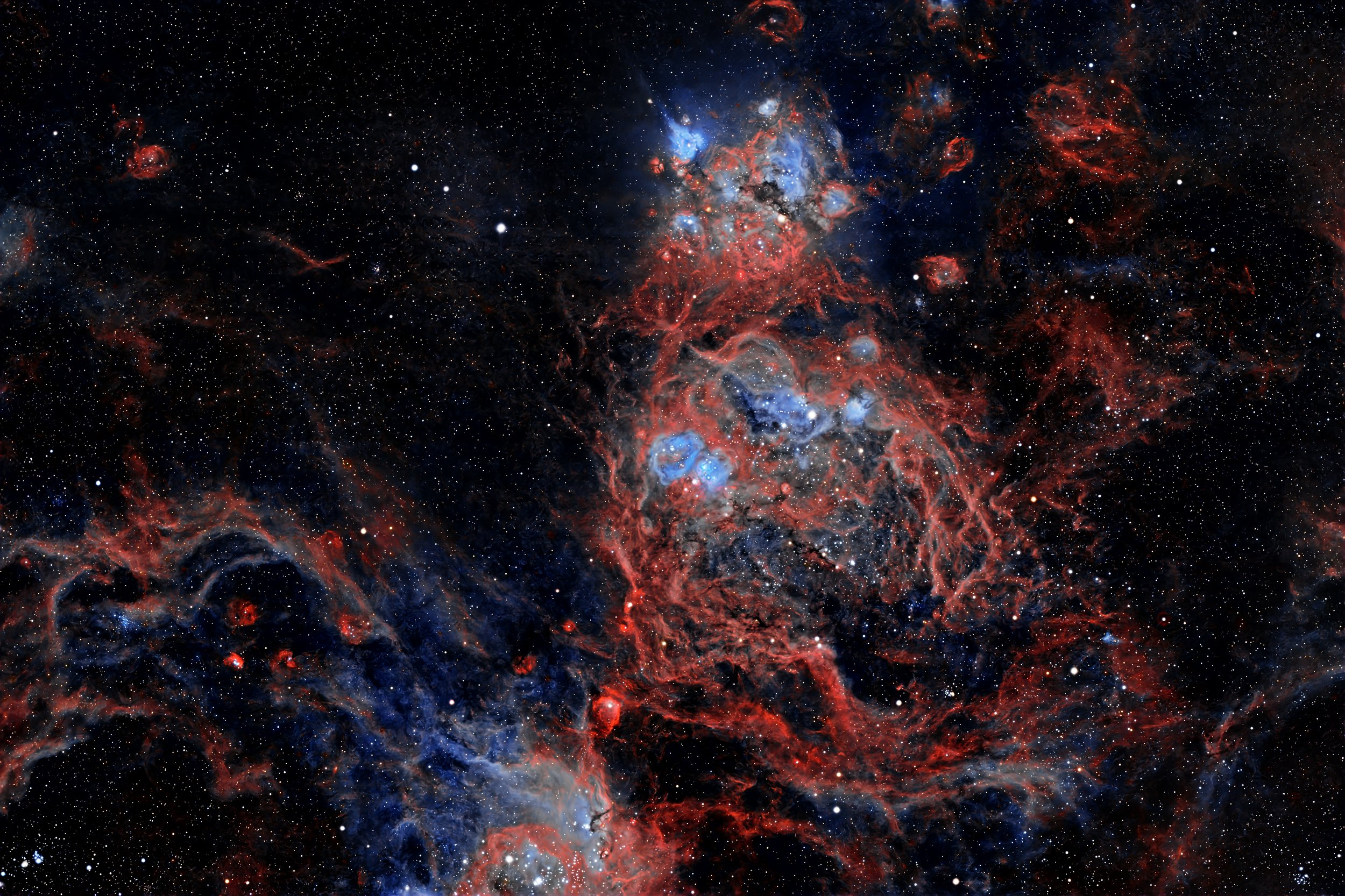
NGC 2077: A Star-Forming Region in the Large Magellanic Cloud. It is an emission nebula about 170,000 light-years from earth. The nebulae in NGC 2077 glow due to the ionization of gases, primarily hydrogen and oxygen, by the intense radiation from the young, hot stars embedded within or nearby. Its colorful glow is a direct result of ultraviolet (UV) radiation emitted by extremely hot, massive, newly formed stars within it. The UV light strips electrons from hydrogen atoms (a process called ionization), and the characteristic red and blue-green light is produced when these electrons recombine with the atoms.
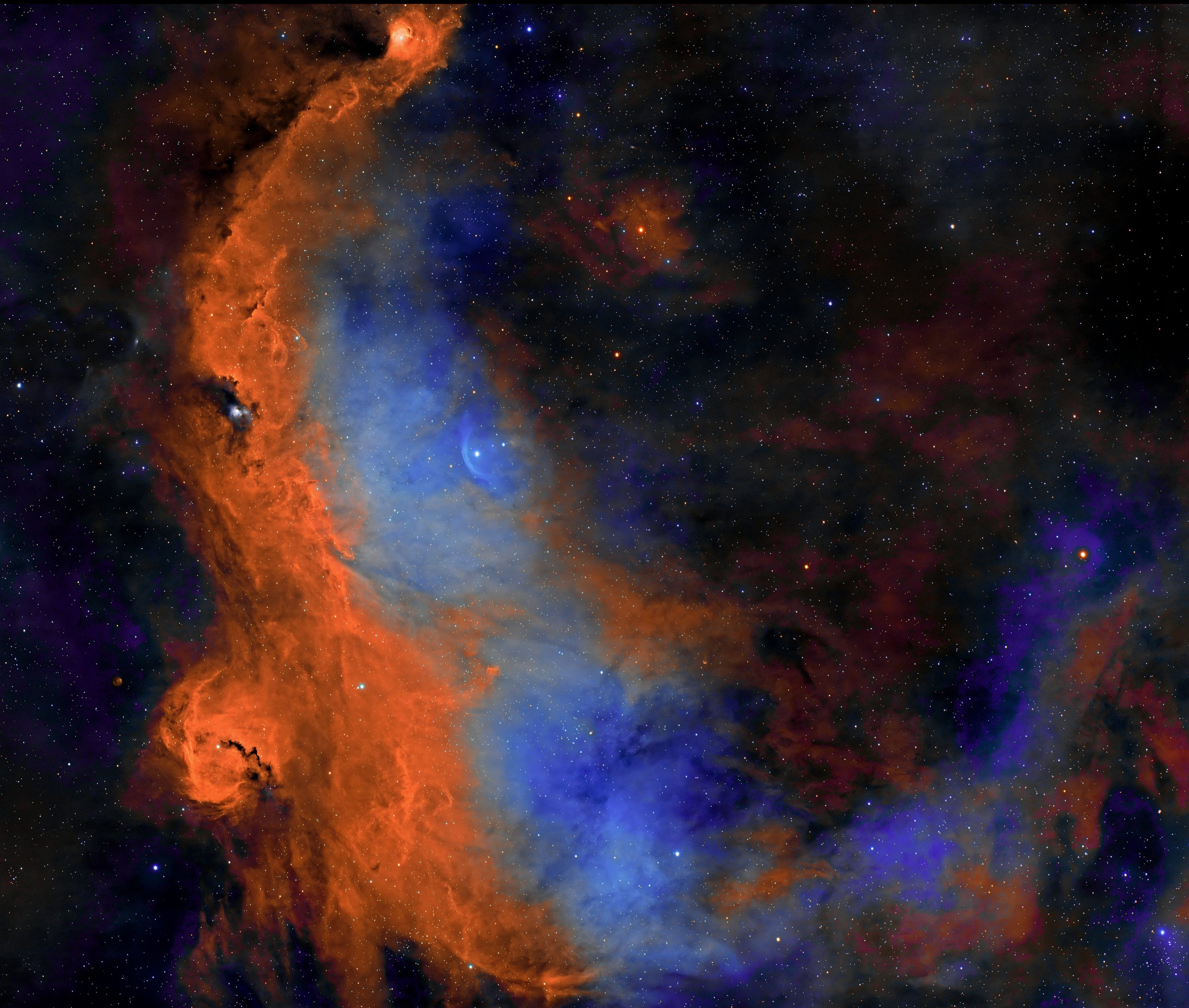
IC 2177, also known as the Seagull Nebula that's nearly 100,000 light-years across. The nebula's glow is powered by an extremely hot and massive star at its center, known as HD 53367. The Seagull Nebula is associated with a distinct bluish arc of gas and dust called a bow shock. This feature is created by the stellar wind of a very fast-moving, massive star, sometimes identified as FN Canis Majoris, which is plowing through the interstellar medium.
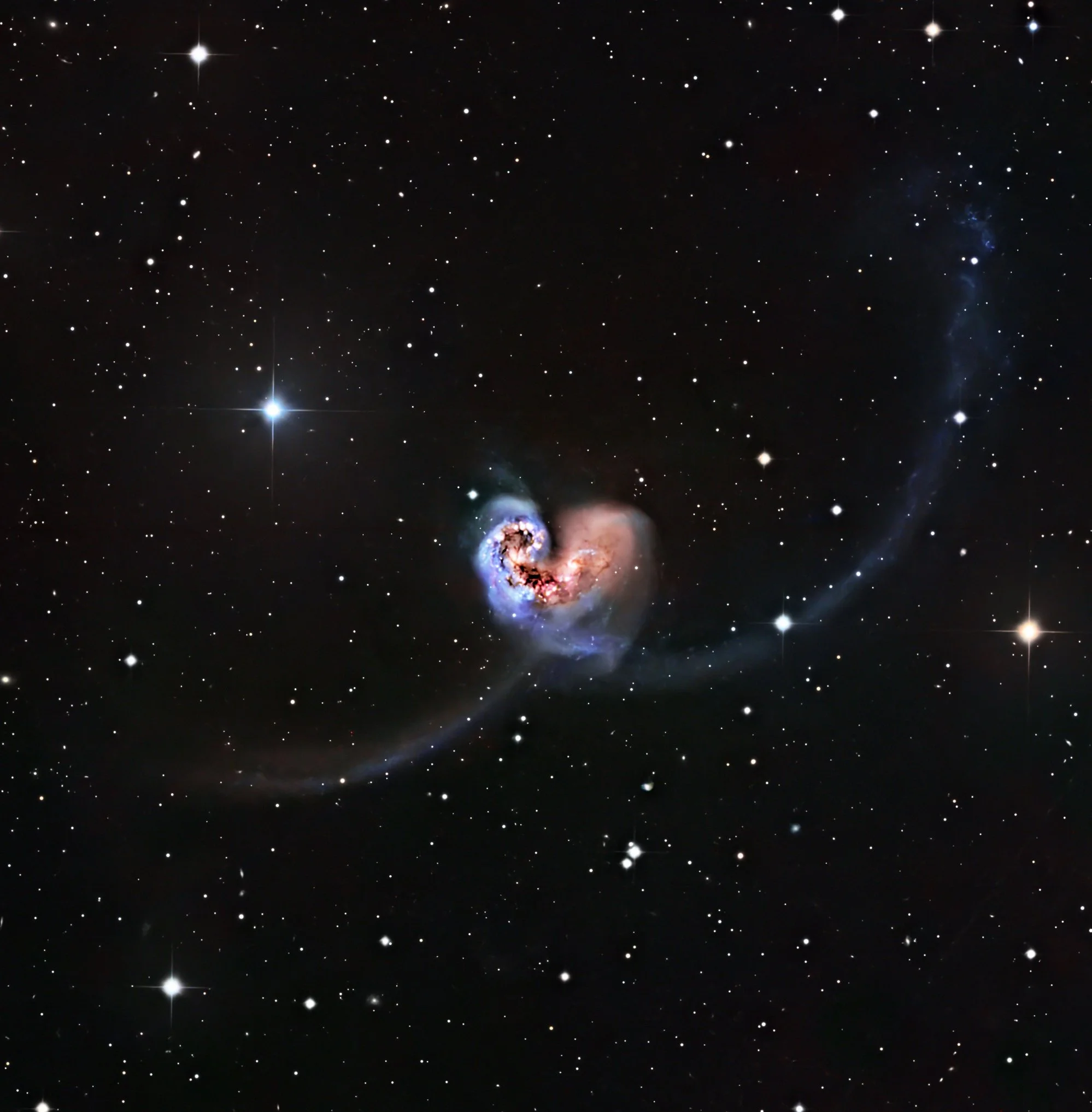
The Antennae Galaxies are a pair of interacting and merging spiral galaxies located approximately 45-70 million light-years away. The galaxies get their distinctive name from the two long tidal tails, of stars, gas, and dust that have been flung out into space as a result of their gravitational interaction.
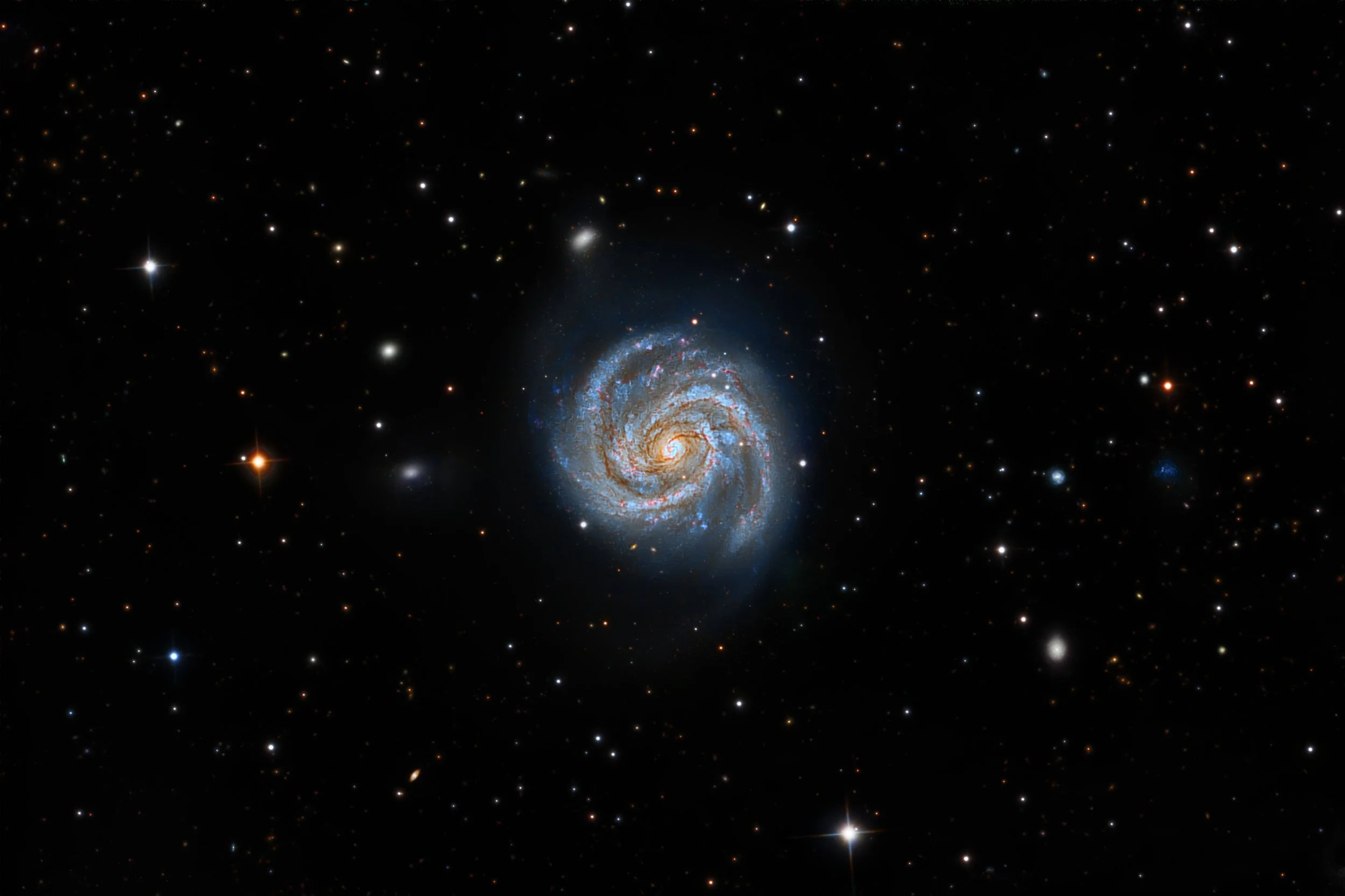
M100 is a classic grand-design spiral galaxy located about 55 million light-years away in the constellation Coma Berenices. Its two long, symmetric spiral arms are sharply defined and rich in blue star-forming regions, making it one of the most photogenic spirals in the Virgo Cluster. Unlike many Virgo galaxies that show obvious signs of disruption, M100 still retains a remarkably orderly structure. A strong central bar and inner spiral structure funnel gas toward the core, fueling ongoing star formation and occasional bursts of activity. At the same time, subtle distortions in its outer disk hint at the gravitational influence of the surrounding cluster environment.
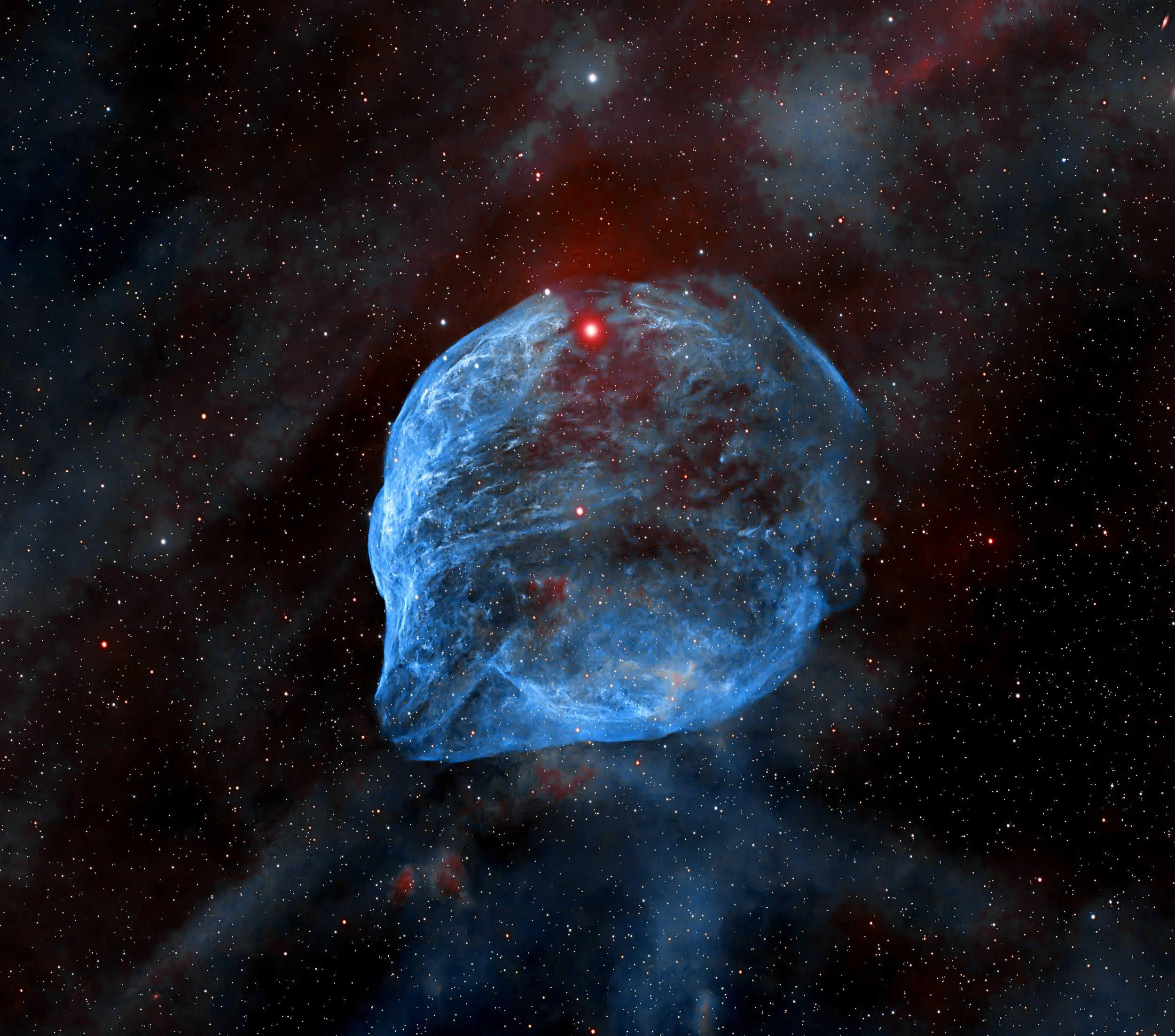
Sh2-308, nicknamed the Dolphin Head Nebula, is one of the most dramatic examples of a stellar wind bubble in our galaxy. It lies in the constellation Canis Major, about 5,000–6,000 light-years away. SH2-308 is sculpted by a dying giant star, WR 6, a massive star in an advanced evolutionary phase. The nebula spans about 35 light-years and is unusually round for something shaped by violent processes.
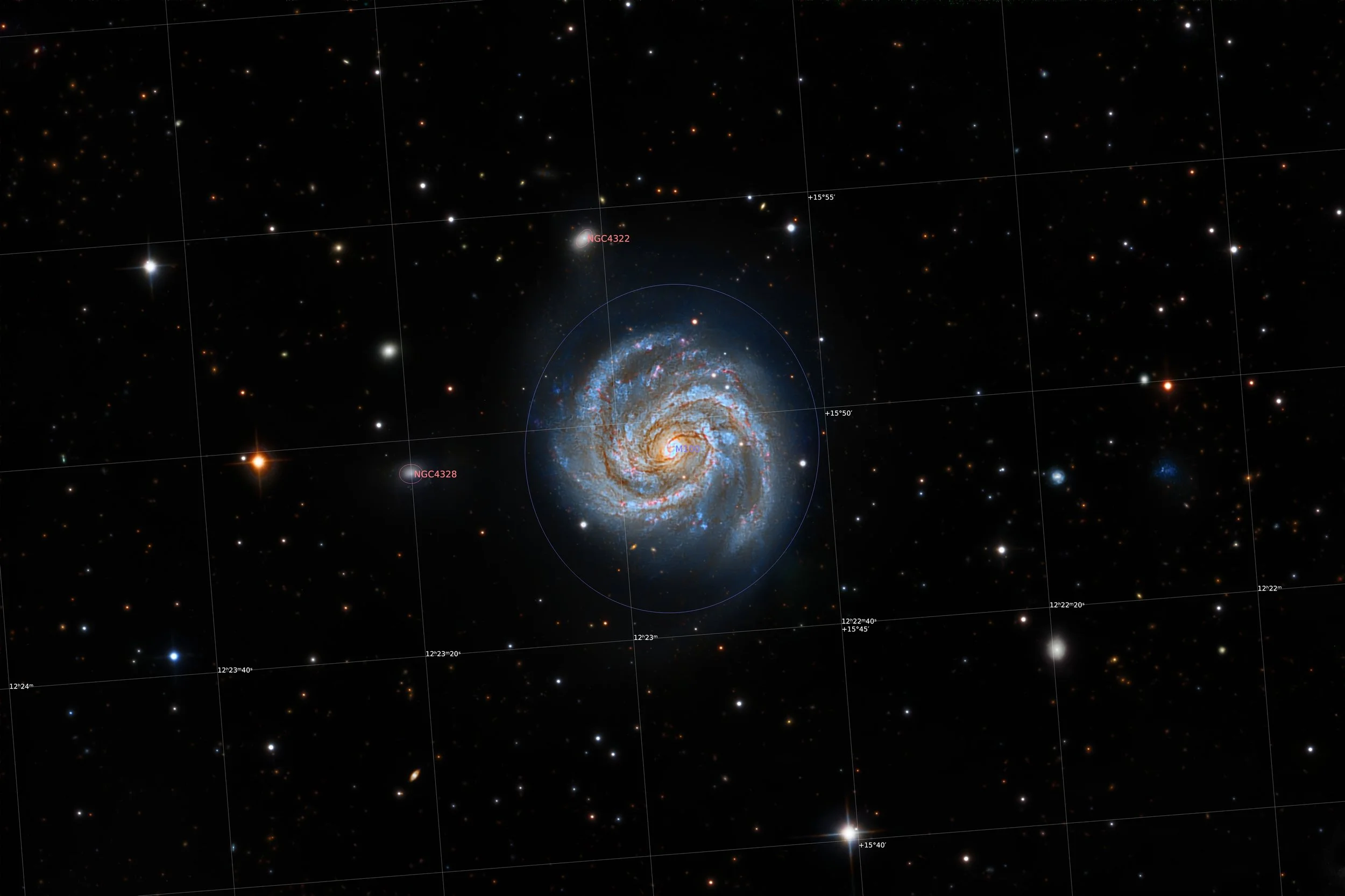
M100 annotated
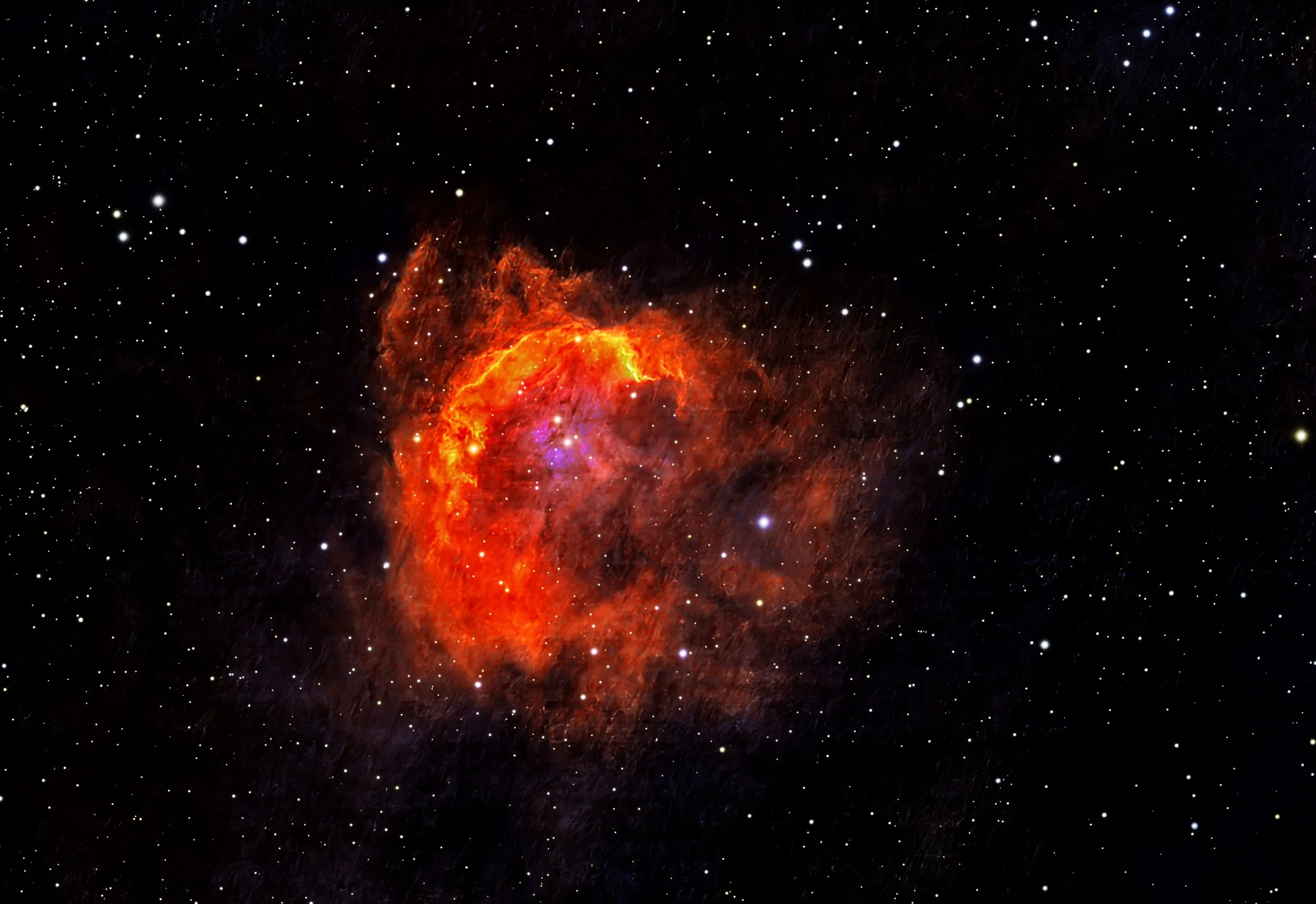
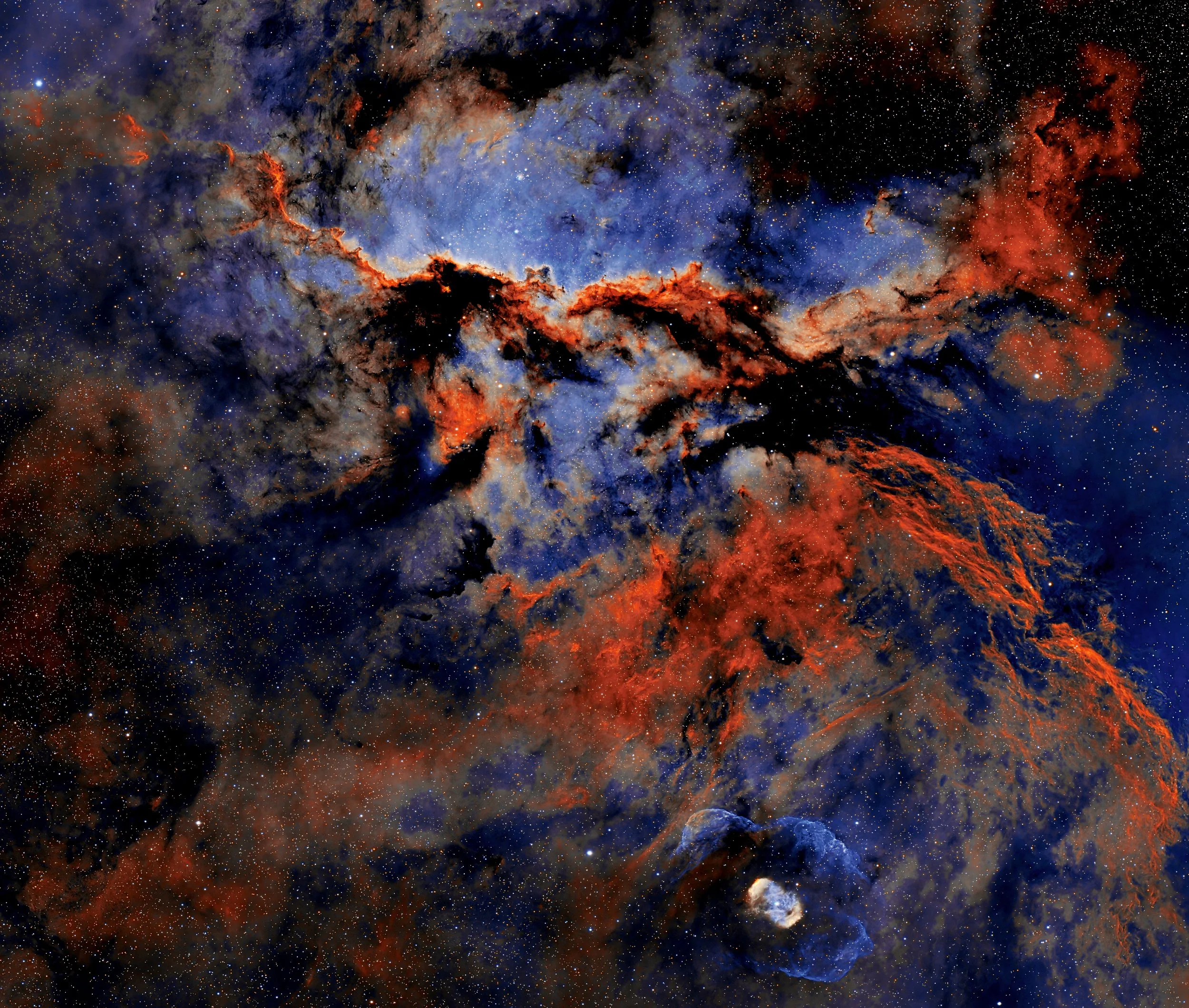
The "Dragons of Ara," officially designated NGC 6188, is a star-forming region located approximately 4,000 light-years away. The nebula's distinctive dragon-like shapes are not static. They are carved by intense stellar winds and powerful ultraviolet radiation emitted by the massive, young stars of the embedded Ara OB1 association.
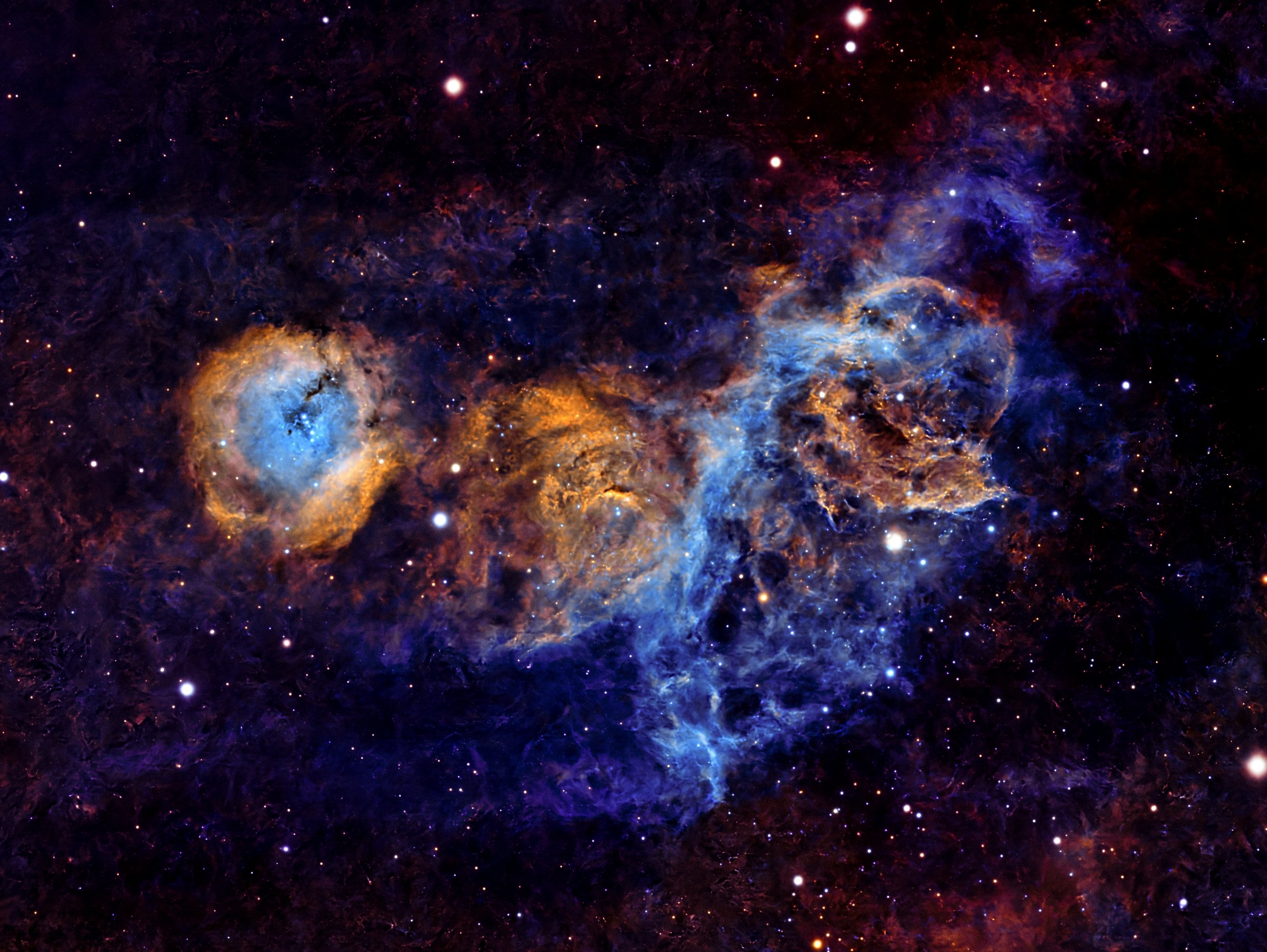
The Jellyfish Nebula, is a famous supernova remnant about 5,000 light-years away in the constellation Gemini. It’s the expanding debris from a massive star that exploded tens of thousands of years ago, and its tangled, filamentary appearance comes from the shock wave plowing into surrounding gas. Unlike clean, spherical remnants, IC 443 looks shredded and asymmetric because it’s crashing into dense molecular clouds on one side and more tenuous gas on the other. IC 443 is especially interesting scientifically because it’s a prime example of a shock–cloud interaction. The supernova blast is compressing and heating nearby molecular material, producing strong H-alpha, [S II], and OIII emission, as well as infrared and gamma-ray radiation.
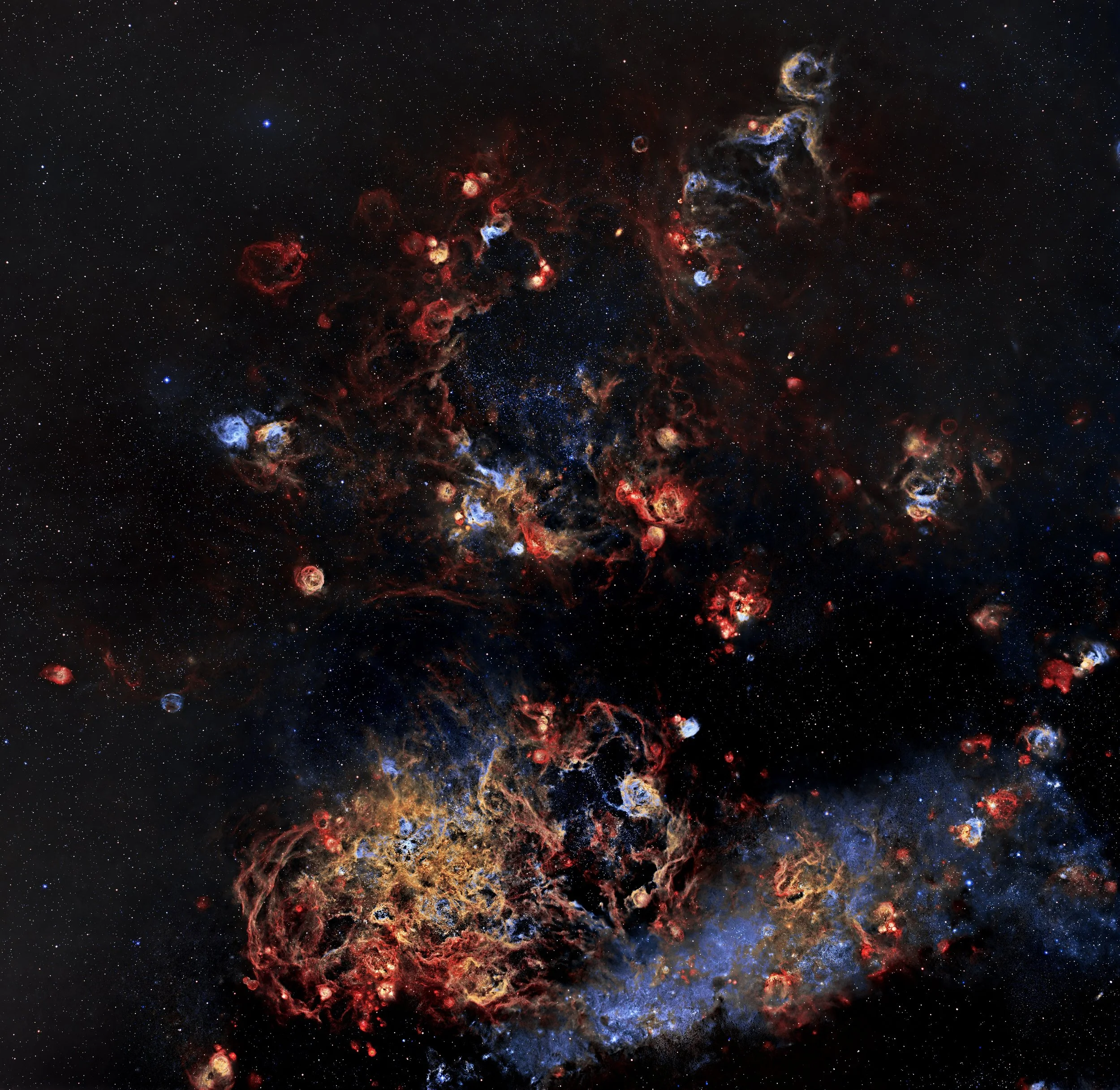
NGC 2014 is a bright star-forming nebula in the Large Magellanic Cloud, about 160,000 light-years from Earth. It’s dominated by hot, massive O- and B-type stars whose intense ultraviolet radiation causes the surrounding hydrogen gas to glow. Visually, NGC 2014 appears clumpy and turbulent rather than smooth, revealing a region where stellar winds and radiation are actively reshaping the cloud that gave birth to the stars.
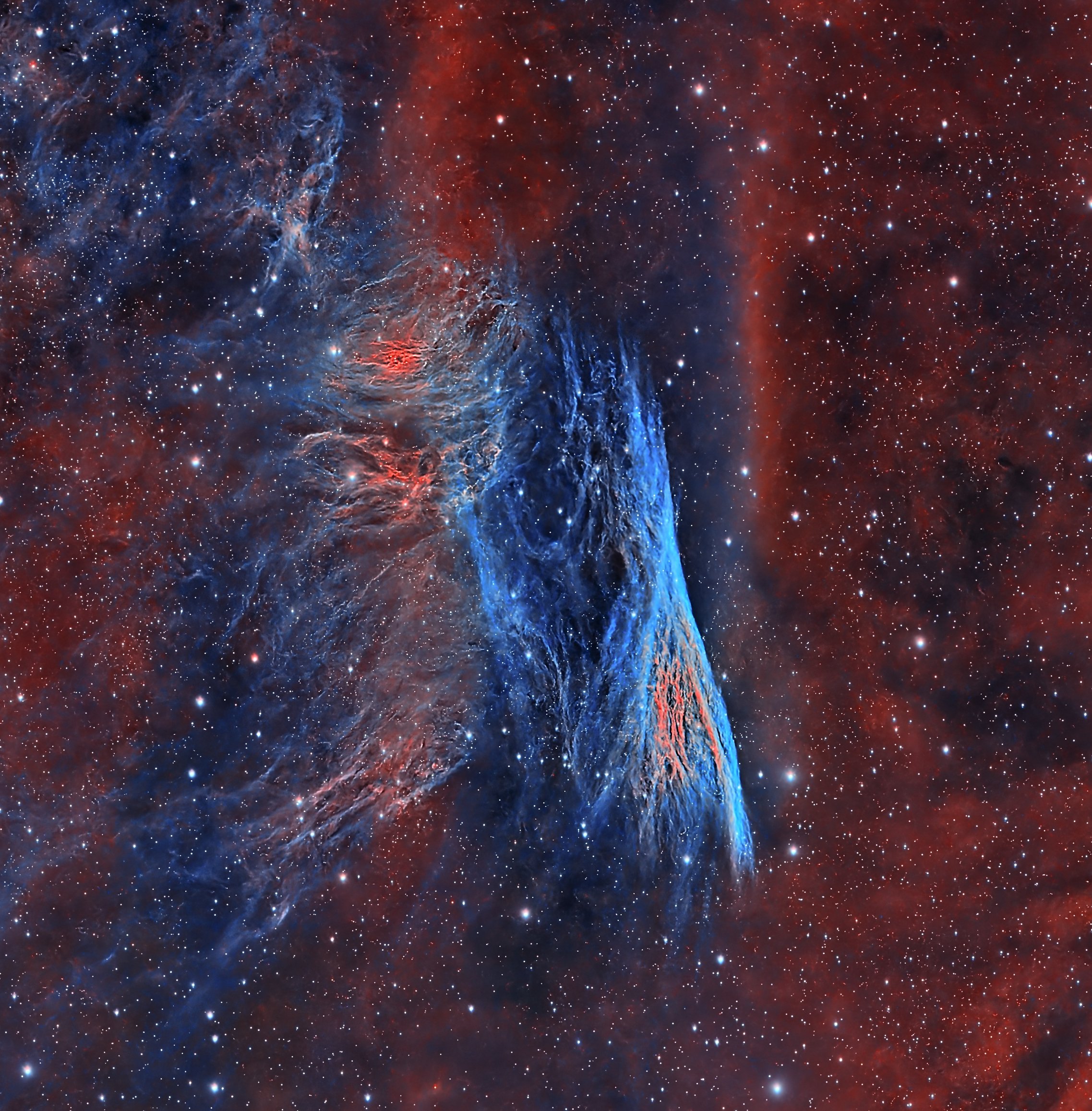
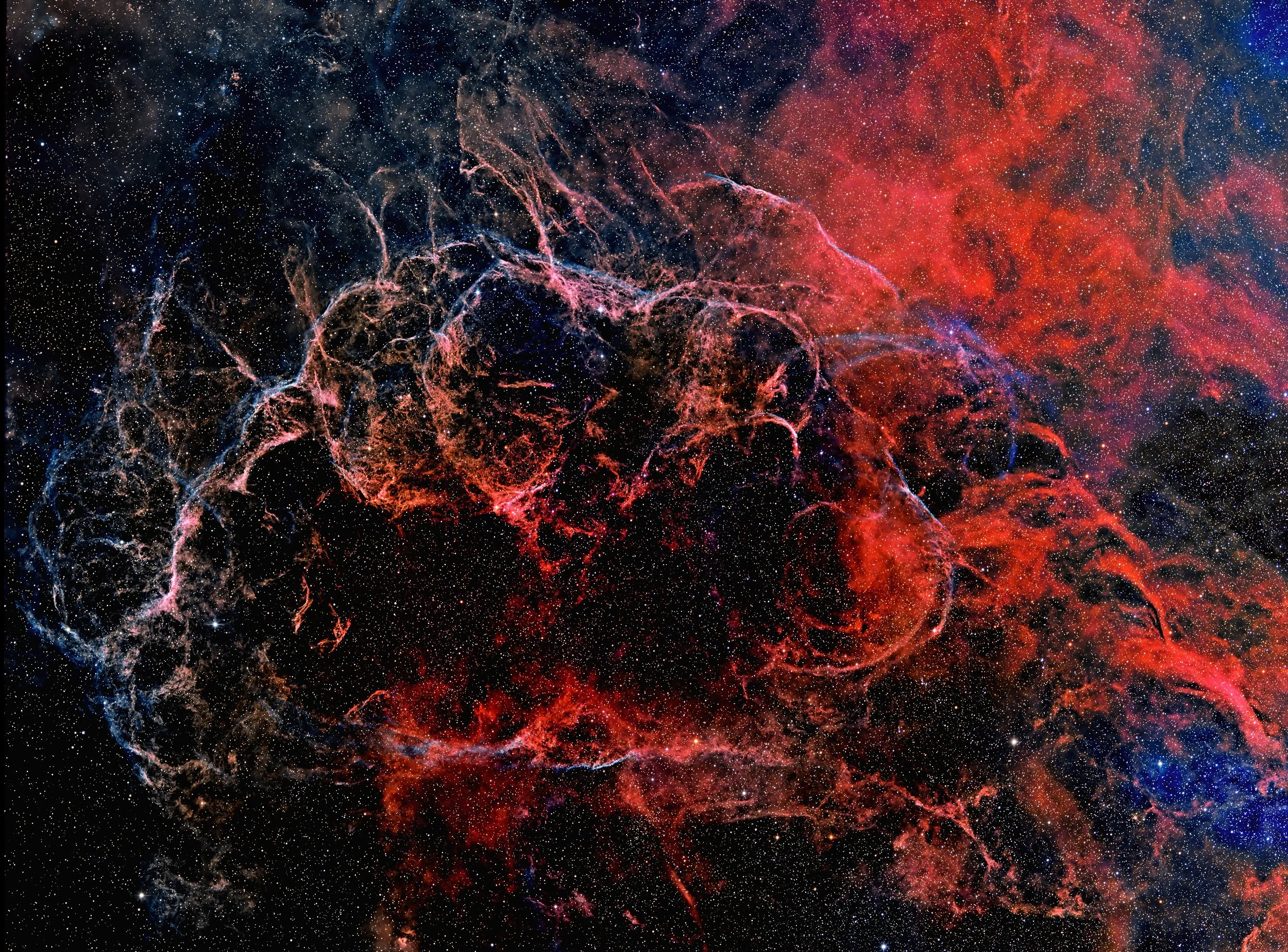
The Vela Supernova Remnant is one of the closest and largest supernova remnants known, lying only about 800–1,000 light-years away. It is the expanding debris of a massive star that exploded roughly 11,000 years ago, now spread across an enormous region of sky that spans much of the constellation Vela. Rather than a single neat shell, the remnant appears as a complex web of thin filaments, arcs, and shock fronts, revealing where the blast wave is colliding with uneven pockets of interstellar gas.
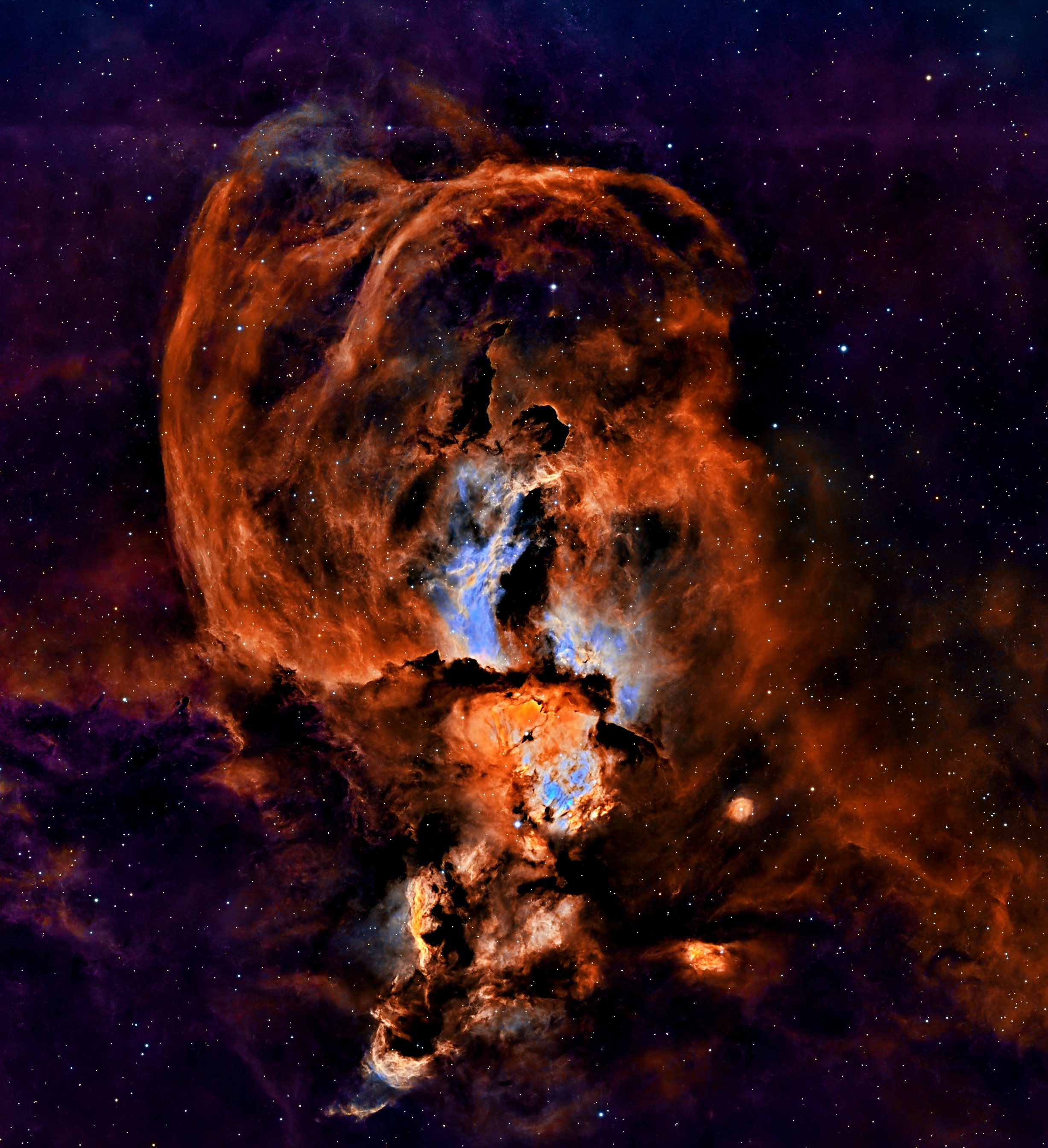
NGC 3576, popularly known as the Statue of Liberty Nebula, is a bright emission nebula and active star-forming region located approximately 9,000 light-years away. As a massive H II region, NGC 3576 is an energetic stellar nursery. The complex and dramatic looping filaments within the nebula are shaped by powerful stellar winds from young, massive, and very hot O-type and B-type stars embedded within.
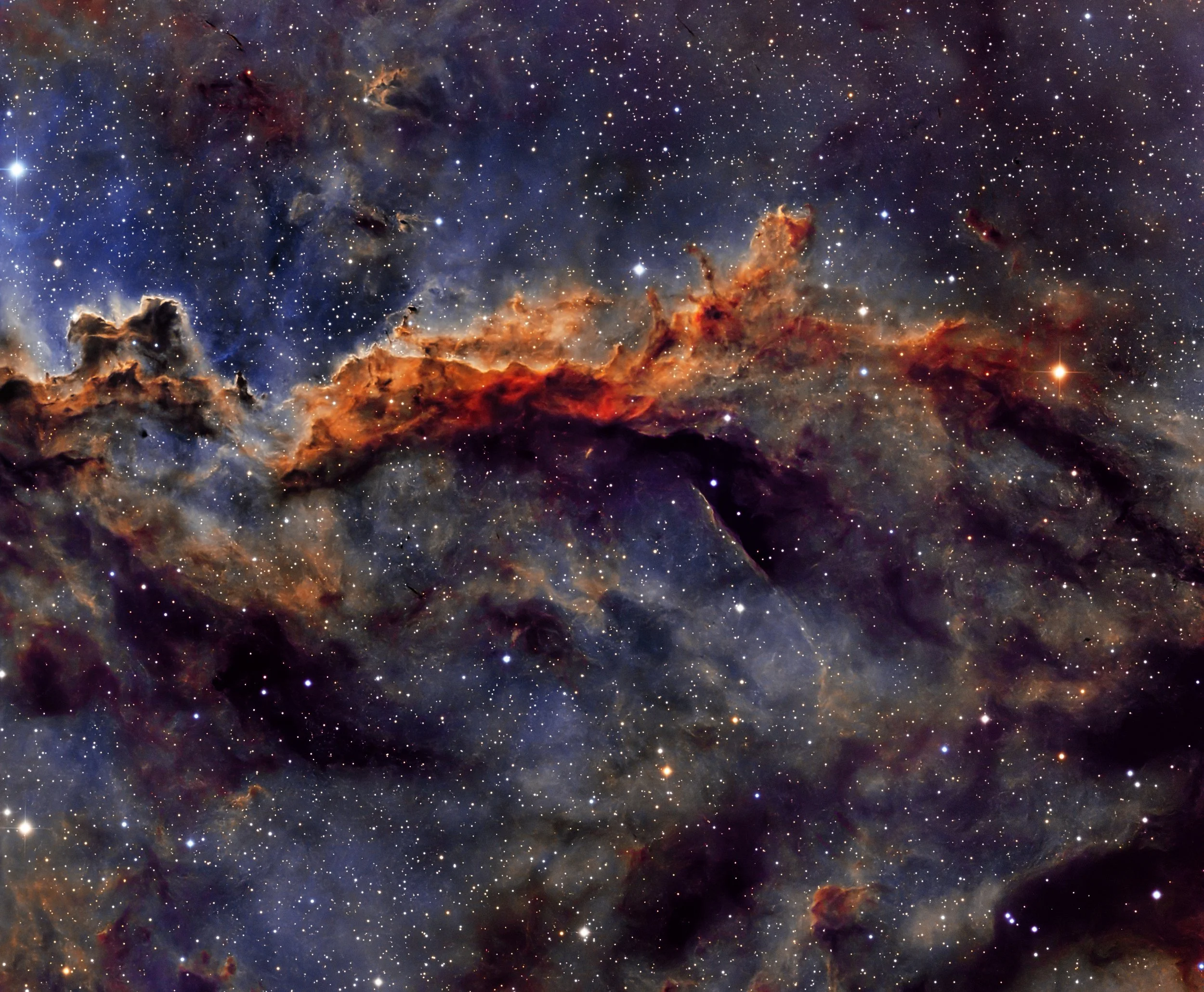
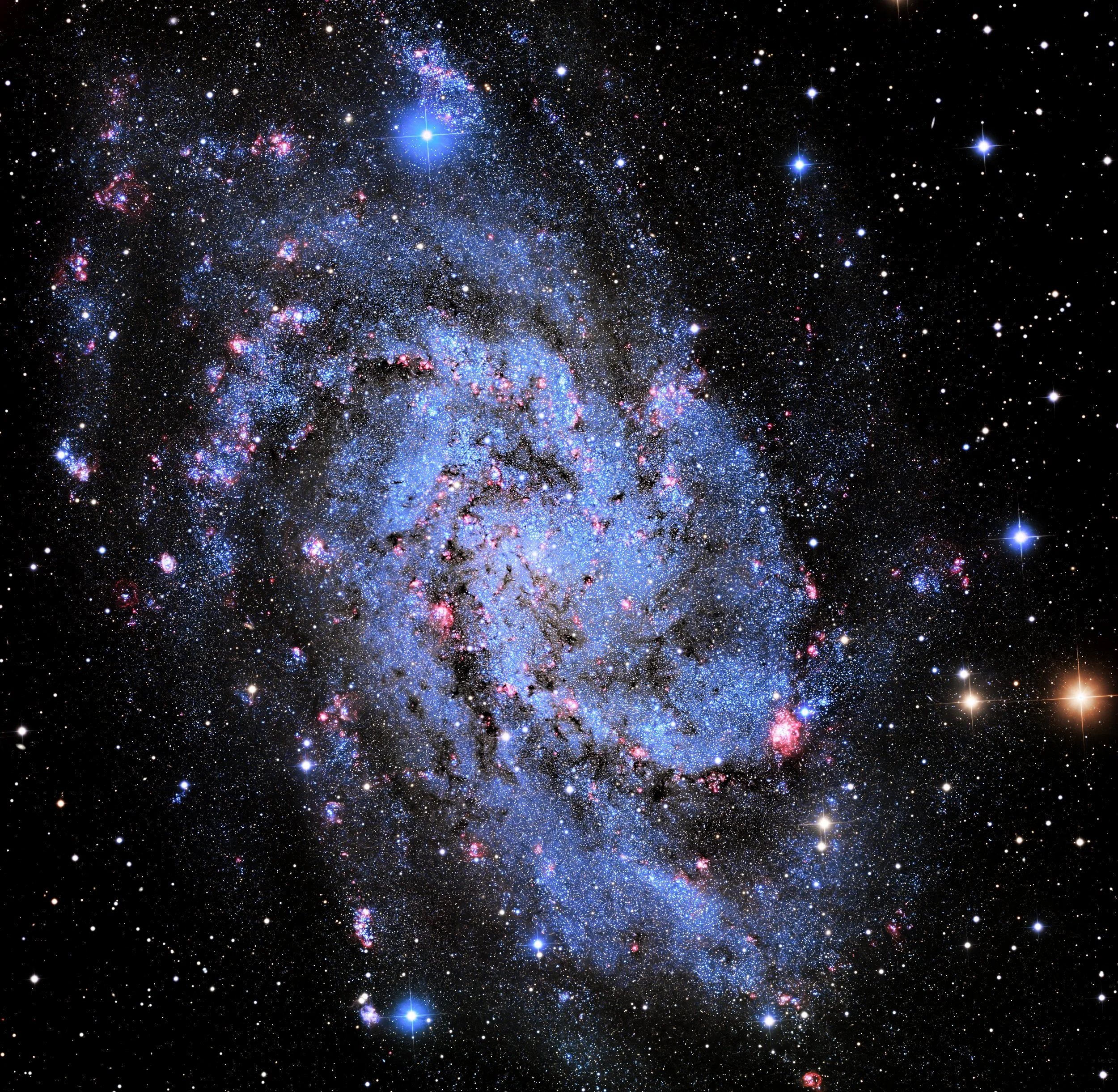
M33 is a nearby spiral galaxy about 2.7 million light-years away, making it one of the most distant objects visible to the naked eye under very dark skies. It’s the third-largest member of the Local Group, after the Milky Way and Andromeda, but unlike its bigger neighbors, M33 is a pure, unbarred spiral with loosely wound arms and a delicate, open structure. What makes M33 especially interesting is how resolved and alive it appears. Individual star-forming regions, including the enormous NGC 604, can be studied in detail, along with clusters, dust lanes, and supernova remnants scattered across its disk.
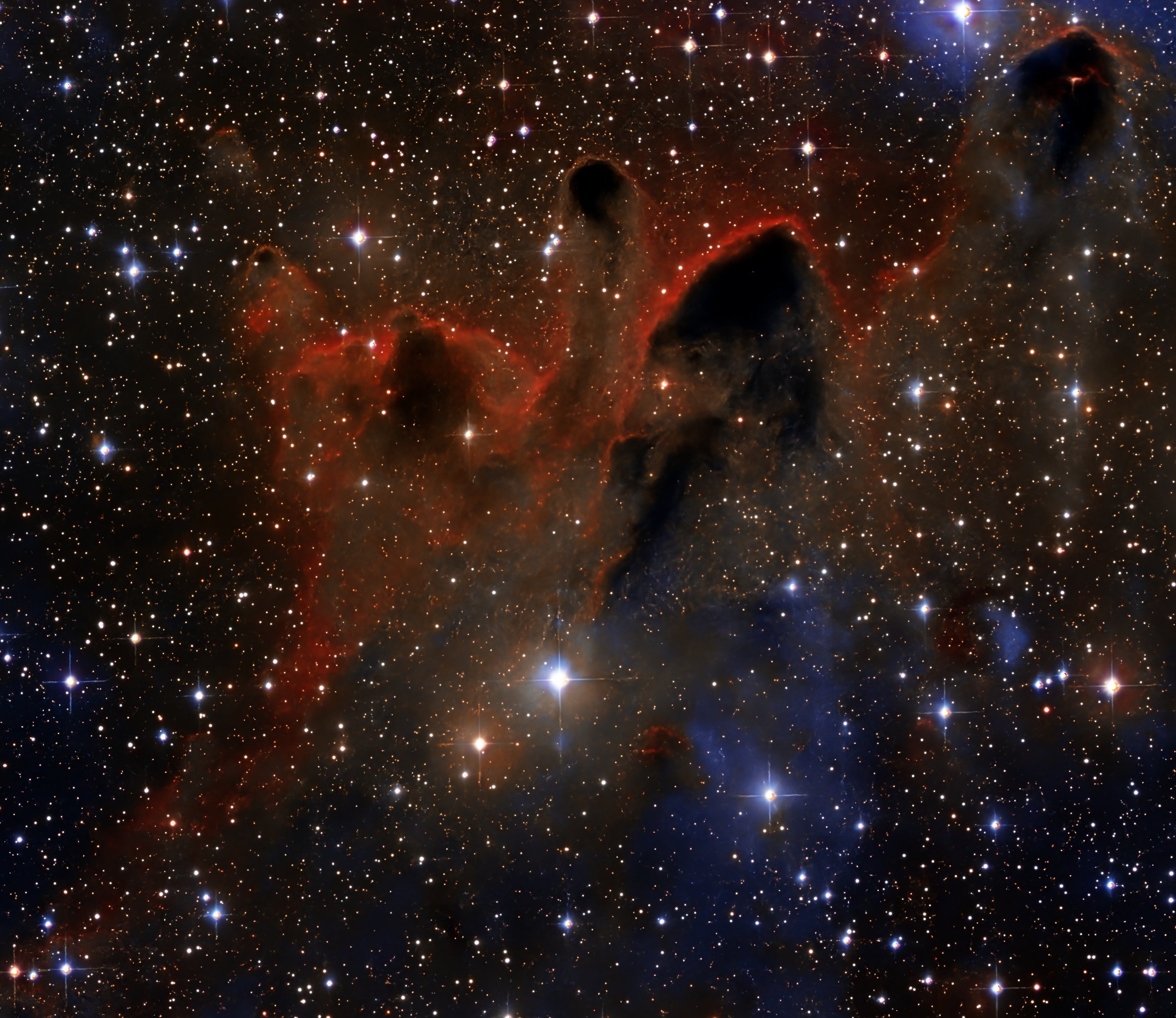
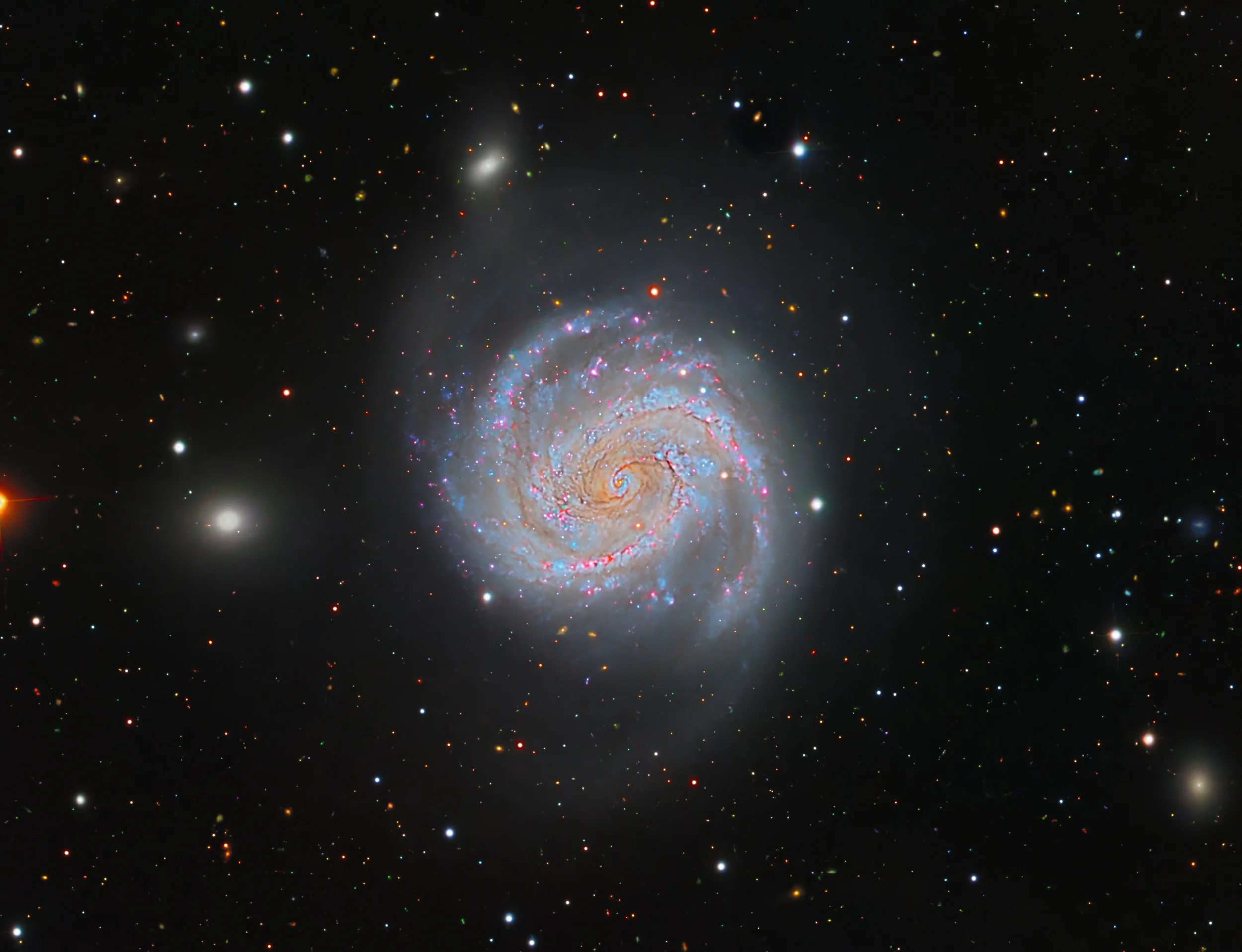
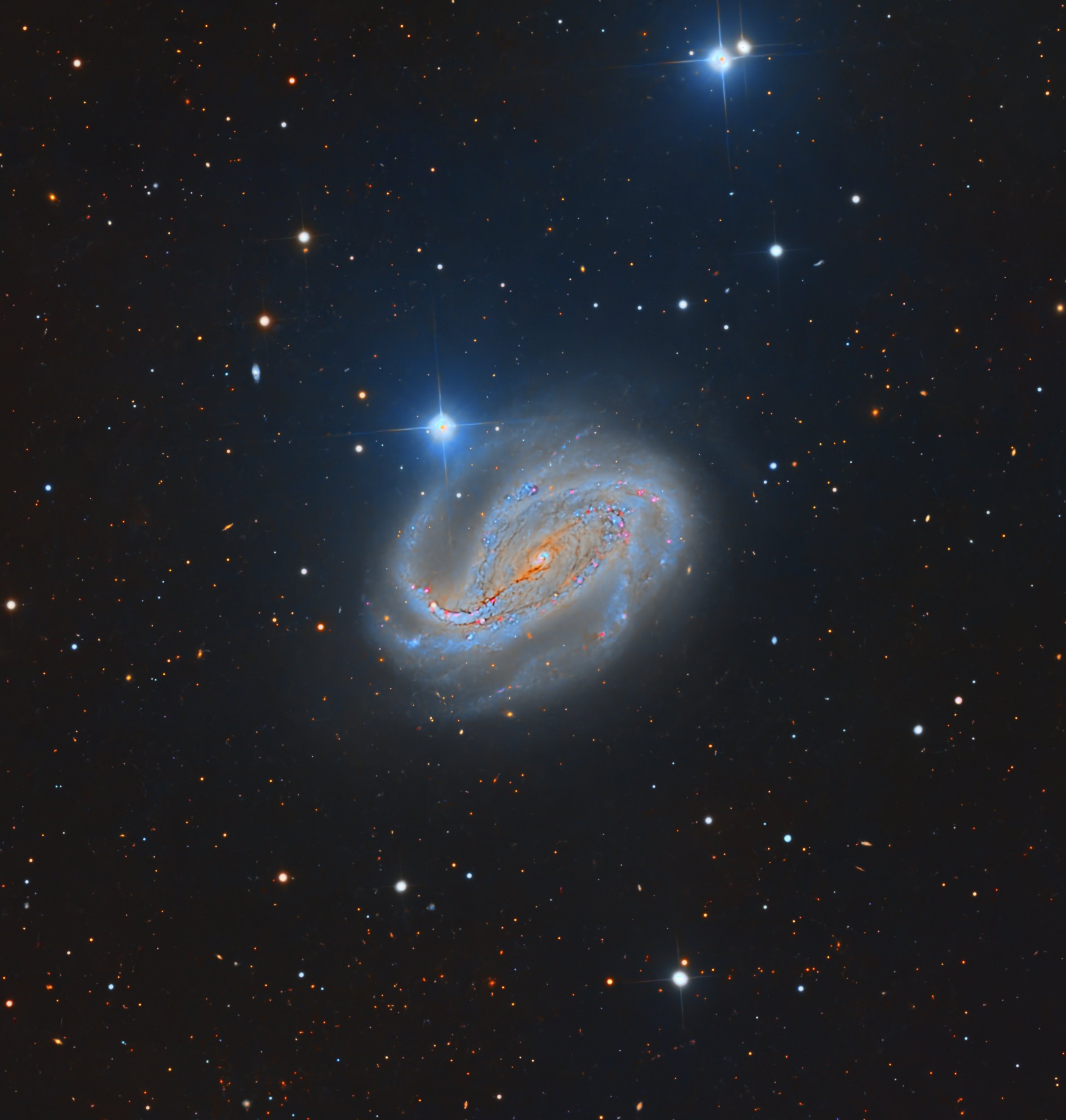
NGC 613 is a striking barred spiral galaxy about 65 million light-years away in the southern constellation Sculptor. Its most eye-catching feature is an unusually long, straight central bar, from which multiple spiral arms emerge in a somewhat chaotic pattern. This strong bar efficiently channels gas inward, making NGC 613 a textbook example of how galactic bars reshape disks and drive internal evolution. At the core, NGC 613 hosts a vigorous starburst nucleus and a low-level active galactic nucleus (AGN). Radio observations reveal jet-like structures interacting with surrounding gas, possibly triggering bursts of star formation near the center.
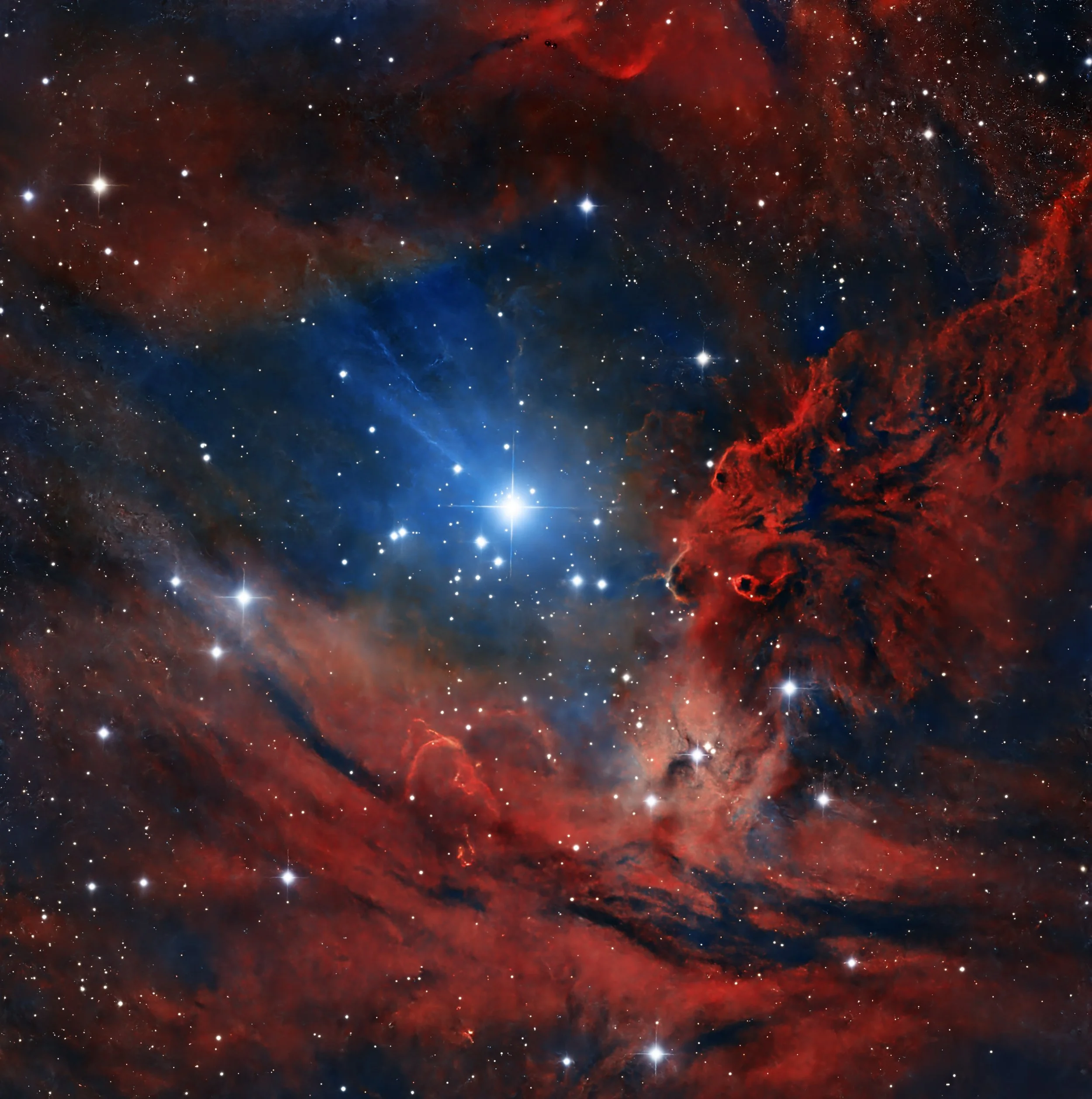
NGC 2264
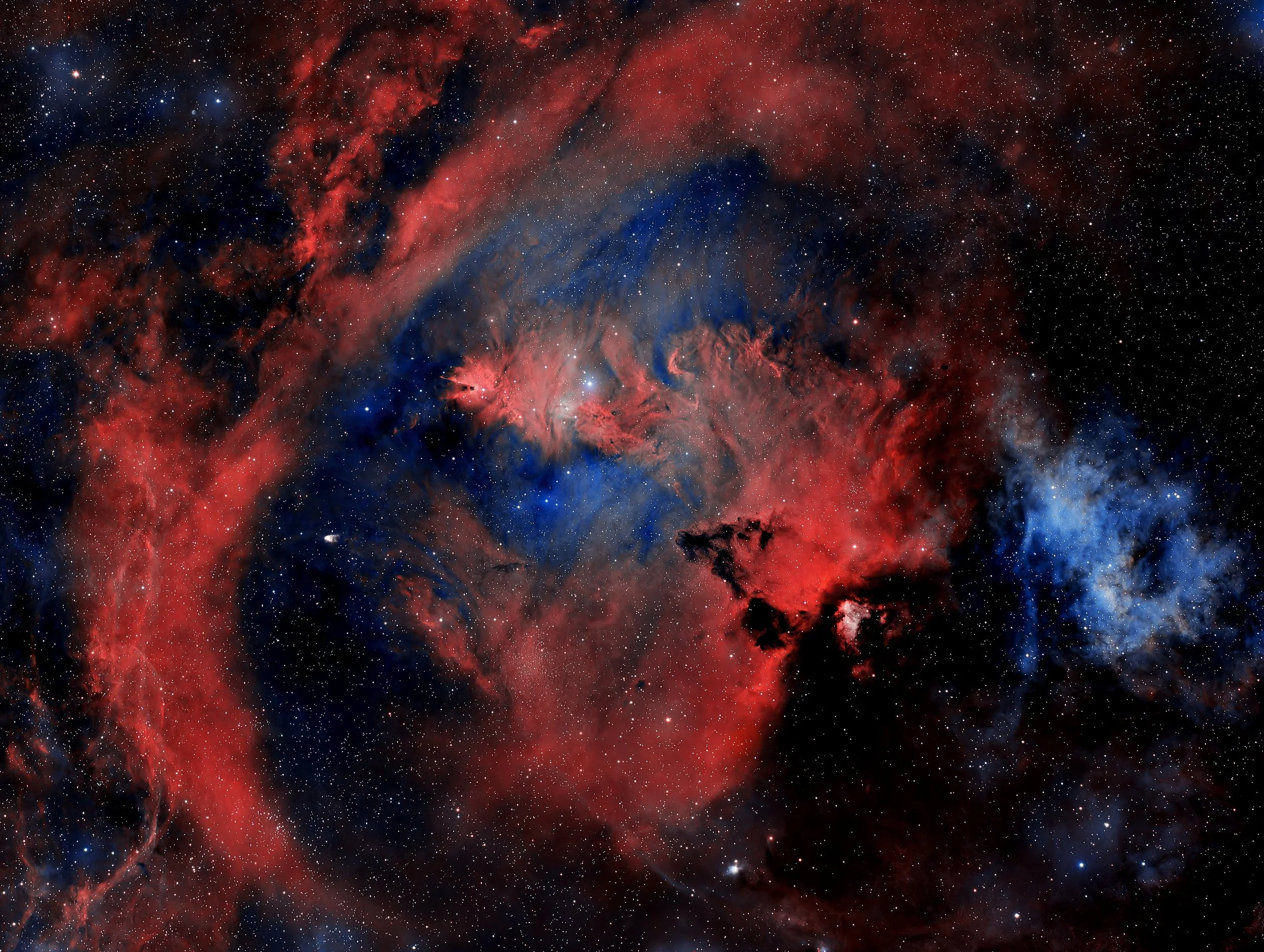
NGC 2264 is a rich star-forming complex about 2,500 light-years away in the constellation Monoceros, best known for containing both the Christmas Tree Cluster and the dramatic Cone Nebula. Rather than a single object, NGC 2264 is a whole stellar nursery, packed with young stars, glowing hydrogen gas, and dark dust lanes. Many of its stars are only a few million years old, making it one of the closest and best places to study early stellar evolution.
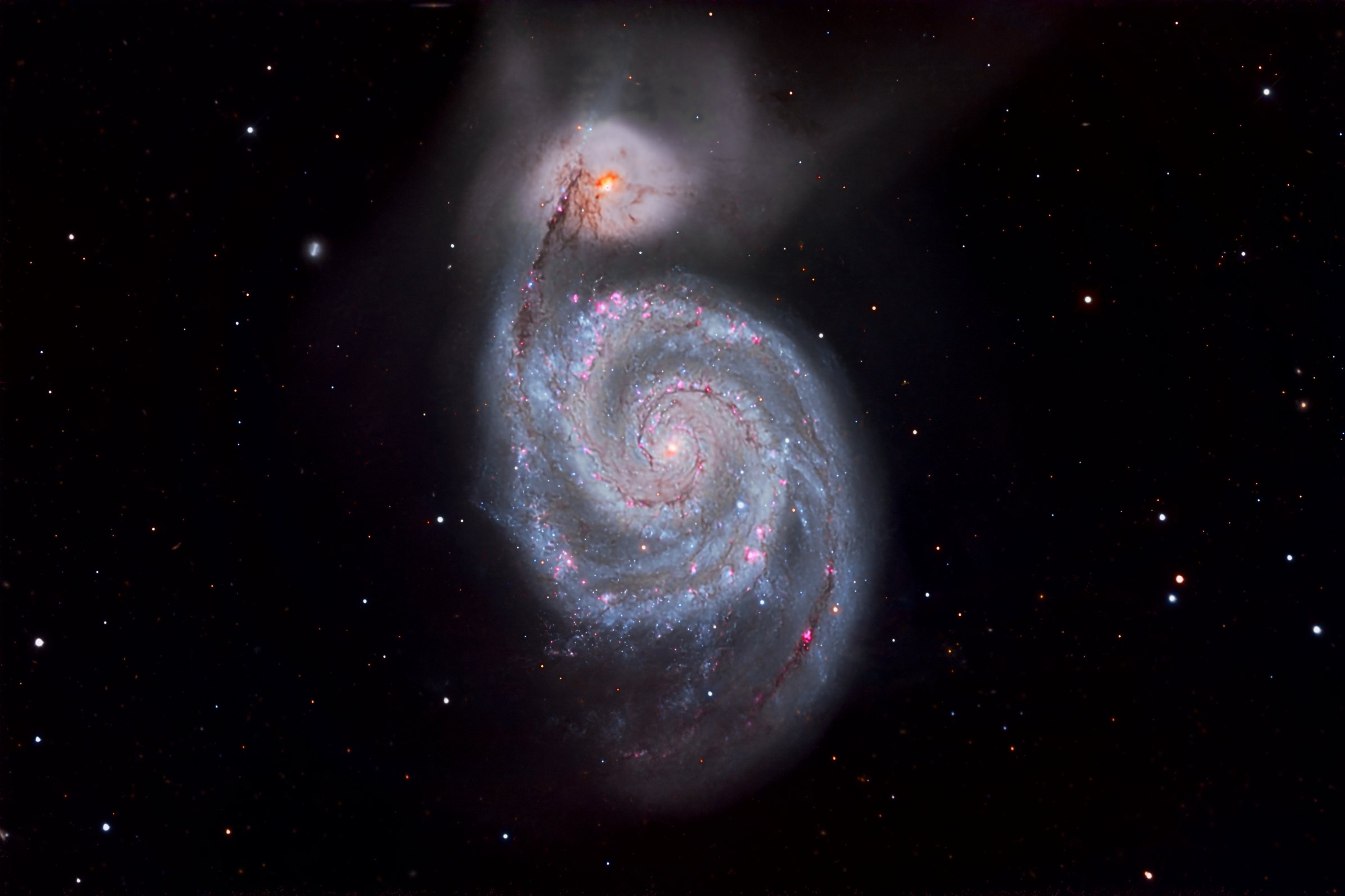
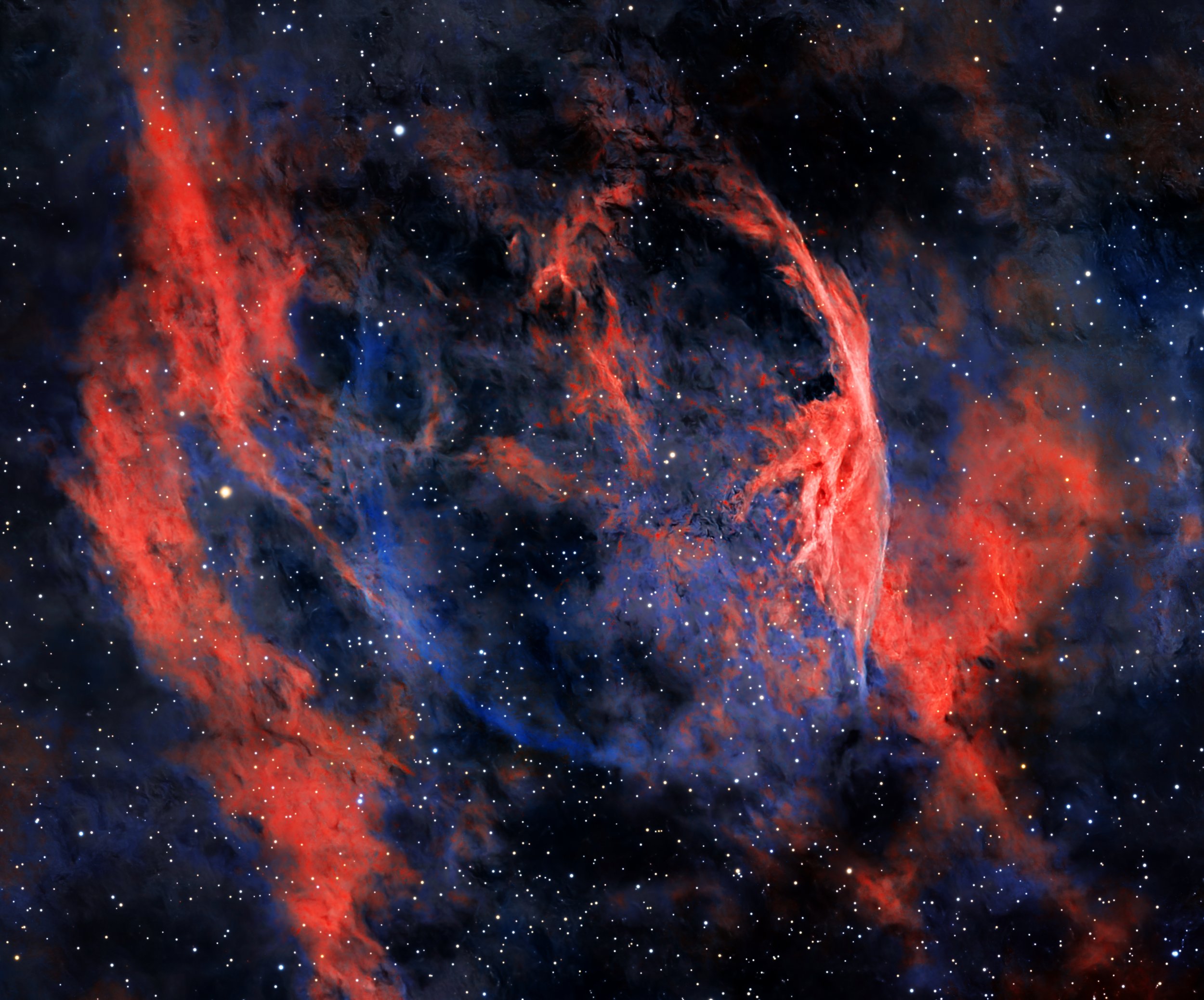
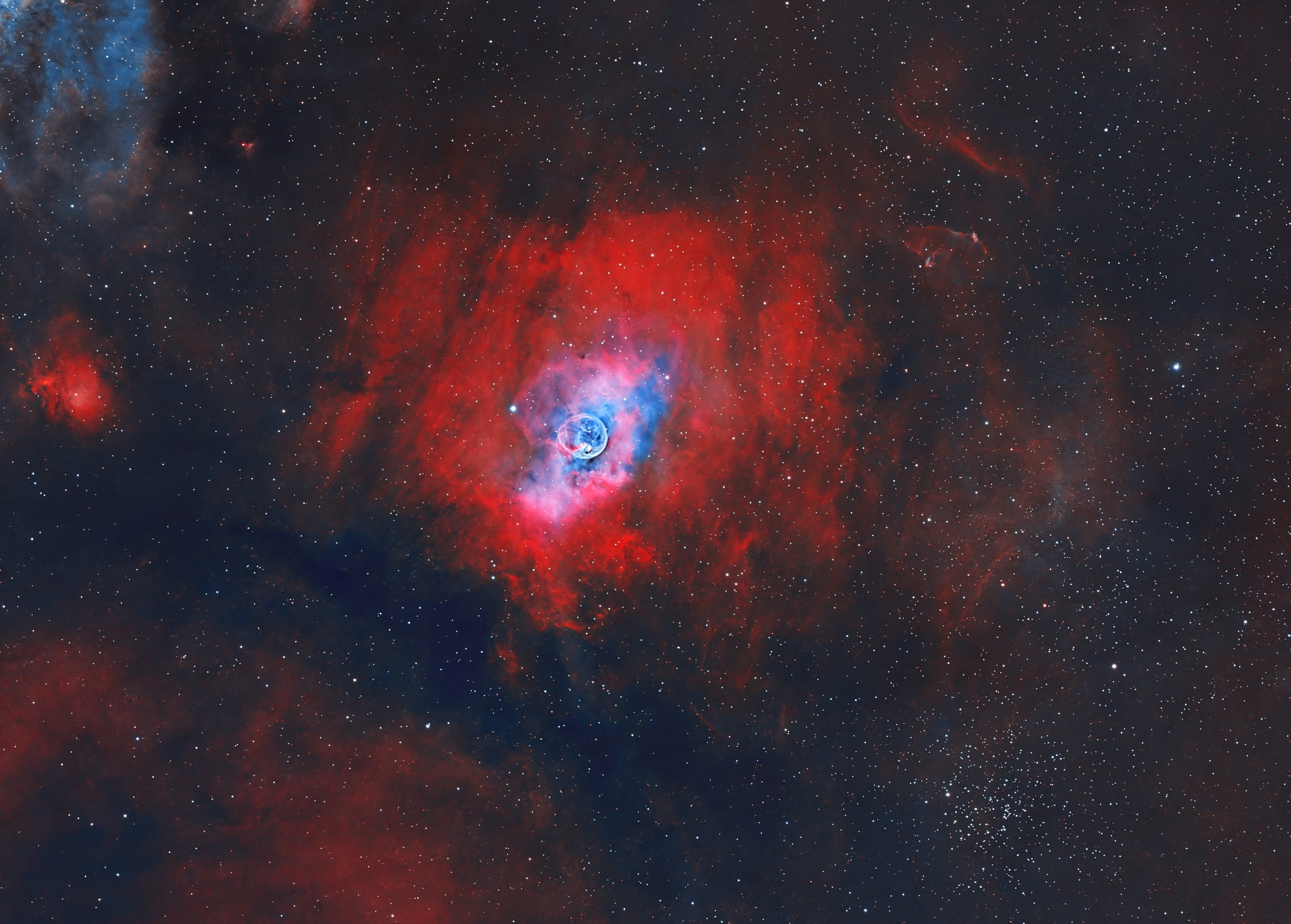
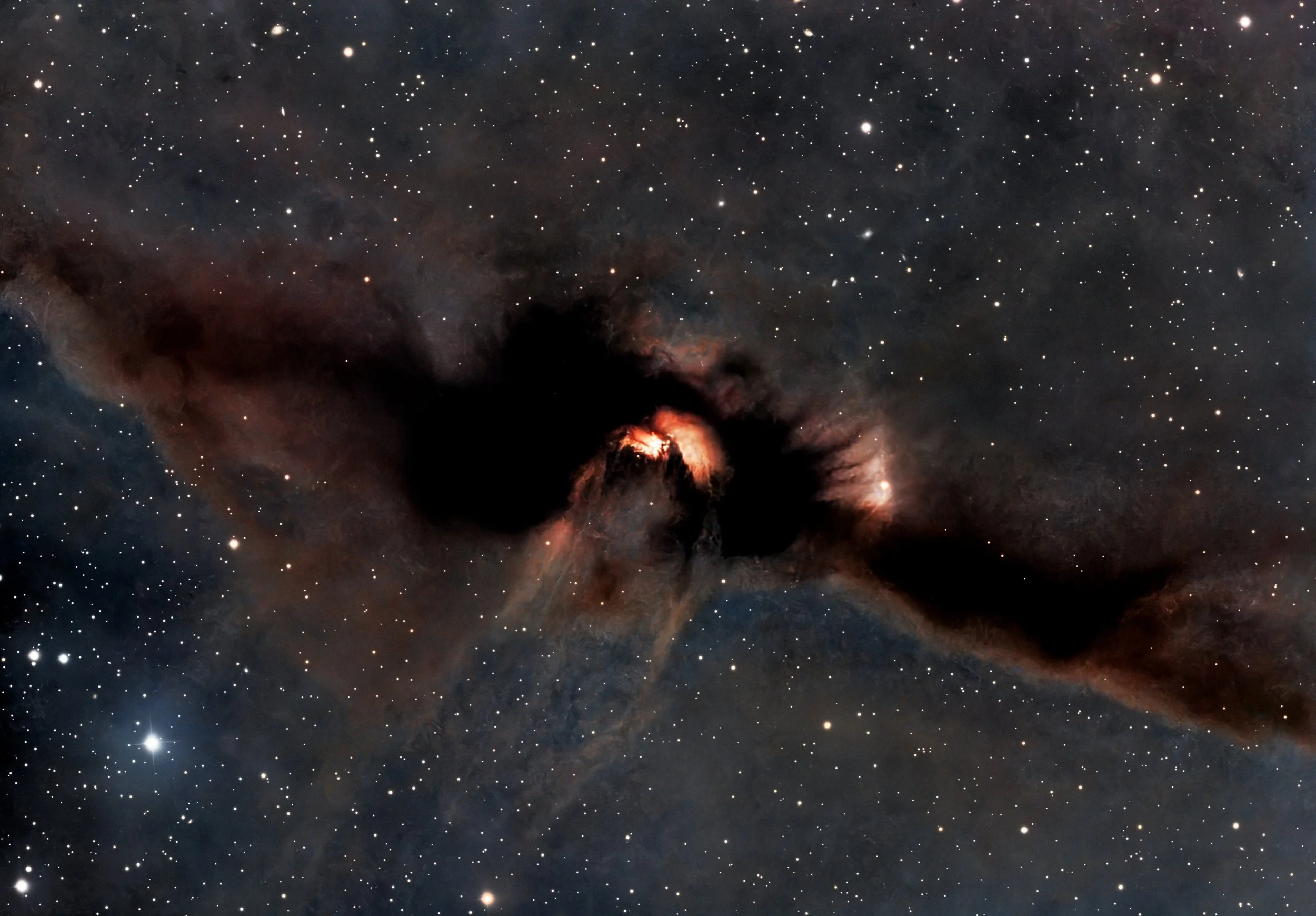
The Flying Bat Nebula, formally NGC 1788, is a dramatic reflection nebula located about 1,300–1,500 light-years away in the constellation Orion. Unlike emission nebulae that glow from ionized hydrogen, NGC 1788 shines because its dense dust clouds reflect blue light from nearby young stars. Its dark, wing-like dust lanes silhouetted against the glowing background give it the unmistakable bat-shaped appearance.
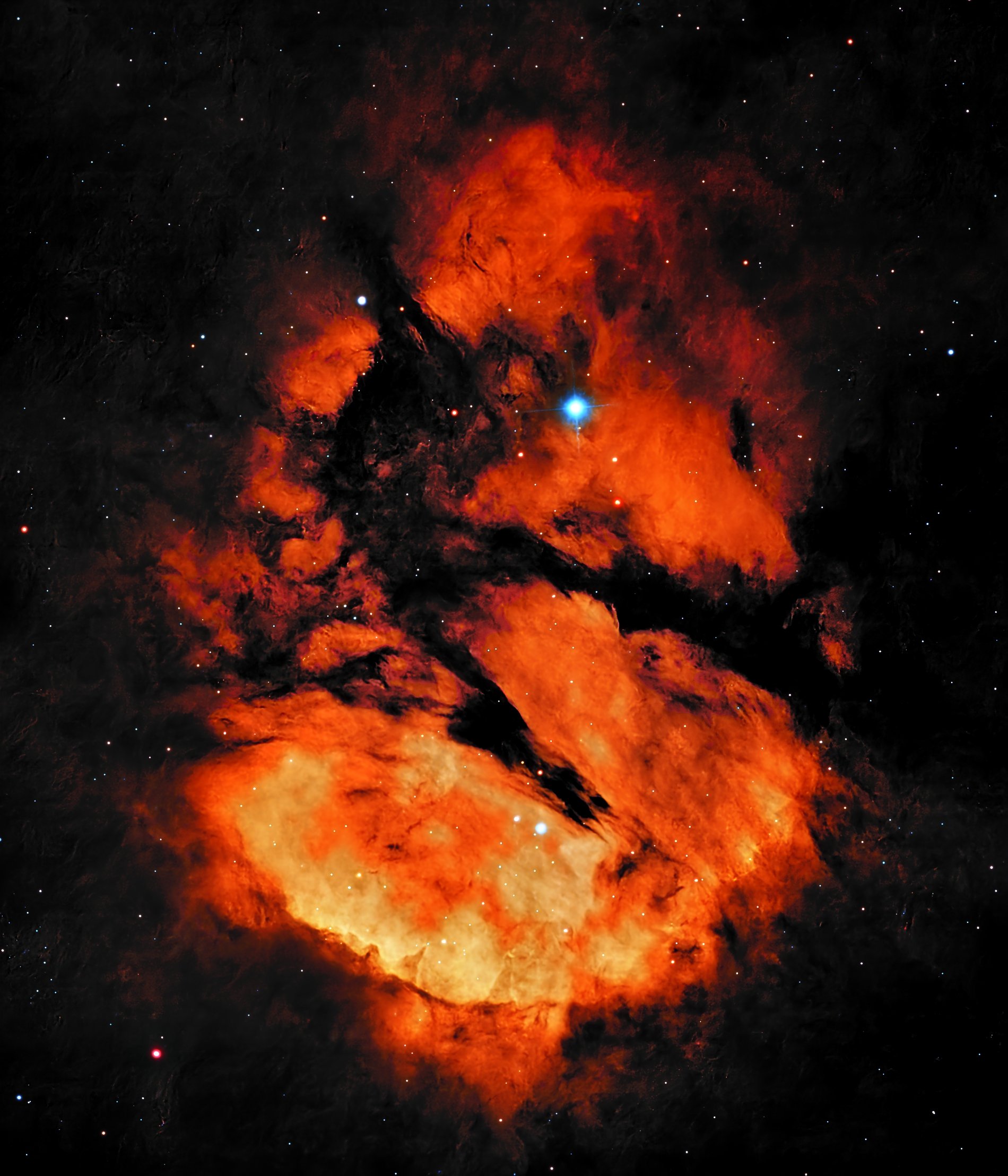
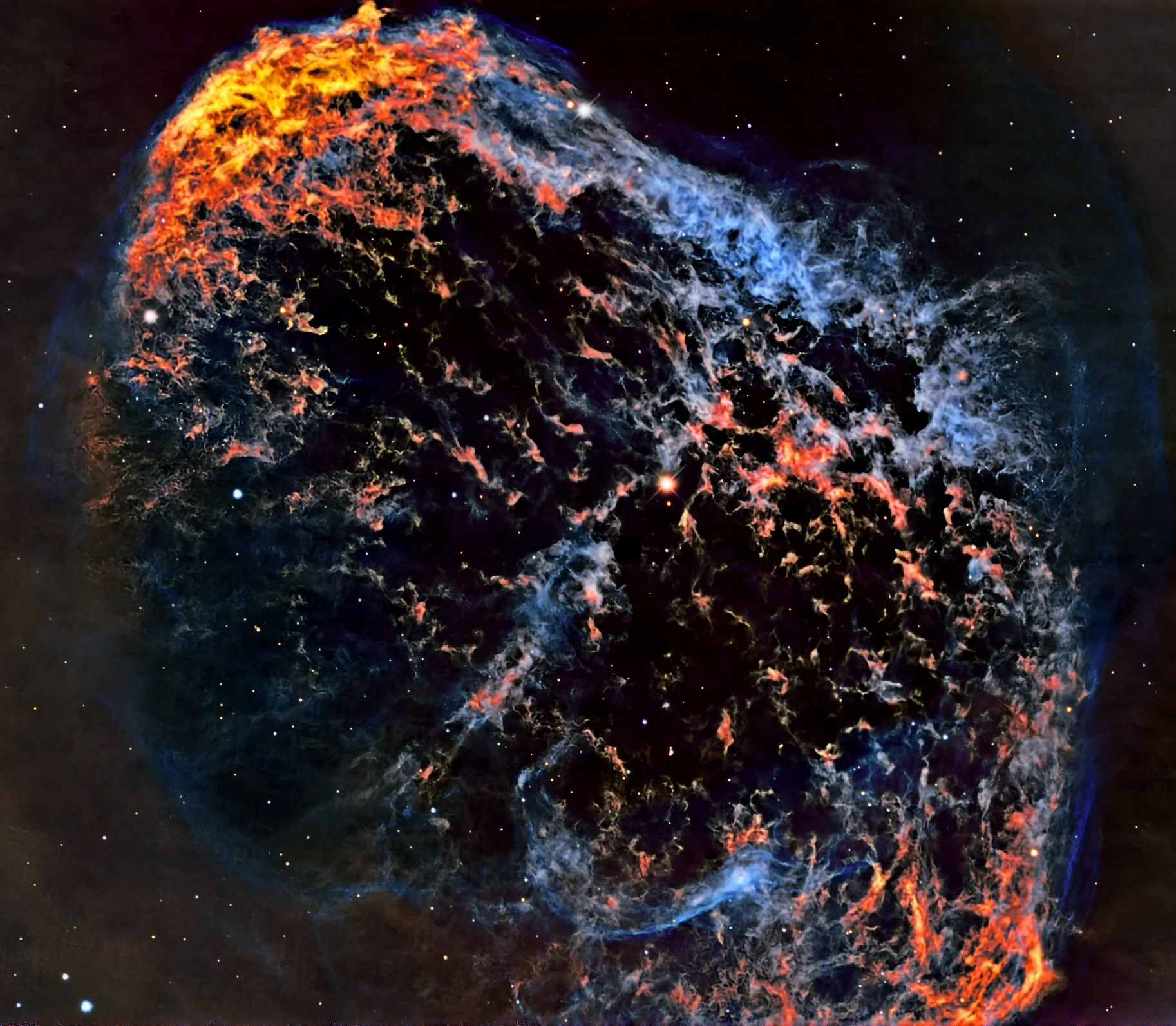
NGC 6888 is a striking Wolf–Rayet nebula about 4,700 light-years away in the constellation Cygnus. It was created by powerful stellar winds from the massive WR 136, which are colliding with slower material the star expelled earlier in its life. The result is a glowing, crescent-shaped shell of gas and shock fronts that reveals multiple stages of a massive star’s evolution all at once. What makes NGC 6888 especially interesting is how clearly it shows stellar wind interactions in real time. The nebula glows strongly in OIII and H-alpha, tracing hot, shocked gas where fast winds slam into older ejecta, while X-ray observations reveal million-degree plasma inside the bubble. WR 136 is expected to end its life as a core-collapse supernova, meaning the Crescent Nebula is a pre-supernova environment already shaped by extreme mass loss.
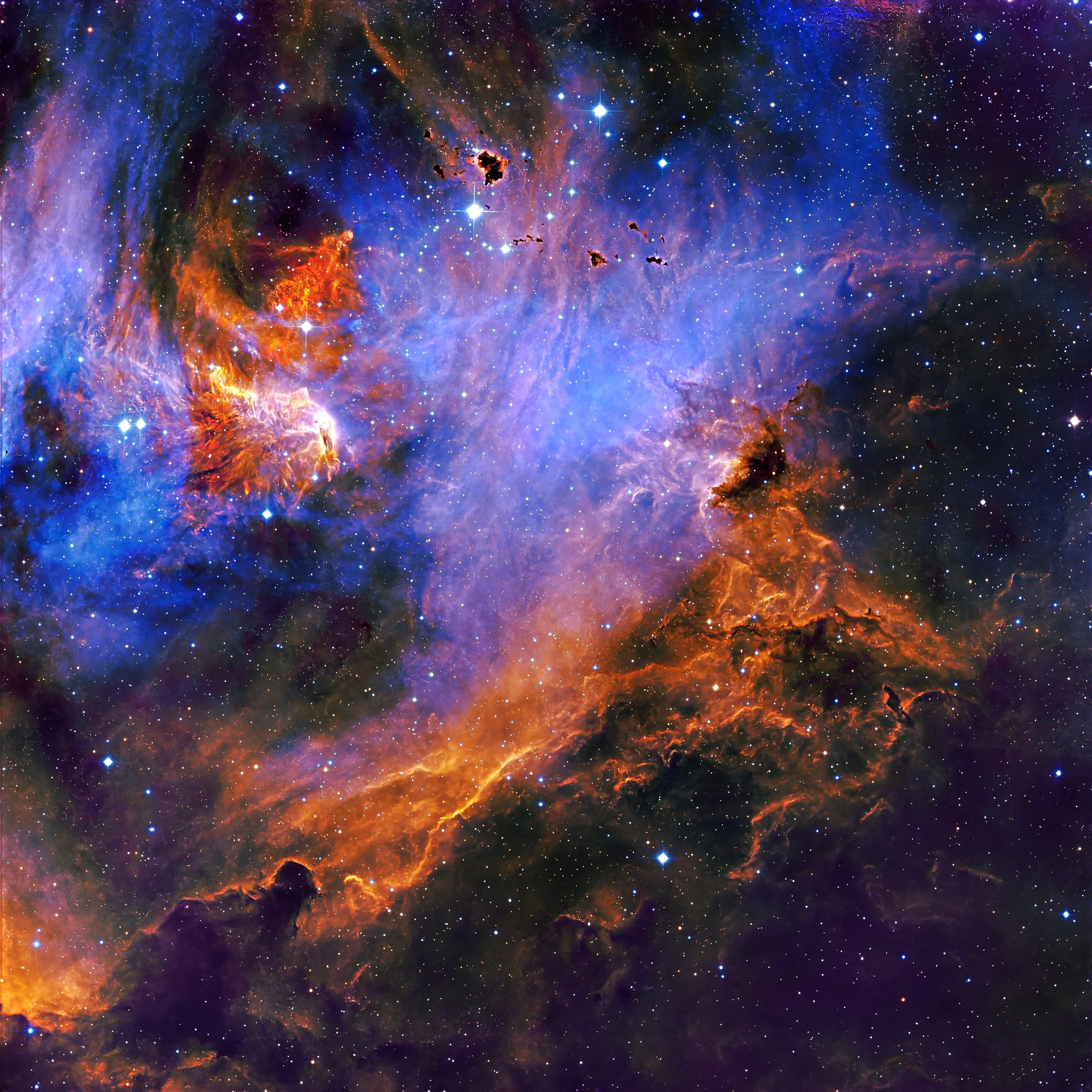
The Running Chicken Nebula, is a bright star-forming emission nebula about 6,500 light-years away in the southern constellation Centaurus. It’s powered by a cluster of hot, massive stars whose intense ultraviolet radiation causes the surrounding hydrogen gas to glow vividly in H-alpha. The nebula’s chaotic, sprawling shape reflects an environment dominated by strong stellar winds and radiation pressure rather than calm, orderly star birth. IC 2948 is especially famous for its embedded Bok globules, known as Thackeray’s Globules—small, cold, opaque knots of gas and dust silhouetted against the glowing background. Once thought to be sites of future star formation, many of these globules are now believed to be evaporating remnants, being eroded faster than they can collapse into stars.
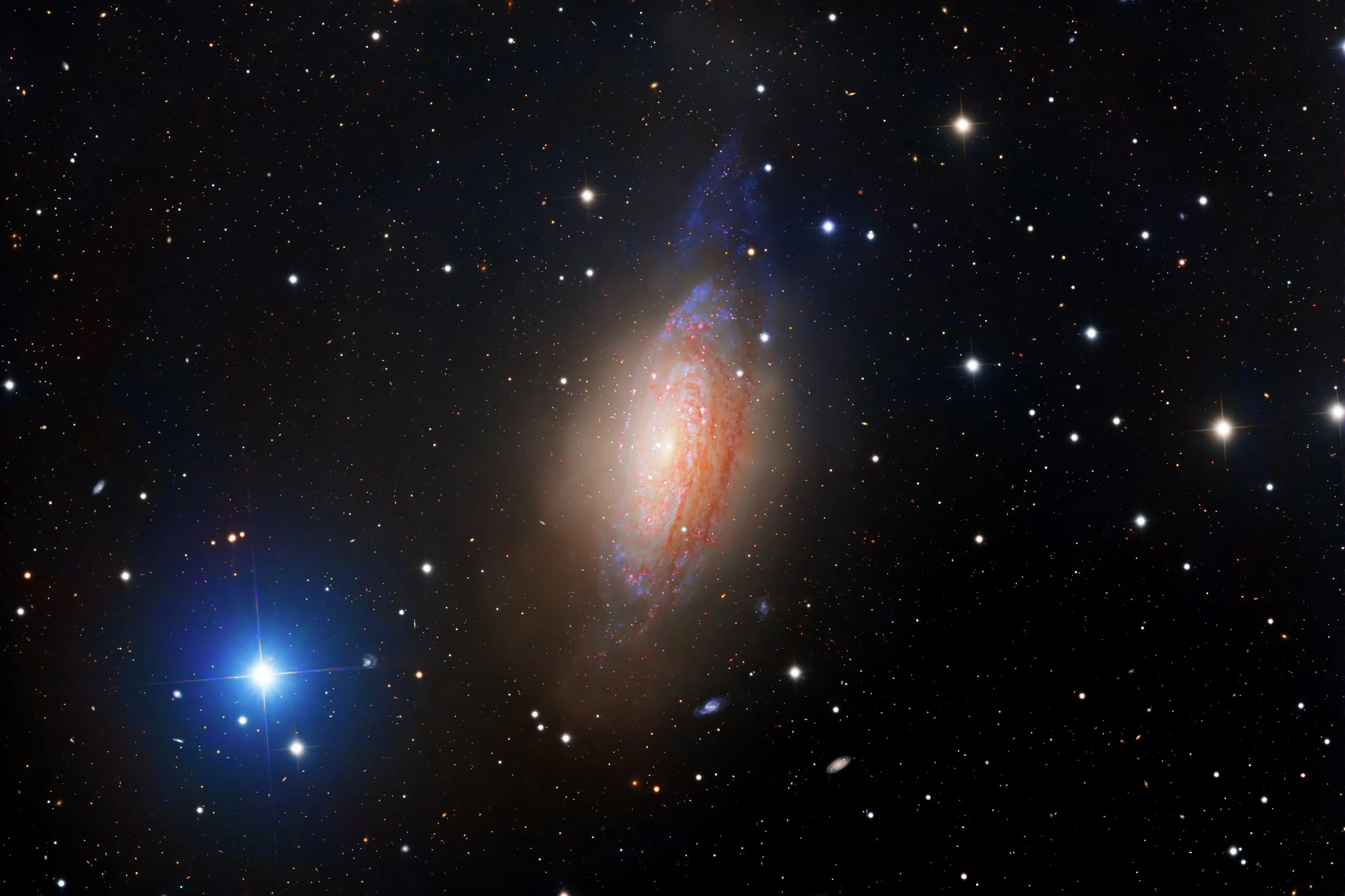
NGC 3521 is a nearby spiral galaxy about 35 million light-years away in the constellation Leo, notable for looking both familiar and oddly unsettled at the same time. At first glance it resembles a classic spiral, but closer inspection reveals chaotic, flocculent spiral arms and thick, tangled dust lanes. These features suggest a galaxy that has experienced past gravitational interactions, leaving it dynamically “heated” rather than cleanly ordered like a grand-design spiral. One of NGC 3521’s most interesting traits is how dust dominates its appearance. Dense foreground dust obscures large portions of the disk, reddening the light from stars behind it and making the galaxy appear lopsided. This heavy dust content hides vigorous ongoing star formation, particularly in the inner disk, and makes NGC 3521 a valuable object for studying how dust, gas, and stars interact in evolved spiral galaxies. Rather than a neat textbook example, NGC 3521 offers a realistic glimpse of how messy and complex spiral galaxies can become over time.
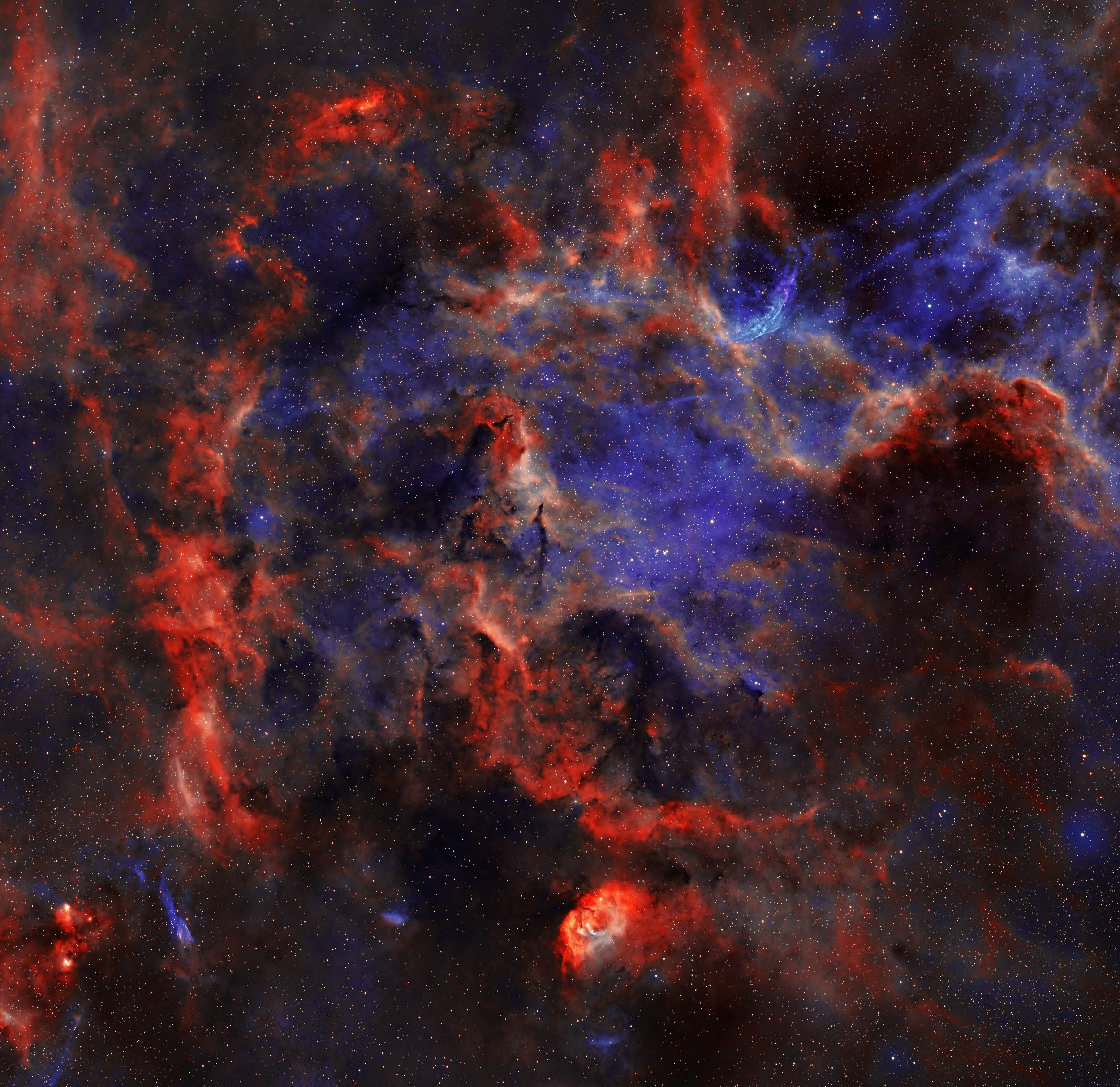
LDN 858 is a dark nebula in Cygnus consisting of cold molecular gas and dust. It’s part of a large complex of interstellar material in that constellation and is commonly captured in astrophotography alongside other famous nebulae in the Cygnus region
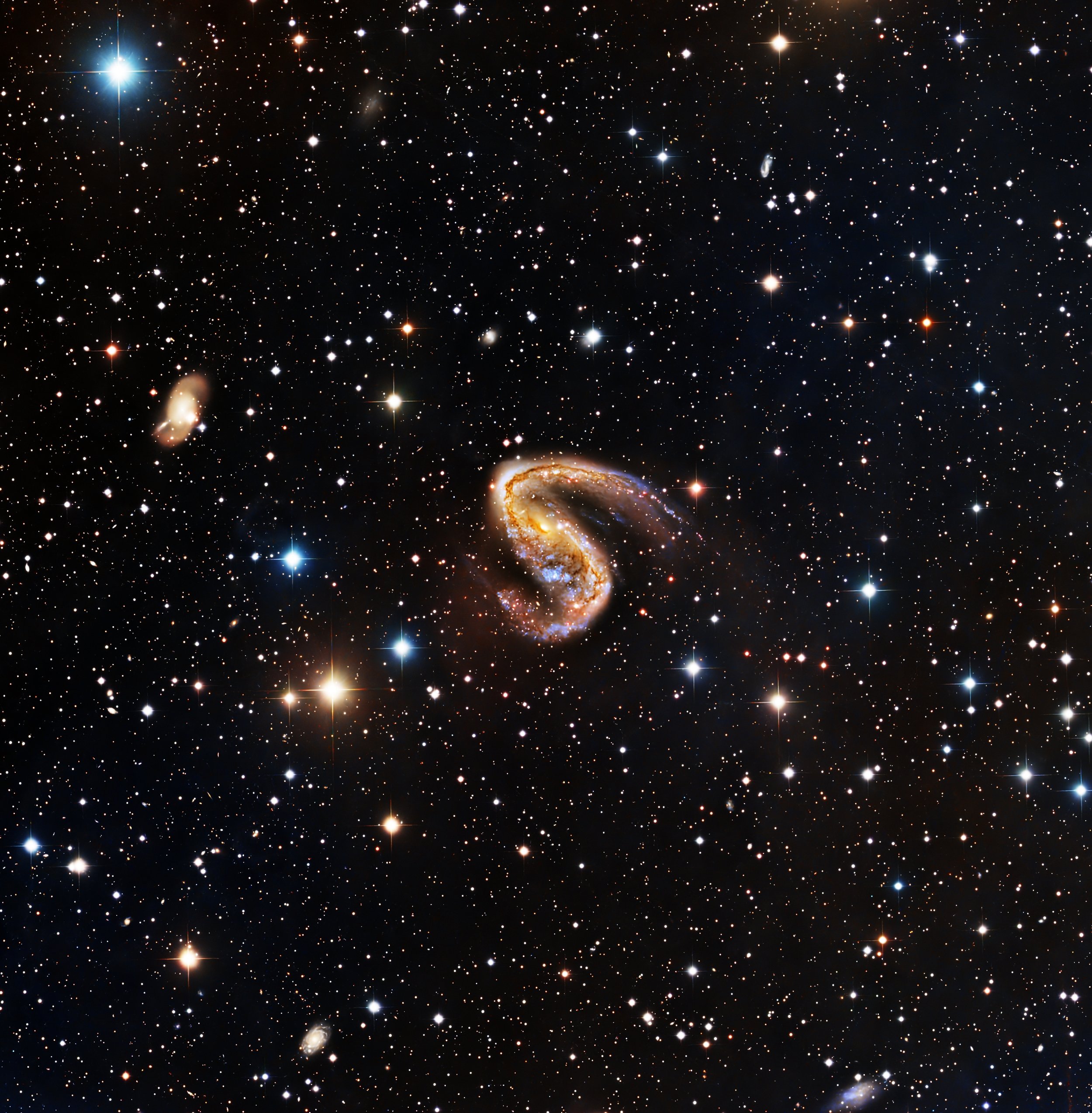
NGC 2442, often called the Meathook Galaxy, is a highly distorted spiral galaxy about 50–55 million light-years away in the southern constellation Volans. Its most striking feature is a wildly asymmetric spiral structure: one arm is stretched and tightly curved into a hook shape, while the opposite arm looks fragmented and truncated. This extreme imbalance immediately signals that the galaxy has been gravitationally disturbed. Astronomers believe NGC 2442’s warped shape is the result of a recent interaction — either a close flyby with a smaller companion galaxy or strong ram-pressure stripping as it moved through surrounding intergalactic gas. These forces compressed gas along parts of the spiral arms, triggering intense star formation. Bright H II regions, warm dust, and elevated supernova activity mark where the galaxy is effectively being “squeezed.”
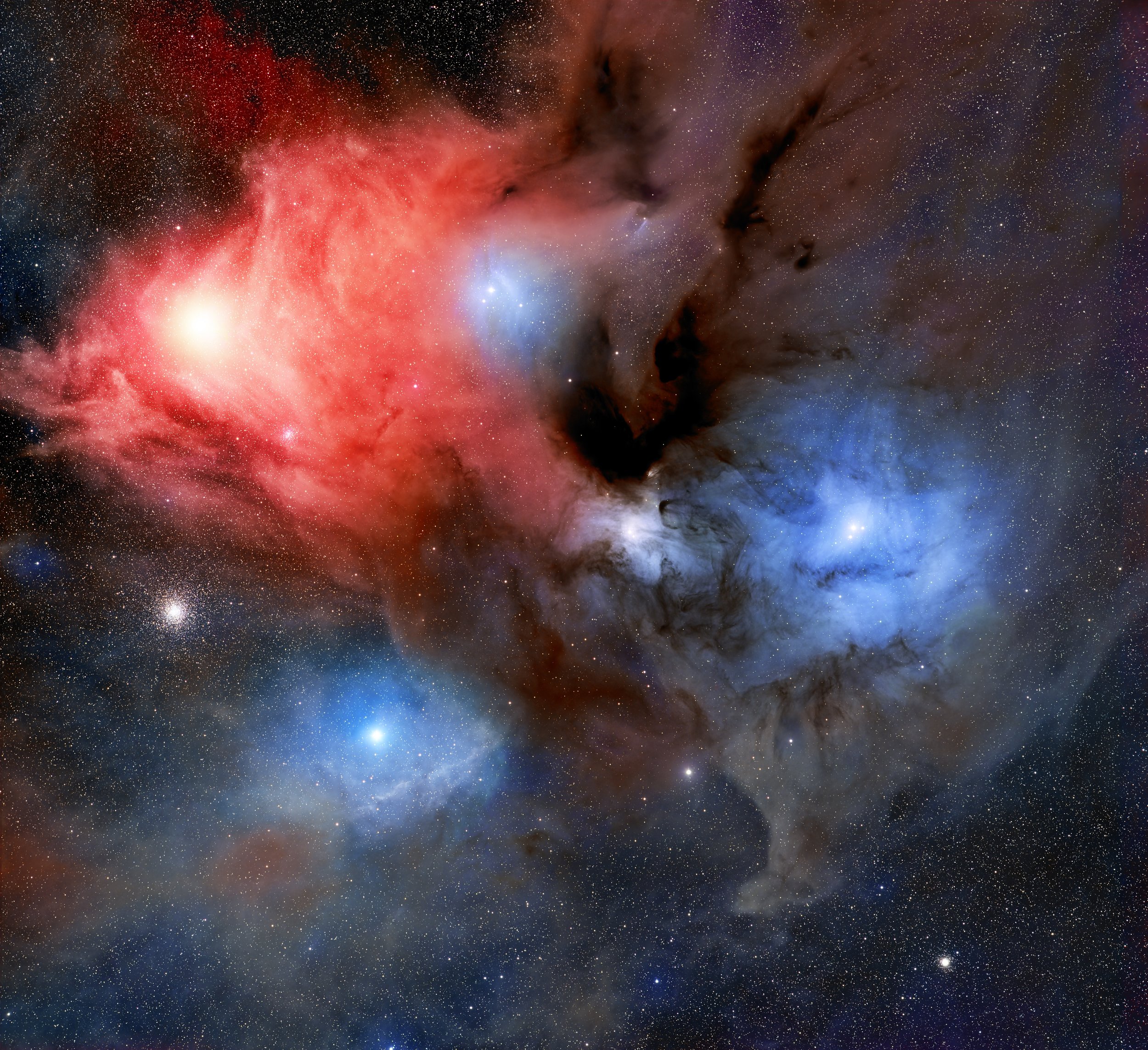
The Rho Ophiuchi cloud complex is one of the closest and most colorful star-forming regions to Earth. Located approximately 460 light-years away, this region is a complex of different types of nebulae, including emission, reflection, and dark nebulae.
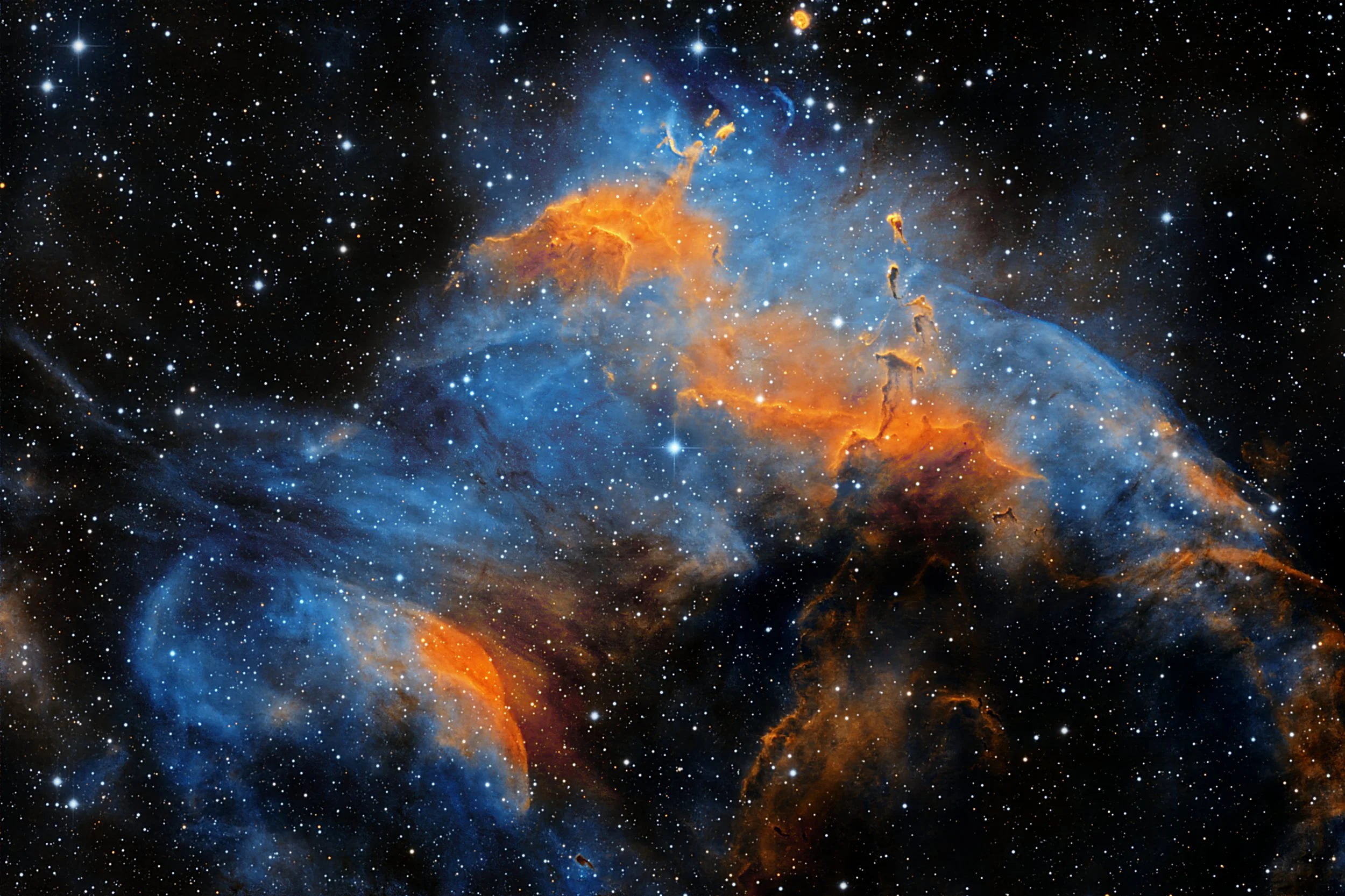
Gum 38 is cataloged as a Cometary Globule (CG) within the Gum Nebula. These are not comets in the solar system sense, but dense, dark clouds of gas and dust that are being shaped by intense radiation. Cometary Globules are dense cloud cores with long "tails" stretching away from them. This appearance is due to the intense ultraviolet radiation and stellar winds from massive, hot stars in the region.
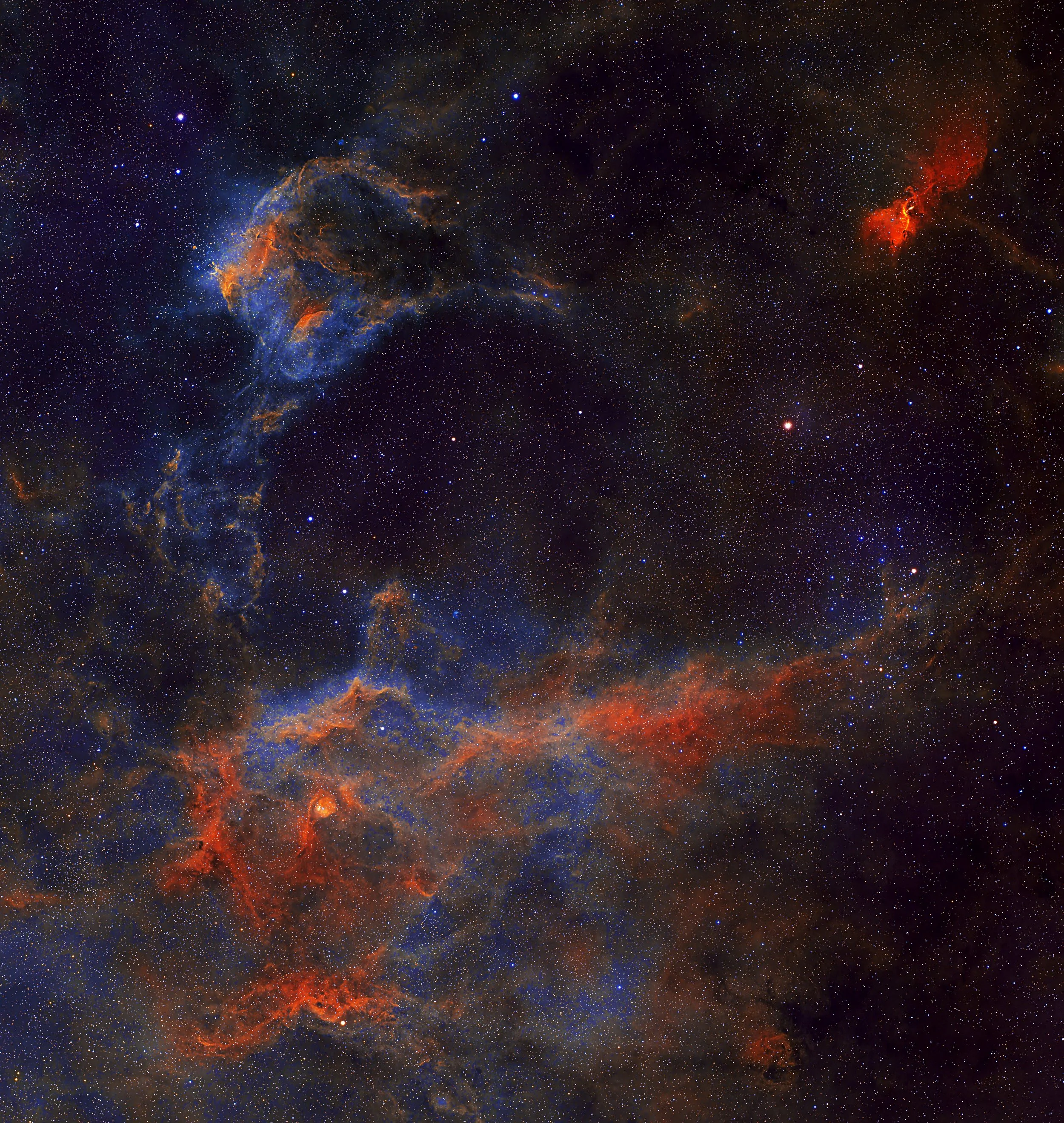
NGC 3503 is a compact but energetic H II region about 9,000 light-years away in the southern constellation Carina. It’s powered by a small cluster of young, massive stars whose ultraviolet radiation ionizes the surrounding hydrogen gas, causing it to glow brightly. Although much smaller than famous Carina-region giants, NGC 3503 stands out for its sharply defined edges and intense local activity.
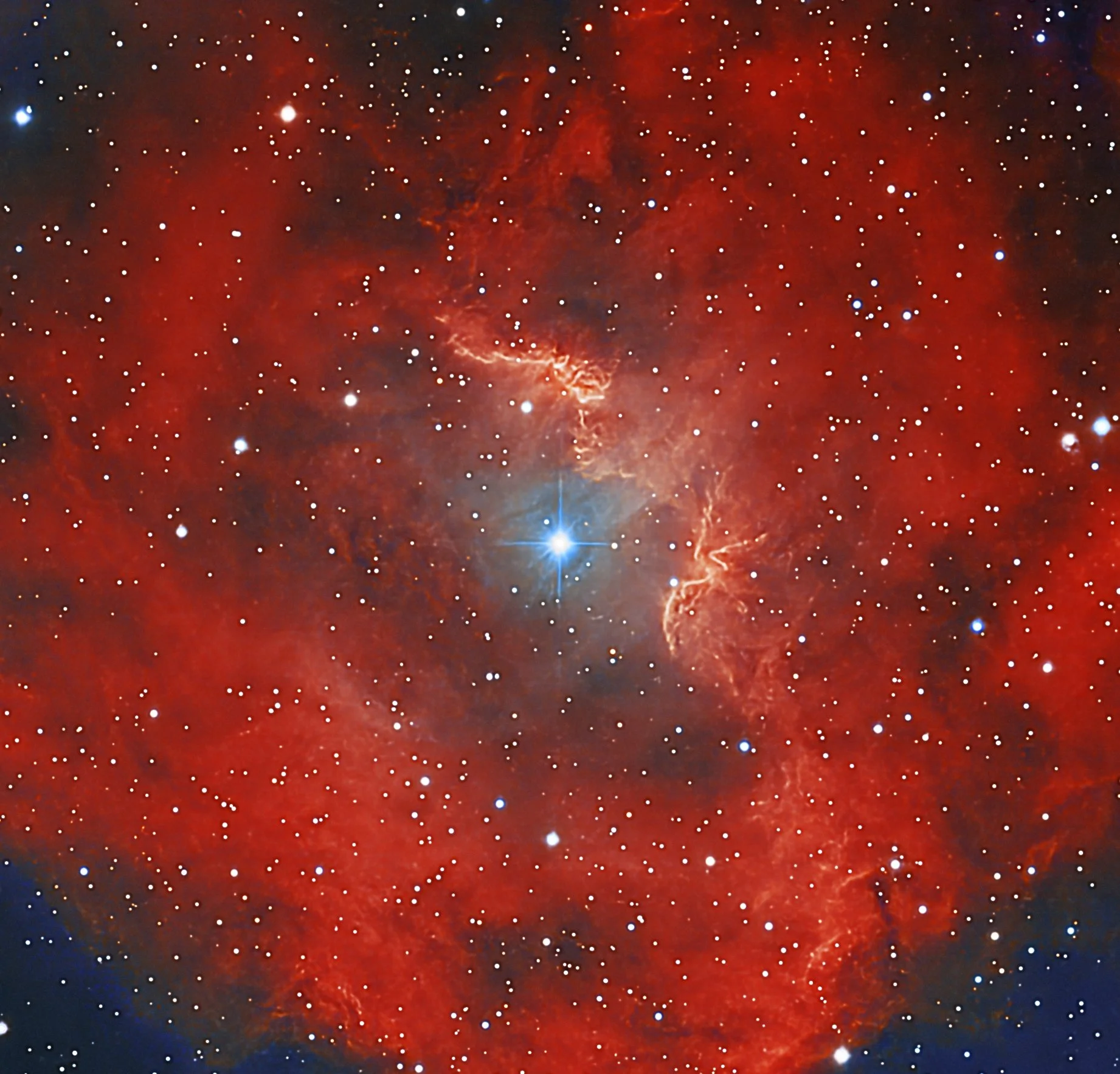
RCW 61 is a faint southern emission nebula cataloged in the Rodgers–Campbell–Whiteoak (RCW) H-alpha survey. It lies in the Carina–Vela region of the Milky Way, an area rich in ionized gas and massive-star activity. RCW 61 is not a showpiece nebula on its own, but rather part of the Galaxy’s diffuse ionized interstellar medium, glowing softly where ultraviolet radiation from nearby hot stars excites hydrogen gas.
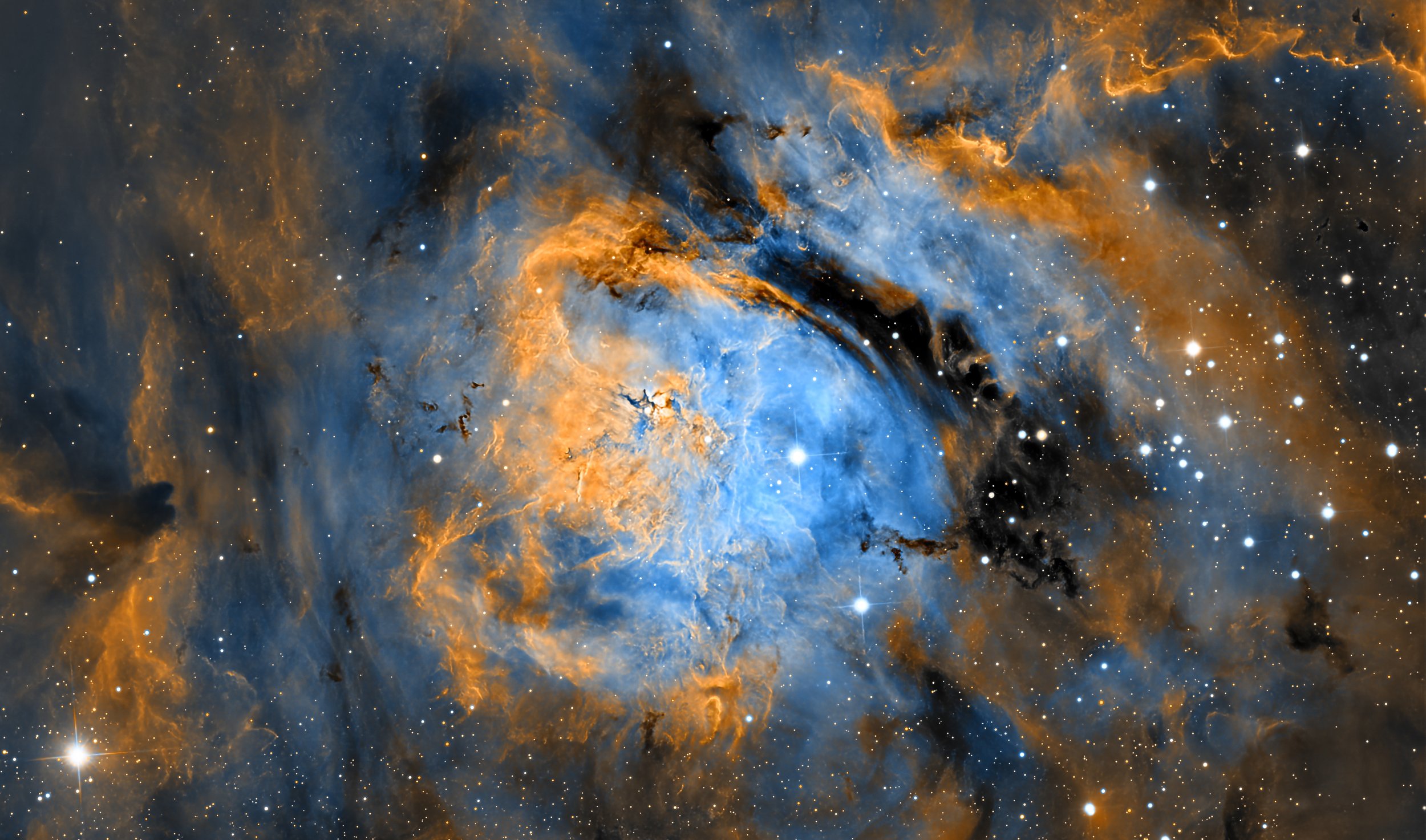
One of the Milky Way’s most famous and spectacular star-forming nebulae, M8 is located about 4,100 light-years away in the constellation Sagittarius. It’s a vast cloud of glowing hydrogen gas threaded with dark dust lanes, giving it a dramatic mix of bright emission and inky silhouettes. At its heart lies a young star cluster whose intense ultraviolet radiation causes the nebula to shine, while carving cavities and ridges into the surrounding gas.
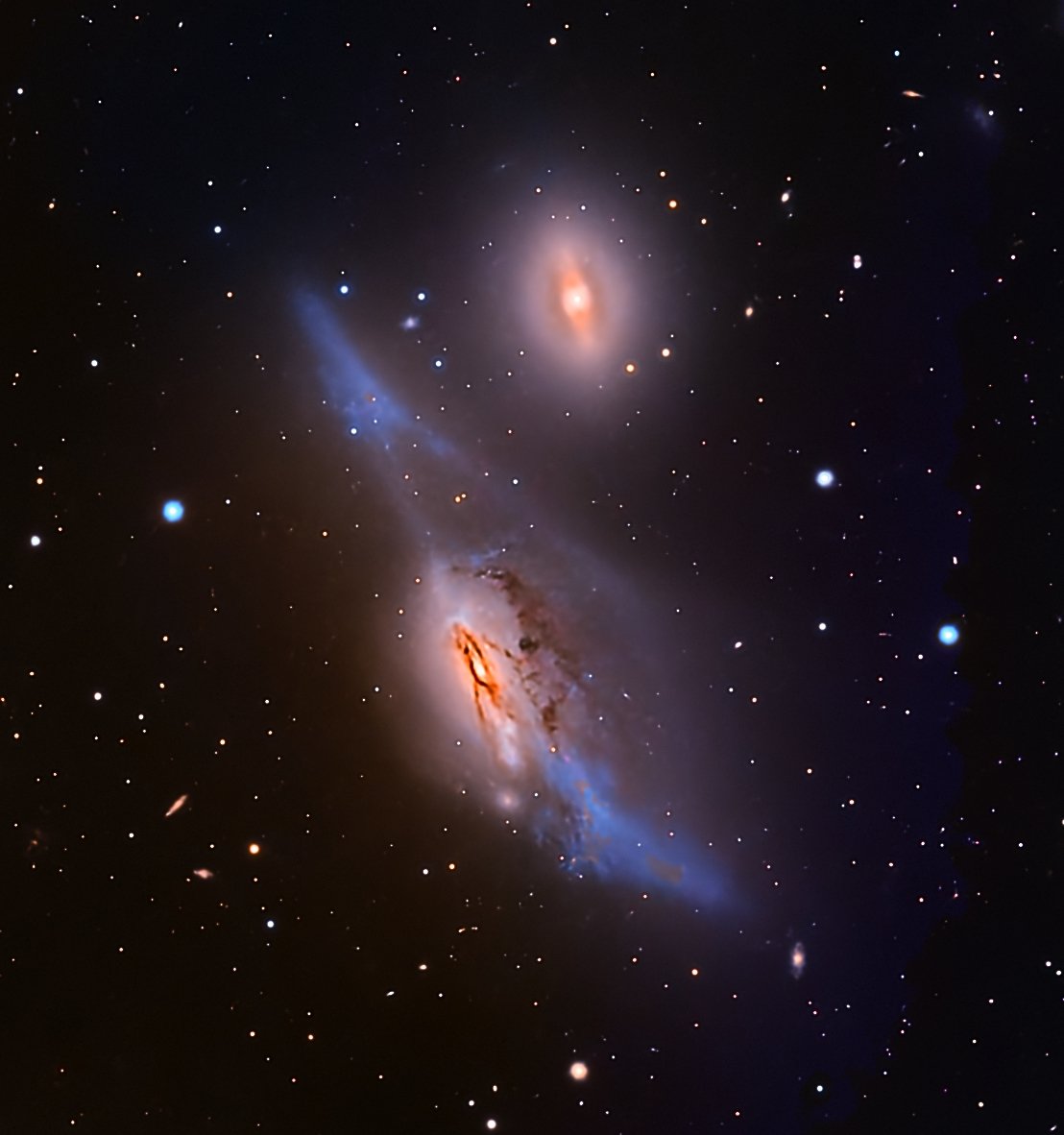
NGC 4438 is one of the most violently disrupted galaxies in the nearby universe, located about 50–55 million light-years away in the Virgo Cluster. Once likely a normal spiral, it now appears heavily warped, with torn dust lanes, asymmetric stellar structure, and long streams of gas extending far from the disk. Its battered appearance immediately marks it as a galaxy that has suffered severe environmental stress. What makes NGC 4438 especially interesting is that its damage comes from multiple mechanisms acting at once. It shows clear evidence of a past close encounter with the nearby galaxy NGC 4435, combined with ram-pressure stripping as it plows through hot intracluster gas in Virgo. Gas has been stripped from the disk, star formation has been largely quenched, and shock-heated filaments glow in optical and X-ray light.
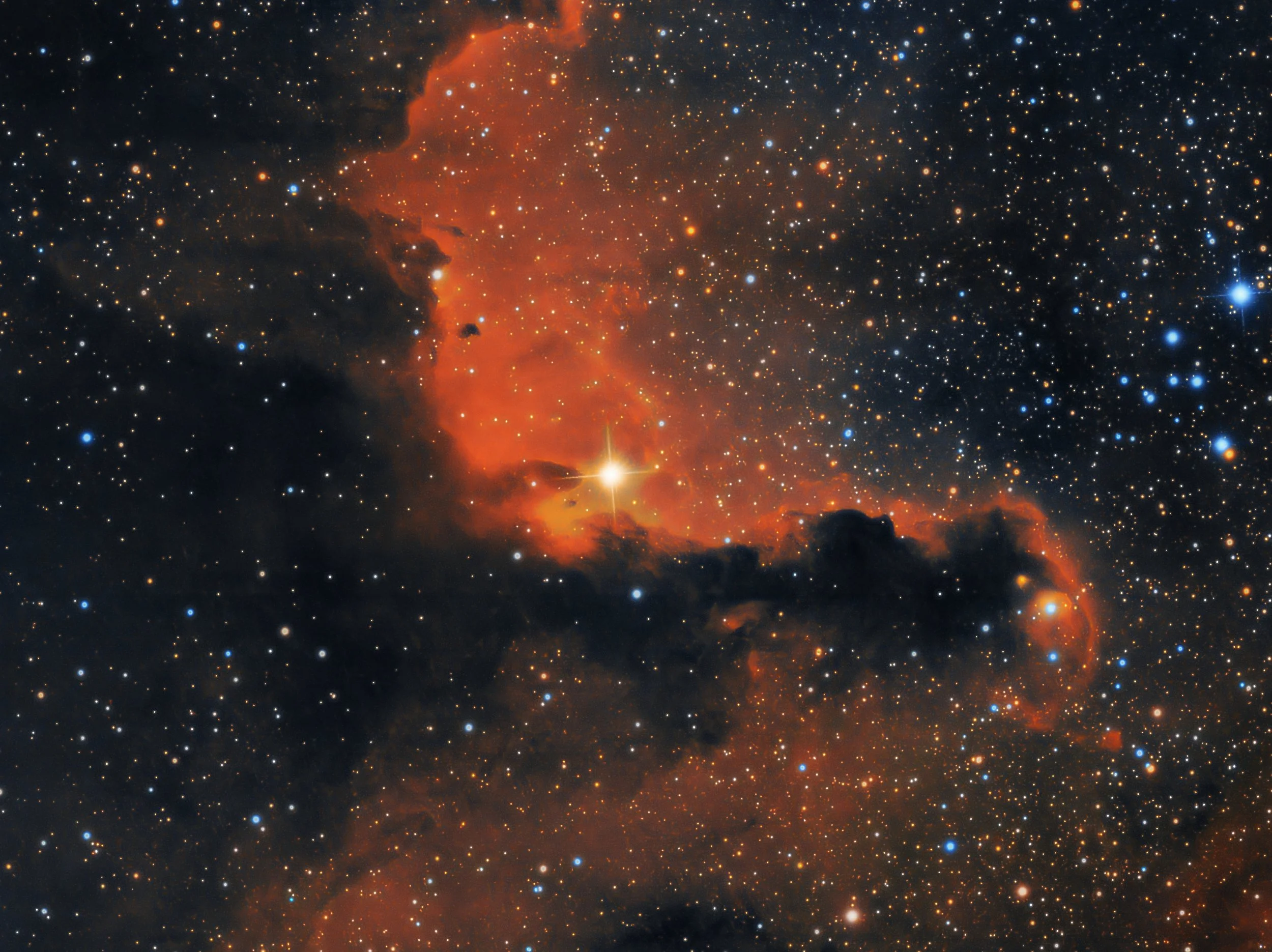
RCW 75 is a compact emission nebula located in the southern Milky Way, cataloged in the Rodgers–Campbell–Whiteoak (RCW) H-alpha survey. It lies a few thousand light-years away and is powered by a small group of young, massive stars whose ultraviolet radiation ionizes the surrounding hydrogen gas, causing it to glow.
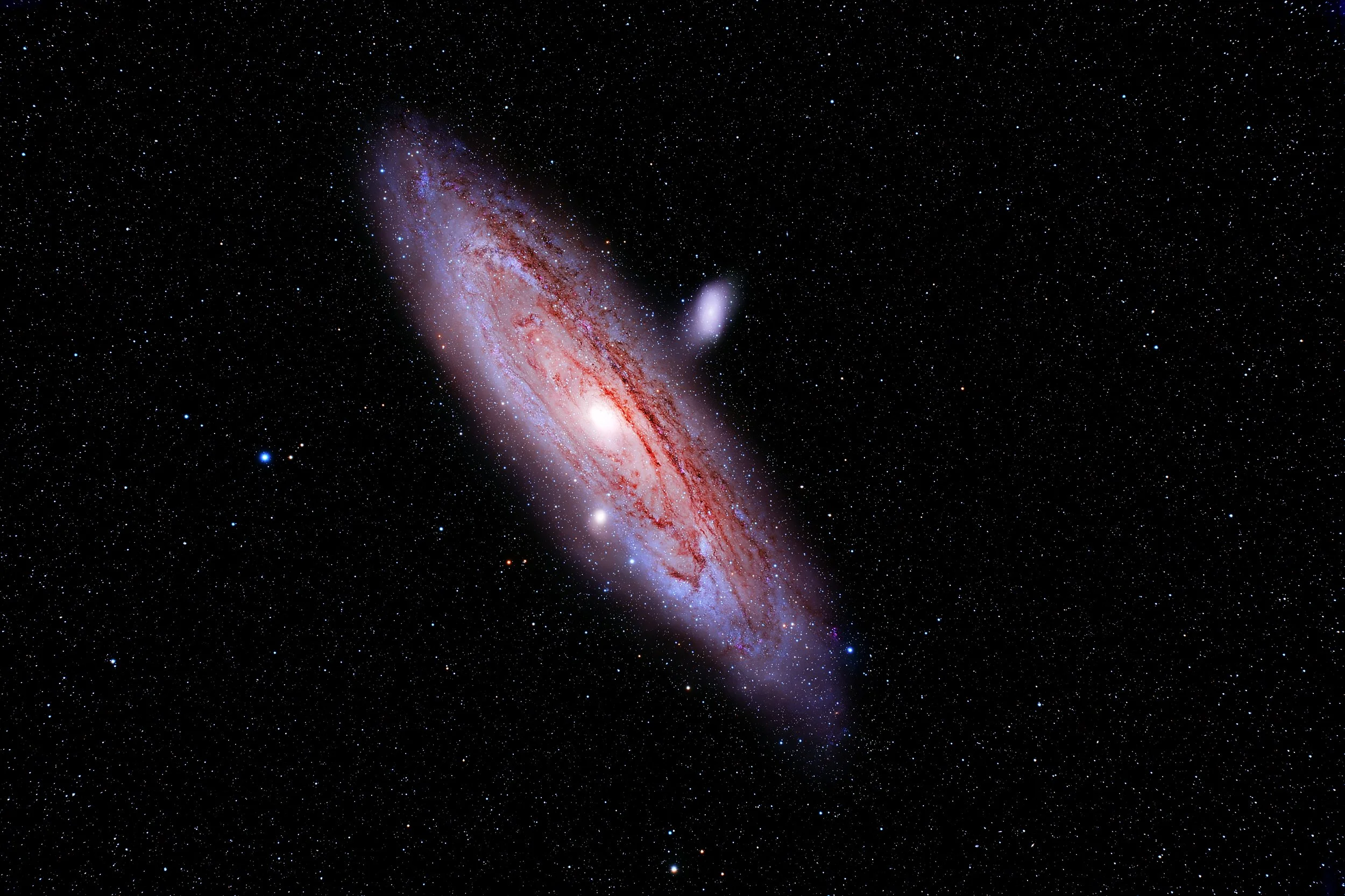
M31 is the nearest large spiral galaxy to the Milky Way, lying about 2.5 million light-years away in the constellation Andromeda. It’s the largest member of the Local Group and spans several degrees across the sky, revealing a massive disk threaded with dark dust lanes, bright star clouds, and numerous satellite galaxies.
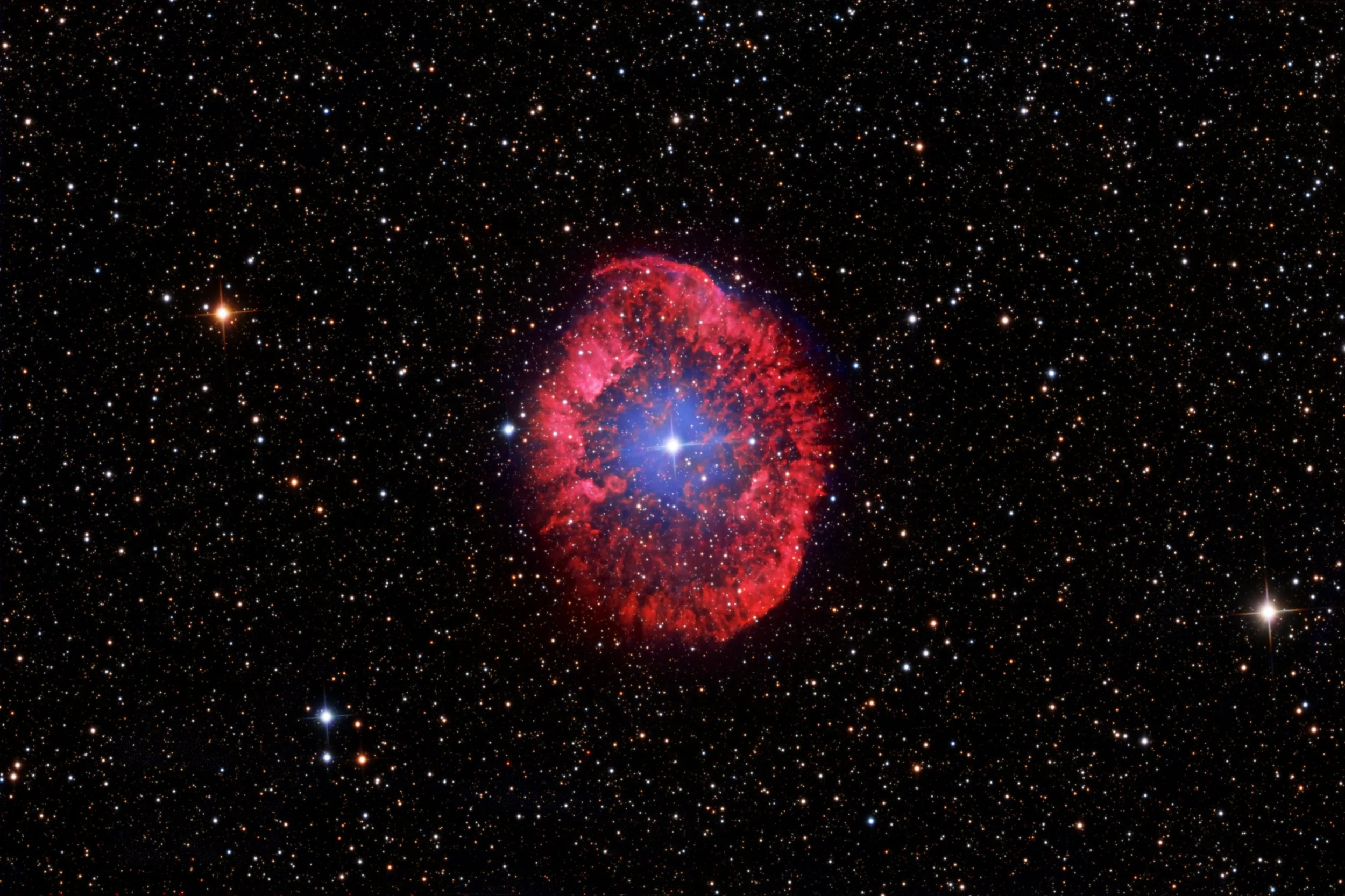
RCW 58 is a dynamic ring nebula located in the southern constellation of Carina. The nebula was formed by the powerful stellar winds from its central star, a massive and luminous Wolf-Rayet star known as WR 40. WR 40 is a "Wolf-Rayet" star, a rare type of massive star that quickly sheds its outer layers through powerful stellar winds. These stars are extremely hot and much more luminous than the sun.
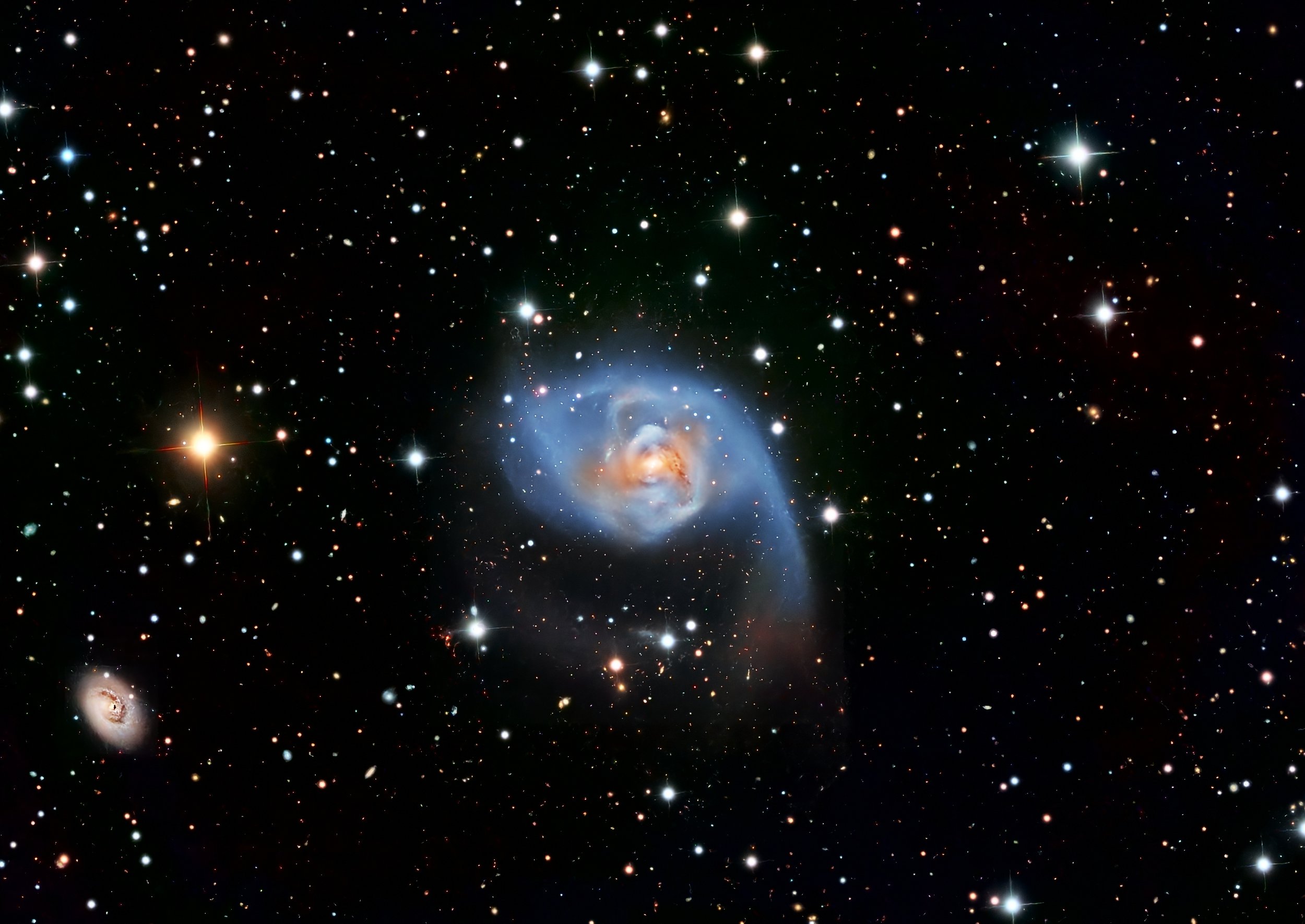
NGC 7727 is a nearby peculiar lenticular/elliptical galaxy about 90 million light-years away in the constellation Aquarius, and it is widely regarded as a late-stage galaxy merger remnant. At first glance it looks relatively smooth, but deeper images reveal faint tidal tails, shells, and warped dust lanes—clear signatures of two disk galaxies that collided and are now settling into a single system. This makes NGC 7727 an excellent snapshot of what galaxies look like after the most violent phase of merging has passed. One of the most intriguing discoveries in NGC 7727 is the presence of two supermassive black holes in its core, the leftover nuclei of the original galaxies. As these black holes slowly spiral toward each other, they provide a nearby laboratory for studying how black-hole binaries form—key precursors to future gravitational wave events. Combined with its distorted stellar structure and fading tidal debris, NGC 7727 offers rare, direct evidence of how major mergers reshape galaxies and build the massive, smooth systems we see in the present-day universe.